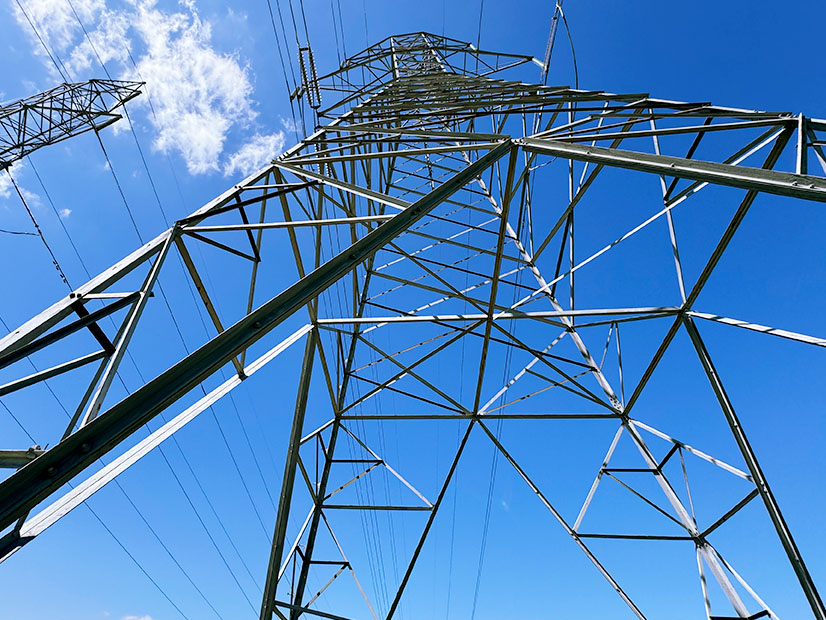
MISO generation developers have pushed back on MISO’s cost allocation of the $1.65 billion Joint Targeted Interconnection Queue (JTIQ) portfolio in partnership with SPP, reportedly saying MISO’s late-stage alterations have eroded the value of the seams planning.
The discord became apparent after a MISO announcement in April that it now plans to incorporate JTIQ lines and assign new generation upgrade costs from them beginning with the 2023 cycle of interconnection queue entrants. The RTO must seek FERC permission to begin including JTIQ lines beginning with the 2023 interconnection cycle because it would use the modeled lines in an earlier queue cycle than it first anticipated.
MISO confirmed in mid-May that it will file with FERC soon to allow the earlier incorporation of JTIQ into its queue studies. (See MISO Readies JTIQ Filings, Hints at More Tx Portfolios with SPP.)
Ordinarily, MISO locks in modeling assumptions when it kicks off studies shortly after it accepts the new cycle of generation projects. However, MISO’s 2023 class of interconnection customers have been in a holding pattern while MISO attempts to get a handle on its oversaturated queue. The RTO has said models as they existed two years ago are too stale to be relied upon as it begins processing proposals again. MISO said it would work from its latest transmission modeling when studies kick off. (See MISO: New Software Effective, Faster than Previous Queue Study Process.)
Some generation developers in MISO reportedly are unhappy with JTIQ being accounted for in the 2023 queue cycle. That stems from concern that cost assignments on the lines could climb as high as under MISO and SPP’s erstwhile affected system study process.
MISO said its view is queue cycles that have not yet started down the study process “must be able to take advantage of all approved transmission and reduce uncertainty for the next cycles.”
MISO and SPP are assessing JTIQ costs 100% to interconnection customers; costs will be assessed a per-megawatt JTIQ charge that is billed directly by either MISO or SPP.
Beyond that, MISO in 2024 added a second step to its JTIQ cost assignments in the form of what it calls the Expanded Scope Study. The additional study is meant to pinpoint line upgrades beyond JTIQ projects that interconnecting generation might require.
Clean Grid Alliance (CGA), speaking on behalf of some of the developers it represents, said it regards the Expanded Scope Study as the old affected system study that produced unexpectedly high upgrade costs and was meant to be replaced by the JTIQ process. In an interview with RTO Insider, CGA representative Rhonda Peters said though the name is different, the function is the same.
MISO has said while the JTIQ study is designed to address congestion for about 28.6 GW of generation projects wishing to connect near the seams, the Expanded Scope Study is designed to address lingering issues around the point of interconnection.
CGA told MISO it is “strongly against” merging JTIQ projects in the 2023 interconnection cycle. The alliance asked MISO to begin work on changing its tariff and joint operating agreement with SPP to make cost assignments more certain and contained for MISO generation developers. The alliance made a similar request when MISO was designing its JTIQ cost allocation in 2023 and 2024. It said its request was ignored repeatedly.
CGA said as it stands now, interconnection customers beginning with the 2023 cycle could be in “for high cost variability when projects are subjected to JTIQ.” It said the penalty-free withdrawal option in MISO’s queue likely won’t be enough to counter the costs because it doesn’t expect the Expanded Scope Study or the JTIQ cost estimates to be completed at that point in the process.
MISO has said the point of JTIQ allocation is to know up front what portion of costs that generation will be on the hook for. The RTO has said the alternative to including JTIQ in the 2023 queue cycle is MISO and SPP conducting another affected system study, where costs wouldn’t be fleshed out until the second or third phases of the queue. MISO also pointed out that its interconnection procedure is “not a risk-free process.”
MISO expects costs from the separate, Expanded Scope Study would be known later, once in the first phase of the queue and again in the second phase of the queue. MISO and SPP will treat a few buses into one another’s footprint as their own system for the purpose of determining whether a generation developer should pay for upgrades under the Expanded Scope Study.
Differing DFAX Thresholds
Generation developers in MISO also oppose MISO employing a lower distribution factor (DFAX) threshold than SPP uses for its internal projects in allocation. When singling out necessary upgrades on generation projects requesting unguaranteed energy resource interconnection service, MISO holds its developers to a more rigid 10% DFAX impact threshold than SPP’s 20%. For projects requesting the higher-quality network resource interconnection service, MISO and SPP both use a 5% DFAX impact threshold.
MISO halved its 20% DFAX value in 2023 despite opposition from stakeholders who claimed MISO did not complete an engineering analysis to support the change. They also argued that such a major change belonged in a tariff filing to FERC, not in a business practice manual edit. Their complaint over MISO’s change is pending before FERC. (See Renewable Developers Challenge MISO’s Lower Congestion Limit.)
In comments to MISO, CGA said MISO’s lower DFAX means that MISO developers will have more exposure to SPP network upgrade costs than SPP developers. The alliance also said that unsuspecting “projects far away from the seams that would have never needed JTIQ lines” nevertheless could get pulled into JTIQ cost sharing “simply because of power flows in the path of least resistance.” CGA said the second study step once again means developers at the seams will have no solid cost predictions on the network upgrades their projects might induce.
CGA also told MISO that the JTIQ 345-kV portfolio lines not having a cost cap mechanism is problematic, given the 100% cost assignment to developers. CGA said that cost overruns on transmission construction would add to generation developers’ tabs. Peters said MISO using its usual network upgrade allocation of 90% to interconnection customers and 10% to load on 345-kV and above projects would have afforded some budget oversight because states likely would question mounting costs even on their 10% portion.
Peters also said the 5% power flow DFAX threshold seems arbitrary and insignificant, and that MISO would be better served if it split costs among generators that actually cause or worsen constraints. CGA said JTIQ essentially reversed a long-standing FERC precedent: the “but for” principle that assigns costs to cost-causers. The alliance said that under JTIQ, many interconnection customers would be assigned costs for JTIQ lines even though they do not depend on the lines and have not contributed to any constraints if the lines were not in the model.
‘Affected System Study on Steroids’
MISO developers opposing allocation methods declined to be interviewed for this article and instead opted to effectively speak through Clean Grid Alliance’s comments.
Peters confirmed that many generation developers oppose MISO’s JTIQ cost allocation mechanisms and called them poorly understood among stakeholders.
Peters said cost recovery of the transmission lines is uncapped for generation developers and that their costs can increase over the 10-plus years the lines are built.
“There is no regulation or oversight on cost increases on those lines,” Peters said. She said the current two-phase JTIQ allocation could saddle developers with more costs than MISO and SPP’s past affected system study process. She said that’s why MISO’s JTIQ cost allocation was so strongly opposed by MISO interconnection customers at FERC. She also pointed out that CGA and other renewable trade associations are appealing the JTIQ cost allocation at the 7th U.S. Circuit Court of Appeals.
Peters said generation developers made sure to enter the 2023 cycle to avoid potentially “disastrous” outcomes funding the JTIQ projects.
“These projects spent a lot of money to enter when they did,” Peters said. “[And] MISO customers are going to have to build out SPP’s system to a 10% DFAX.” She added that the uneven threshold between MISO and SPP is likely to “significantly cost shift from SPP to MISO generators near the seams.”
“We call it affected system study on steroids,” Peters said, adding that she thought the JTIQ began as a good idea, but generation developers got “trampled” in the stakeholder process, including cost allocation discussions. She said there are “fatal flaws” in several aspects of the allocation methodology that make costs to generators highly unpredictable.
Peters said developers made “commercial decisions to enter the queue” based on the absence of JTIQ cost sharing in the 2023 cycle.
“This introduces significant uncertainty and cost increases to projects which undermines the predictability necessary for project financing and development. [Definitive Planning Phase] 2023 projects entered the queue having specifically modeled the transmission system without the unpredictable cost exposure JTIQ creates, and do not want the process changed at this point,” CGA said in its comments to MISO.
Shell’s Savion, a solar and energy storage developer, agreed that developers entered the queue in 2023 strategically before JTIQ integration began. In comments to MISO, Savion said the RTO’s move to group the 2023 entrants into the cost allocation now is “akin to retroactive ratemaking.”
MISO: Allocation Already Has FERC Support
MISO, on the other hand, stressed that FERC unanimously approved the JTIQ cost allocation, including the Expanded Scope Study, in late 2024.
“The JTIQ portfolio was developed in close collaboration with SPP and our joint stakeholders to support generation at our seam and strengthen regional reliability. MISO and SPP followed a transparent, stakeholder-driven process to develop the JTIQ study framework and cost allocation methodology,” MISO spokesperson Brandon Morris wrote in an emailed statement to RTO Insider.