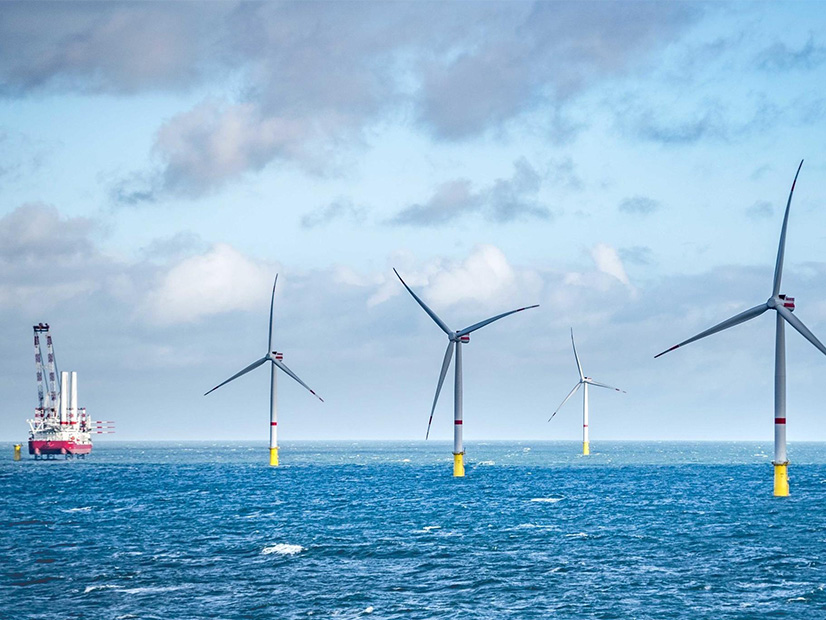
The manufacturer of an offshore wind blade that disintegrated in July 2024 has agreed to pay a Massachusetts beach community $10.5 million.
The town and county of Nantucket said the agreement with GE Vernova for the Vineyard Wind 1 incident is compensation for costs and losses sustained by the town and local businesses. The settlement was announced almost a year to the day after debris began washing up on beaches during the height of the tourist season.
It was a landmark failure for the young U.S. offshore wind industry, which already was struggling against cost and logistical hurdles, and it provided new ammunition for offshore wind opponents.
A year later, the offshore wind sector is on the ropes, facing continued popular opposition and a hostile new presidential administration. The latest potentially harmful move by federal regulators was to inform Maryland officials about errors in the final permit they issued for wind power projects off that state’s coast.
The July 13, 2024, incident south of Nantucket was a failure that just kept getting worse for Vineyard Wind 1, an 800-MW joint venture of Avangrid and Copenhagen Infrastructure Partners. (See Blade Failure Brings Vineyard Wind 1 to Halt.)
The project already was behind schedule, and federal regulators slapped lengthy work stoppages and limits on it after. The developers faced a roar of local criticism about the speed and manner in which they publicized the incident and a chorus of told-ya-so attacks from offshore wind foes nationwide.
GE Vernova’s internal investigation revealed quality control problems at the Quebec factory where subsidiary LM Wind Power built the blade that disintegrated. It determined that multiple blades already installed on Vineyard Wind turbines would need to be removed and replaced at additional cost of time and money. (See GE Vernova Gives Update on Offshore Wind Woes.)
Nantucket said debris entered the water table, settled on the seabed and washed up on town beaches, necessitating a monthslong cleanup.
The settlement bars Nantucket from making disparaging remarks about GE Vernova and related parties covered in the lawsuit, although the town can make accurate good-faith comments on the blade incident.
In its July 11 statement, Nantucket said it “commends GE Vernova for its leadership in reaching this agreement.”
Nantucket Select Board member Brooke Mohr also kept within the boundaries of the agreement, saying: “Offshore wind may bring benefits, but it also carries risks — to ocean health, to historic landscapes and to the economies of coastal communities like Nantucket, known worldwide as an environmental and cultural treasure.”
Nantucket now will place the financial settlement in a community claims fund and hire an administrator to review claims.
Work continues on Vineyard Wind. A July 7 mariners update indicated safety zones around five of the 62 turbine foundations.
On the very last business day of the Biden administration, the U.S. Bureau of Ocean Energy Management approved a revised construction and operations plan for Vineyard Wind 1 that reflected blade removals. (See Prior to Trump Inauguration, Feds Lift Suspension on Vineyard Wind 1.)
Three days later, on the very first day of his second term, President Trump issued a directive that chilled some offshore wind development and essentially froze planning on future projects. (See Critics Slam Trump’s Freeze on New OSW Leases.)
Aside from a stop-work order slapped on Empire Wind 1 for a few weeks, however, work has been allowed to continue on the other projects already under construction — Coastal Virginia Offshore Wind, Revolution Wind and Vineyard Wind 1.
By contrast, EPA on March 14 placed a hold on the air quality permit issued to New Jersey’s last actively pursued offshore wind project — Atlantic Shores, which still was well short of construction. (See EPA Puts Hold on Atlantic Shores OSW Permit.) Its developers later shelved the plan indefinitely. (See Developer Shelves Atlantic Shores, Seeks to Cancel ORECs.)
Likewise, US Wind’s Marwin 1 and Momentum Wind are federally permitted but have not started construction off the Maryland coast.
On July 7, EPA informed the Maryland Department of Environment that the construction permit it issued June 6 to US Wind is deficient and would need to be reissued with clarification that appeals of the permit must be directed to EPA, not to the state, because the state issued the permit under federal authority.
Failure to rectify the error could result in invalidation of the permit on appeal, EPA wrote.
On July 11, wind power opponent U.S. Rep. Andy Harris (R) of Maryland applauded the EPA finding, saying: “The EPA has confirmed what many of us knew for years — this project was approved with glaring procedural and legal flaws. The Maryland Department of the Environment had no business directing the public to appeal a federal permit to a state court, and such a decision showed both incompetence and a disregard for public input from my affected constituents in Worcester County.”