Equinor is taking a nearly $1 billion impairment on its U.S. offshore wind development efforts and is blaming the Trump administration’s anti-wind power crusade for the impact.
A federal stop-work order on the Empire Wind 1 project cost Equinor millions, but that is not the only factor in the impairment, nor even the largest.
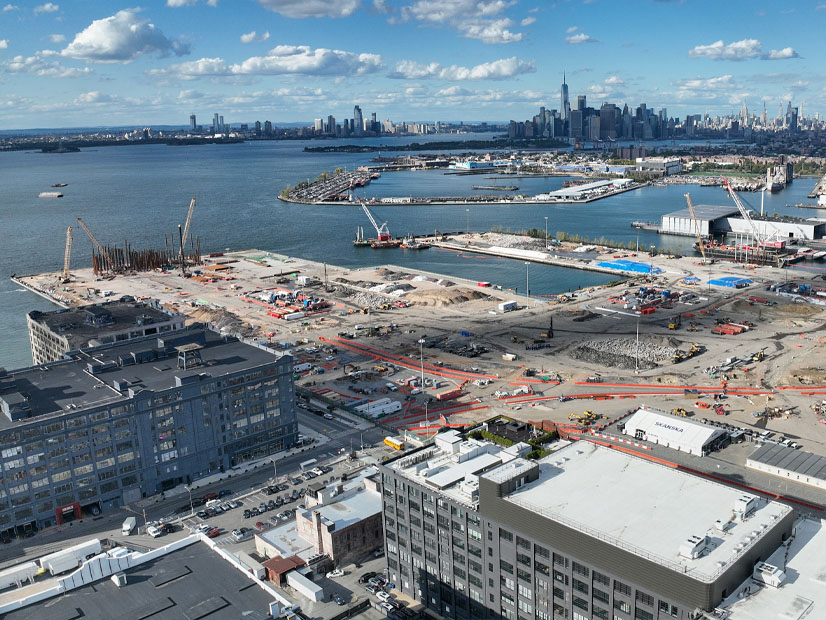
The company began building an offshore wind hub in New York City in 2024 to serve Empire Wind 1, the future Empire Wind 2 and other developers’ operations in the New York Bight. The assumption was that the over-$850 million price tag would be amortized across multiple future offshore wind projects, yielding cost-saving synergies in the process.
Now, Equinor said, there may not be any future projects.
This, combined with rising tariffs, the shelving of Empire Wind 2 and the delays on Empire Wind 1, led to a $955 million impairment announced July 23 as part of the second-quarter financials for the Norwegian oil and gas producer.
“The main driver for this is the changes in regulations for future offshore wind projects in the U.S.,” Chief Financial Officer Torgrim Reitan said during a conference call with analysts.
“Part of the impairment is related to the undeveloped Phase 2 of Empire Wind. However, the largest portion is related to the South Brooklyn Marine Terminal. The development of the terminal assumed future projects that would use it. This is now unlikely with the current framework conditions, and this new reality is reflected in the updated book value for Empire Wind 1 and the South Brooklyn Marine Terminal.”
The new U.S. policy framework will lead to a lower lifetime rate of return on Empire Wind 1, Reitan said, but continuing with construction was determined to be the best way to protect shareholders.
Even with the U.S. losses factored in, the company still expects a double-digit return on its offshore wind portfolio as a whole, he added.
Equinor was formed in 1972 as Statoil, a state-owned oil company. Norway still owns a majority stake in the company, which in 2018 was renamed Equinor.
It still is a major fossil fuel producer, with $104 billion in 2024 revenue from operations in more than 20 countries, including the United States. In the first half of 2025, it reported $2.2 billion in revenue and $694 million in net income on its U.S. exploration and production activity.
However, Equinor has set a goal of being a leader in the clean energy transition and becoming a net-zero company by 2050. One of the ways it plans on doing this is by leveraging its offshore fossil fuel expertise to become a global offshore wind developer.
It has had varying degrees of success with that.
In the United States, it holds seabed leases off the New York, Delaware and California coasts, each with about 2 GW of wind power potential.
Nothing is likely to be built in the Delaware and California lease areas any time soon.
But Empire 1 and 2 were early movers. They won offtake contracts from New York in 2019 and 2022 and obtained full federal approval in early 2024.
In early 2024, Equinor placed Empire 2 on hiatus due to market conditions. But it pressed ahead with Empire 1, making the final investment decision on the $7 billion project just weeks before Trump returned to office. Subsequent events have shown offshore wind developers were justified in their worries about Trump 2.0.