New nuclear generation holds promise for the U.S. and its energy sector if its challenges can be overcome, panelists said during a Resources for the Future webinar.
The consensus was that regulatory, financial and policy support are important components of the process by which this can happen.
RFF President Billy Pizer opened the Oct. 21 conversation with John Williams, senior vice president of technical services at Southern Nuclear, which developed Plant Vogtle Units 3 and 4, the only U.S. nuclear construction project to reach commercial operation in decades.
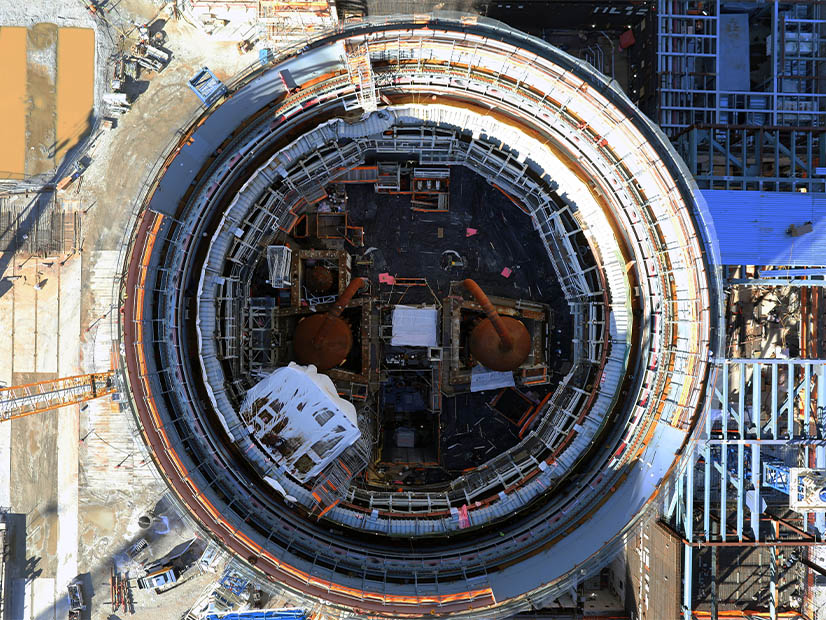
With its delays and cost overruns, Vogtle illustrates the problems facing first-of-a-kind projects, Williams said, but also the benefits that can accrue for second-of-a-kind projects.
The project was plagued with unforeseeable problems such as the Fukushima disaster, the bankruptcy of its contractor and the COVID pandemic, Williams said, but there also were the predictable first-mover difficulties, particularly with Unit 3.
“We had challenges as we were building a new supply chain for a new technology,” he said. “And then workforce — it had been 30 years since we had built a new nuclear plant from scratch in the United States. So our workforce, we didn’t have that muscle memory that they have in other parts of the world, where they have been building on a more regular frequency.”
Unit 4 was in some ways a second mover, and the effect showed, Williams said: It cost nearly 20% less than Unit 3 to build, and commissioning took half as long.
How many more Vogtles would it take, Pizer asked, to reach that “Nth of a kind” balance where things can move fast and predictably, without cost overruns and delays?
Six to 10, Williams estimated.
The momentum has flagged, however. Heavy construction was completed at Vogtle in mid-2023, Williams said, and a workforce now experienced at building nuclear reactor complexes went its separate ways to build data centers and auto factories.
Williams said Vogtle 3 and 4 cost about $11,000 per kilowatt of nameplate capacity in present-day dollars, but if the next several projects were built in close succession around the same Westinghouse AP1000 reactor, the cost would gradually drop.
“By the time you come down that Nth of a kind curve, now you’re looking at $6,000 to $7,000 a kilowatt,” he said. “By taking a pause, we will absolutely have to do some relearning. The sooner we get started, the better off we’ll be.”
Karen Palmer, senior fellow in RFF’s electric power program, asked when all this nuclear generating capacity in the planning stages might start sending power onto the grid.
Matt Bowen, senior research scholar at Columbia University’s School of International and Public Affairs, ran through a partial list of the many development efforts vying for market leadership positions and said: “I sort of think the better question is, who if any of these entities is going to build something at an acceptable cost that can then be deployed a bunch of times in the 2030s and 2040s to make a sizable contribution to the U.S. energy portfolio, let’s say over 50 gigawatts.
“It’s a little too early to say how these are all going to turn out.”
Bowen said he is confident, however, that future gigawatt-scale projects could proceed with fewer delays and cost overruns than the two recent U.S. examples, Vogtle and the canceled V.C. Summer.
Alan Ahn, deputy director for nuclear at Third Way, said small modular reactors are promising because of their smaller footprint, which is expected to lower cost and increase versatility. Lower cost could facilitate financing , which has been a challenge for the nuclear industry.
“I think the reality in terms of hurdles going forward is that we’re still at a first-of-kind stage with these technologies. Matt went over some of those issues at length,” Ahn said. “There’s definitely light at the end of the tunnel. I think the challenge now is maximizing the potential of these technologies by building them at scale, maturing supply chain and reaching commercial maturity.”
Mixing into this crowded environment are a number of states promoting nuclear development, such as New York, whose governor has ordered the New York Power Authority to develop at least a gigawatt of nuclear capacity.
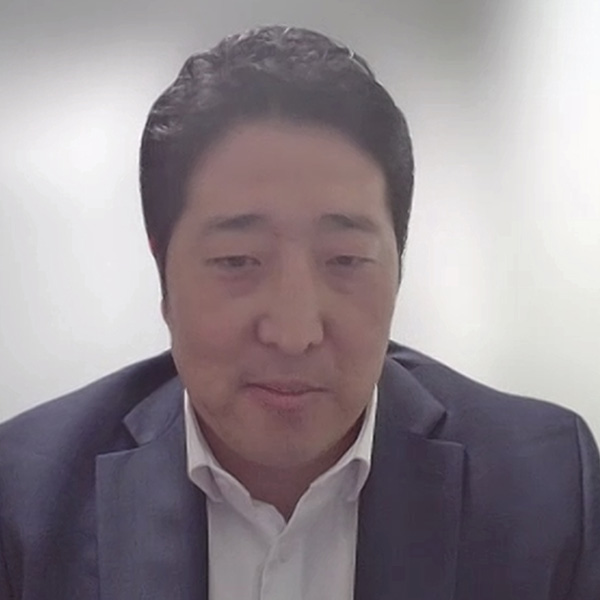
Erich Scherer, director of strategy at the New York State Energy Research and Development Authority, said NYSERDA is not exactly new to the sector, having evolved from New York’s atomic agency.
But that was 50 years ago, and nuclear power has evolved greatly since then.
“So learning lessons is very much at the top of mind, both in terms of learning at the project level, but also in terms of learning from best practice, policy experience,” he said. “I’m also going to recognize that, I think, as a reality check, [there] just aren’t that many lessons to learn yet.”
Vogtle is a treasure trove of lessons, Scherer said, but it is an exception: Only a few of the many other reactor designs and business models being developed have even begun construction, and only a few states have put forth a comprehensive policy strategy.
New York is very aware of the risks involved in being a first- or second-mover, he said. “What’s really important in our mind is the possibility of cooperation between states, and so as we develop our master plan, we are also very much conscious that that’s not an effort in isolation. And New York state is part of initiative called the First Mover Initiative together with 10 other states.”
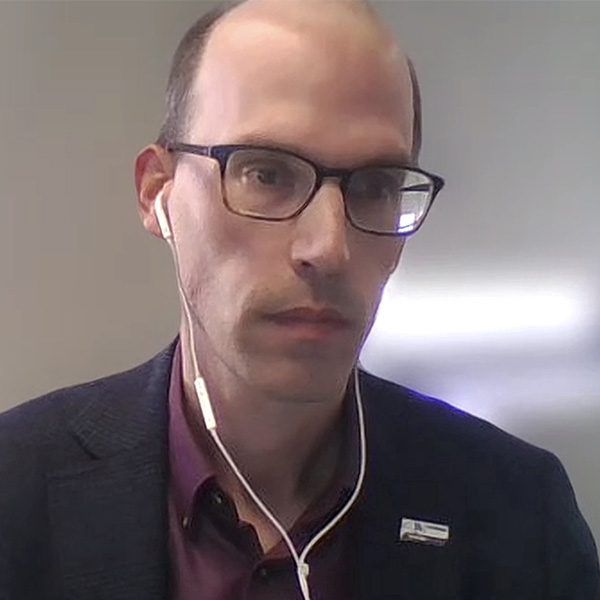
This presents the chance to build a multistate order book and a pipeline that spreads the risks more broadly, Scherer said.
President Donald Trump, meanwhile, is roiling the regulatory environment in which all this would take place, demanding faster approvals and streamlined oversight.
Bowen said a lot of regulations are outdated and ripe for efficiency reviews, and there are opportunities to responsibly speed the process. But the Nuclear Regulatory Commission is being blamed unfairly for so few new reactors coming online in the past 30 years, he said.
Ahn addressed another challenge: the fuel supply chain. The U.S. gets its uranium from mines in other countries, he said, and while they can ramp up production, “I think the real challenge and bottleneck is with uranium conversion and enrichment, where producers need to invest in and execute expansions to their industrial capacity.
“In and of itself, that dependency on foreign fuel supply chains is not an insurmountable issue. We’ve operated our nuclear fleet on fuel converted and enriched overseas for very long time.”
The potential problem is that many other nations want to ramp up nuclear power generation, he said, setting up a strain on the supply chain, and that a significant share of the supply chain is still controlled by a potentially uncooperative country: Russia.
“I think particularly on nuclear fuel, there is need for coordinated, cooperative, international actions between the U.S. and its allies and partners,” Ahn said.