A coalition of municipal officials and climate advocates in Massachusetts are renewing a push for the expansion of a state program allowing a select number of municipalities to ban fossil fuel hookups in new building construction and renovation projects.
The current program, established by a 2022 omnibus climate bill passed in the state, authorizes 10 municipalities to “require new building construction or major renovation projects to be fossil fuel-free,” with exceptions for scientific research and medical facilities.
Prior to the bill’s passage, the demonstration project faced significant opposition from real estate and business groups, who argued it would increase the costs of new construction.
Activists lobbied for an expansion of the program during the 2023-2024 legislative session, facing pushback from energy and real estate companies and groups including National Grid, the Massachusetts Energy Marketers Association and the real estate association NAIOP. (See Massachusetts Considers Legislation to Ban Gas in New Buildings.)
Ultimately, an expansion of the program was not included in a wide-ranging energy bill passed by the state in 2024. Disagreements over gas utility reforms were one of the key points of contention during negotiations between the House of Representatives and Senate, with the latter supporting a more ambitious approach to transitioning away from natural gas.
While an expansion of the demonstration program was not included in the 2024 bill, the legislation included a series of gas regulation reforms intended to rein in spending on pipe replacements and amend gas utilities’ legal obligation to provide gas service to customers. (See Mass. Clean Energy Permitting, Gas Reform Bill Back on Track.)
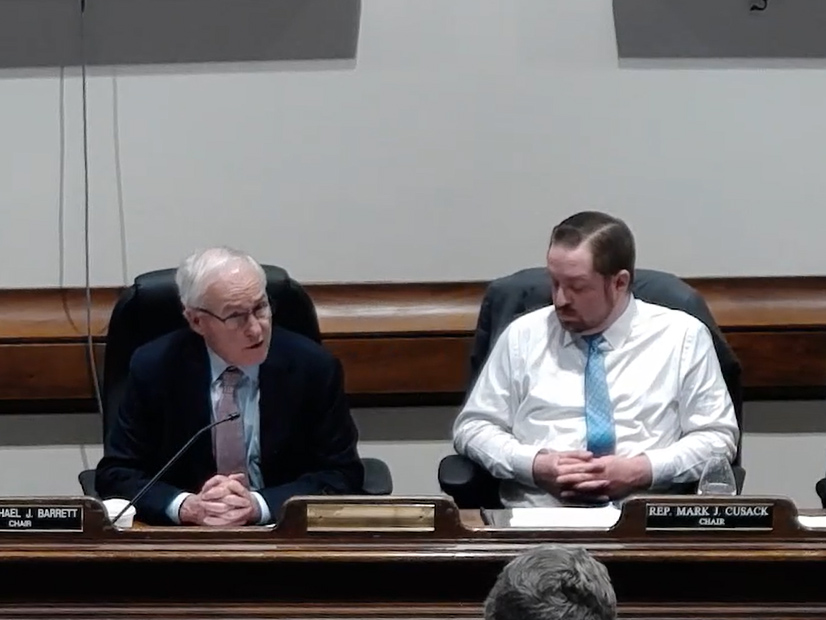
At a hearing held by the legislature’s Joint Committee on Telecommunications, Utilities and Energy (TUE) on Oct. 29, advocates urged lawmakers to expand the cap on the demonstration program from 10 to 20 municipalities.
Proponents’ case for expanding the demonstration project was simple: The cost of all-electric buildings is generally on par with fossil buildings, and building all-electric would avoid costly retrofits in the future. Advocates also highlighted the climate and health benefits of electrifying buildings.
Several advocates cited a 2022 study by the Massachusetts Department of Energy Resources — conducted during the administration of Gov. Charlie Baker (R) — which projected the costs of all-electric homes to be cheaper than the cost of gas homes in most cases.
In 2024, a report commissioned by climate group ZeroCarbonMA found construction costs for all-electric buildings to be within 1% of fossil buildings, and forecast energy costs “to quickly become much more cost-effective than gas under expected emissions regulations and increasing average gas delivery costs.” (See Report Outlines Cost Savings of All-electric Buildings in Mass.)
Recent steps taken by the Massachusetts Department of Public Utilities could also shift the cost calculation in favor of electrification; the DPU has moved to prevent utilities from socializing the costs of new gas hookups across their rate base and has approved a new winter heat pump rate reducing winter costs for heat pump owners. (See Mass. DPU Requires Revisions to Gas Line Extension Policies and Report Details Cost Savings of Heat Pump Rates for Mass. Consumers.)
Katjana Ballantyne, mayor of the city of Somerville, said the city has “has overwhelmingly supported” joining the demonstration project and noted that the City Council in 2023 unanimously voted in favor of adopting a fossil-free building ordinance, though the city ultimately was not included in the program.
“All-electric new construction offers the easiest and most effective opportunity to begin decarbonizing buildings,” Ballantyne said. “The cost of all-electric new construction is level or even less than fossil fuel construction.”
Mark Sandeen, a member of the Lexington Select Board, said the town’s participation in the demonstration program “has been a huge win for affordable housing developers, and perhaps more importantly, for the eventual residents of those homes.”
Jonathan Kantar, manager of a design and construction company and a volunteer member of the city of Newton’s Design Review Committee and Energy Commission, said the city has found that “energy-efficient and all-electric buildings don’t cost any more than fossil fuel alternatives, and sometimes cost less.”
Representatives of groups that typically have opposed electrification requirements did not speak at the TUE hearing, though this does not mean they are not active on the issue.
A 2021 Brown University report on lobbying in the state noted that “major energy and utilities corporations and their trade groups only rarely submit public testimony in opposition to legislation advancing climate action,” but they have found significant success blocking legislation through behind-the-scenes lobbying.
According to state disclosures, over the first half of 2025, National Grid spent about $128,000 on lobbying; Eversource Energy spent $135,000; NAIOP spent $126,000; and the Home Builders and Remodelers Association of Massachusetts spent $61,000.
Sen. Mike Barrett (D), the top senator on the TUE Committee, said he is “starting to see significant indication” that building developers have “begun to move against” fossil fuel-free requirements and stricter building energy codes.
Massachusetts has three building codes available to municipalities: the base code; the stretch code, which includes increased energy efficiency requirements; and the specialized code, which incorporates even stricter requirements, including that buildings be pre-wired for electrification. Municipalities in the state can opt into either the stretch or specialized codes.
Barrett said that “early reports from participating communities I represent are that costs of installing heat pumps in new construction are equal to or lower than the costs of installing gas furnaces in new construction,” but he pressed advocates to provide clear data comparing the costs of all-electric construction and fossil construction.
“It seems to me that that proof point is going to be crucial in the next several months as people begin to hunt, as we must, for the real sources of the housing problem,” Barrett said.
In comments made to NetZero Insider following the hearing, representatives of real estate and building development groups argued that all-electric buildings are costlier to build.
“NAIOP is strongly opposed to the expansion of the fossil fuel-free demonstration program at this time,” said Anastasia Daou, vice president of policy at NAIOP Massachusetts. “The existing program dissuades investment, creates significant safety concerns with inconsistent applications of standards and empowers communities to block desperately needed housing in the commonwealth.”
A representative of the Home Builders and Remodelers Association of Massachusetts said the organization “absolutely opposes this expansion” and cited a 2023 industry-sponsored report that forecast Massachusetts’ specialized energy code to increase the construction costs of single-family homes by 1.8 to 3.8%.
A representative of Eversource said the company has “not provided testimony on this legislation and [does] not have anything to provide at this time.”
Representatives of National Grid and the office of Gov. Maura Healey (D) had not responded to requests for comment as of press time. Healey’s administration has not taken an official stance on the potential expansion of the program.