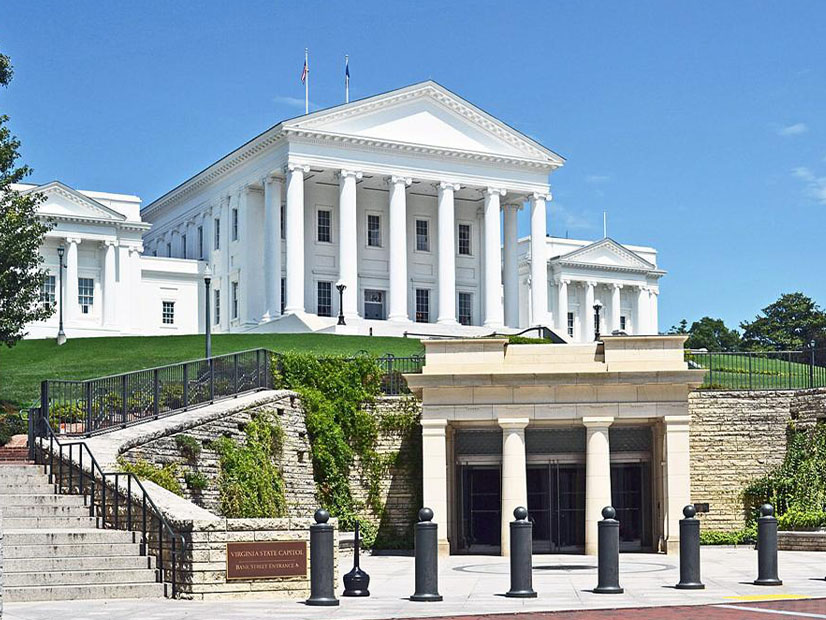
Democrats won off-cycle elections around the country Nov. 4, with races in Georgia, New Jersey and Virginia holding implications for energy policy.
In Virginia, Gov.-elect Abigail Spanberger (D) cruised to victory over Lt. Gov. Winsome Earle-Sears (R) in a race where energy was less of a focus than in New Jersey. (See related story, N.J. Backs Clean Energy Democrat for Governor.)
Democrats’ strong performance in Virginia was evident downballot, where they won all the statewide offices and added to their majority in the House of Delegates (state senators were not up for re-election).
“Virginians voted for a pragmatic leader who gets results, because we’re in the midst of a growing energy affordability crisis, and she will need to lead from Day 1,” Advanced Energy United Virginia Director Jim Purekal said in a statement. “Gov.-elect Spanberger has a clear mandate to make energy more affordable and reliable by making it easier to build low-cost clean energy and fixing the bottlenecks that slow progress.”
Environmental group Clean Virginia congratulated Spanberger and downballot Democrats in a statement.
“Virginians have made history,” Clean Virginia Executive Director Brennan Gilmore said. “For the first time, every statewide office and the majority of the House of Delegates will be held by leaders who do not accept money from Virginia’s monopoly utilities. That marks a sea change in Virginia politics and a clear rejection of the pay-to-play system that has dominated Richmond for decades.”
As home to the largest data center market in the world, which is growing fast, Virginia has had to contend with large load customers’ impact on the grid. Spanberger has said the data centers should pay for their fair share of grid impacts.
In 2025, a number of bills were introduced in the legislature that would have responded to data center growth. Most failed to make it through to law with a split government. That will not be an issue once Spanberger and newly elected legislators take office. (See Virginia Legislators Introduce Bills to Deal with Data Center Growth.)
One area of concern, which equity research firm Jeffries said is “hanging above all else,” is whether the change in governors will spell trouble for Dominion Energy’s Coastal Virginia Offshore Wind (CVOW) project.
Incumbent Gov. Glenn Youngkin (R) was term-limited, and the question is whether the Trump administration will leave the project alone, as it has so far. Roadblocks have been thrown up against offshore wind projects in Democratic-run states to Virginia’s north.
Dominion CEO Robert Blue addressed that issue on the firm’s earnings call a few days before the election, arguing that CVOW’s electrons were needed to meet growing demand from data centers and to power facilities vital to the U.S. Navy in southeast Virginia, so it should move forward with its planned completion in late 2026. (See Dominion Reports on CVOW Progress, Data Center Growth in Q3 Earnings.)
In Georgia, Democrats flipped two seats on the Public Service Commission as Alicia Johnson and Peter Hubbard handily defeated incumbent Republicans Tim Echols and Fitz Johnson. Echols has been on the PSC since 2011, while Fitz Johnson joined it in 2021.
Alicia Johnson has a background in health care, and her website calls her “a lifelong community advocate,” while Hubbard has 15 years of energy experience and has been active before the PSC via a nonprofit he founded in 2019: the Georgia Center for Energy Solutions. Both Democrats said cutting consumers’ power bills was a priority.
In a post-election note, Jeffries analyst Julien Dumoulin-Smith noted that Southern Co.’s Georgia Power has “top-tier authorized rates of return,” and the incoming commissioners’ election promises around affordability make the outcome of its next rate case, for deliveries starting in 2029, less certain.
In New Jersey, Democrat Mikie Sherrill campaigned on “affordability” for residents of the state, with a promise that on her first day in office, she would address the state’s dramatically rising electricity costs by declaring a “state of emergency” on utility costs, and freezing rates. Sherrill trounced Republican Jack Ciattarelli 56% to 42%.