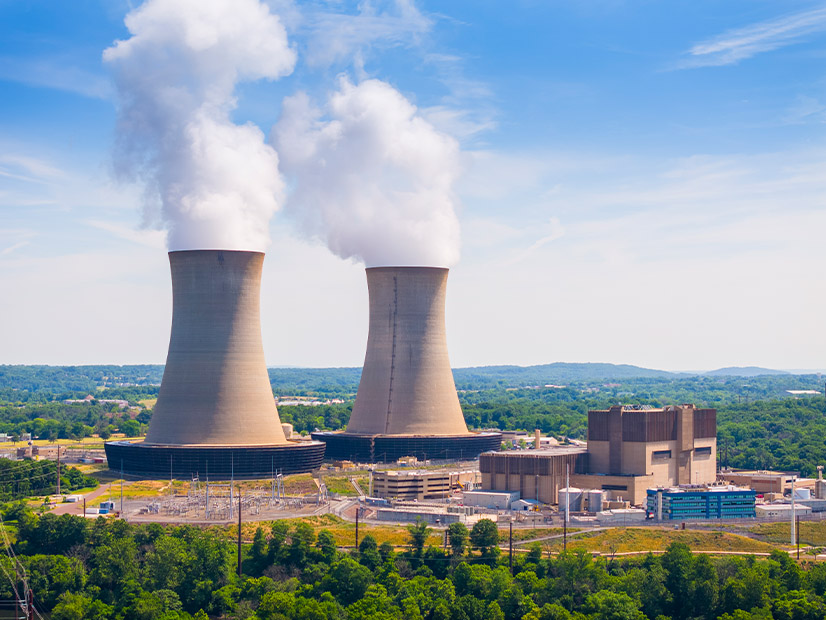
The Nuclear Regulatory Commission said its approval of the digital upgrade at Constellation Energy’s Limerick Clean Energy Center paves the way for instrumentation and control modernization across the U.S. commercial fleet.
A 40-year-old Pennsylvania facility that is among the nation’s younger nuclear power plants is the first to win approval to replace its analog safety systems with a single digital system.
The Nuclear Regulatory Commission said Jan. 5 that its approval of the digital upgrade at Constellation Energy’s Limerick Clean Energy Center paves the way for instrumentation and control modernization across the U.S. commercial fleet.
Operators of other facilities have taken advantage of regulatory flexibilities to make limited, targeted digital upgrades, NRC said, but the Limerick project is the first authorized to take a broad, comprehensive approach. Much of the U.S. fleet still relies on analog controls.
Constellation said Jan. 6 that the $167 million overhaul will be performed in phases to maintain operational continuity, with major work planned when the reactors are taken offline for refueling.
The company said the Limerick Digital Modernization Project would enhance safety system reliability and cybersecurity; significantly reduce manual maintenance, testing and surveillance requirements; enhance operator interfaces and diagnostic capabilities; reduce plant operating and maintenance costs; and eliminate obsolete components.
The effort is part of Constellation’s $5.1 billion effort to preserve and expand the capacity of its nuclear fleet in Pennsylvania and comes as the Trump administration tries to bolster nuclear power generation nationwide. It is supported by the U.S. Department of Energy’s Light Water Reactor Sustainability Program.
The NRC license amendments place some requirements on the project but conclude that the changes will not endanger the health, safety and security of the public (Docket Nos. 50-352 and 50-353).
Limerick Clean Energy Center is 35 miles southeast of Philadelphia. Its two General Electric boiling water reactors are rated at a combined 2,317 MW. They operated at a capacity factor of 95.2% to generate a net 19.36 million MWh of electricity in 2024.
Unit 1 entered commercial service in February 1986 and Unit 2 in January 1990.
In October 2014, the NRC renewed the operating licenses for Unit 1 through October 2044 and Unit 2 through June 2049.