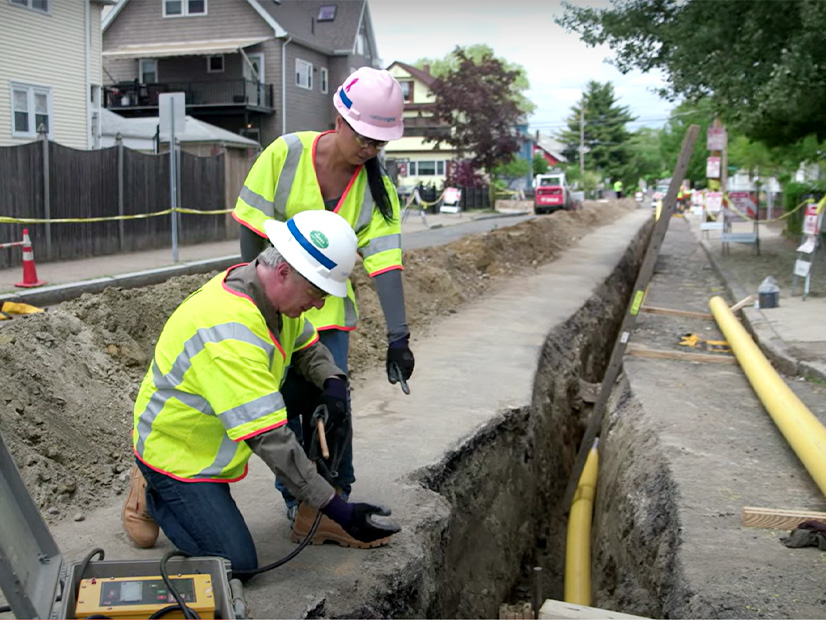
In Massachusetts’ latest step to transitioning away from natural gas, the state’s Department of Public Utilities (DPU) has ordered major changes to the state’s program for addressing pipe leaks, aiming to better align the program with its long-term decarbonization strategy.
Massachusetts’ gas system enhancement planning (GSEP) process was created by the legislature in 2014 to reduce methane leaks from the state’s gas network. The program has come under fire in recent years from climate and consumer advocates, who argue it encourages the utilities to invest in replacement pipes that risk becoming stranded assets as the state moves away from gas.
Massachusetts has taken an ambitious approach to transitioning away from gas following the election of Gov. Maura Healey (D) in 2022 and the appointment of DPU Chair Jamie Van Nostrand. In late 2023, the DPU ruled that decarbonization of the state’s gas network should center around electrification, citing concerns about the overall viability of replacing natural gas with renewable natural gas and hydrogen. (See Massachusetts Moves to Limit New Gas Infrastructure.)
In the 2023 order, DPU singled out networked geothermal as the emerging technology with “the most potential to reduce GHG emissions.”
In recent years, lawmakers and regulators have made several changes to the GSEP process to account for the state’s climate strategy. In 2022, the legislature directed the utilities to consider using advanced repair technology in GSEP investments, and in 2024 the DPU required the utilities to consider the use of non-pipeline alternatives (NPAs). In late 2024, lawmakers amended the GSEP statute to put a greater focus on decarbonization and avoiding stranded assets. (See Mass. Clean Energy Permitting, Gas Reform Bill Back on Track, Mass. Gas Working Group Finalizes Recommendations to Legislature.)
Building on these efforts, the DPU on April 30 ordered a series of significant changes to the program, requiring the utilities to more rigorously document their analyses of pipe repairs and NPAs, lowering the annual GSEP spending cap and prohibiting the collection of carrying charges when utilities defer cost recovery on GSEP investments that exceed the annual cap.
“The GSEP program as currently implemented is not striking a good balance between safety and affordability, given the escalating costs and limited progress in addressing leak-prone pipe,” the department wrote in the order, adding that the utilities’ focus on pipe replacement is at odds with affordability and the state’s decarbonization laws.
The department estimated the utilities spent about $4.7 billion on GSEP projects between 2015 and 2024 and projected that addressing the 4,000 miles of remaining leak-prone pipe in the state would cost an additional $13.7 billion if the gas distribution companies “continue down the current path of relying primarily on pipe replacement and failing to control costs in any meaningful manner.”
“The replacement strategy followed by the LDCs [local distribution companies] is the most expensive path for customers, and the one most profitable for the LDCs given the earnings benefits of making a capital investment in new pipe having a useful life of 50 to 60 years,” the DPU wrote.
The DPU noted that its $13.7 billion cost estimate may be “relatively conservative,” as it assumes just 2% inflation, compared to the nearly 12% annual increase in GSEP costs seen in recent years. Prior to the DPU’s order, Dorie Seavey, senior research scientist at Groundwork Data, estimated the cumulative cost to ratepayers of the GSEP program was on track to reach $42 billion by the end of the century.
“The fundamental issue is the lack of any meaningful incentive for cost containment,” the DPU wrote, noting that GSEP’s accelerated rate recovery mechanism bypasses the typical regulatory lag between when investments are made and when utilities recover the costs, which typically “provides an effective incentive for the LDCs to minimize costs.”
The reforms were praised by the Massachusetts Attorney General’s Office (AGO) and climate advocacy groups, who recommended similar changes prior to the April orders.
“We applaud the DPU for adopting nearly all of our office’s recommendations to rein in the gas companies’ unrestrained and costly spending under the GSEP program,” Attorney General Andrea Campbell said in a statement. “It is fundamentally unfair to charge ratepayers billions of dollars to prop up the gas system as the commonwealth works to decarbonize.”
Both the AGO and the DPU framed the changes as an important step to reduce gas costs in the state, which skyrocketed this past winter due to increased delivery fees and high gas supply prices induced by cold weather. The DPU noted that GSEP costs are the second-largest component of gas delivery charges.
The GSEP cap reduction cuts the amount the utilities can spend through GSEP from 3 to 2.5% of the companies’ total firm service revenues. The DPU also wrote that it likely will cut the cap to 2% in 2026 and 1.5% in 2027.
However, the department still will allow the companies to spend up to the 3% cap on NPAs, which should create increased incentives for the utilities to pursue these alternatives.
In the proceedings prior to the order, the state’s gas utilities opposed cutting the spending cap, arguing it would make it difficult for them to meet their DPU-approved GSEP timelines, and would be “inconsistent with the Commonwealth’s climate goals and injurious to customers, from both a risk and financial perspective.”
However, the DPU rejected this argument, writing that “reforms in the risk prioritization process and increased integration of NPAs and advanced leak repair technology into the GSEP process” should enable the companies to meet their existing timelines while also reducing costs.
The department also stressed that the updates to GSEP cost recovery mechanisms should have no effect on reliability, as the gas companies “are obligated to spend whatever it takes to maintain and operate a safe gas distribution system, in compliance with all federal safety requirements.”
Also in the order, the DPU directed the companies to improve their frameworks for analyzing NPAs, writing that “it appears that the LDCs are continuing with business as usual for the 2025 GSEPs.”
The department emphasized the importance of NPAs for meeting the state’s decarbonization requirements and said the gas companies must fully incorporate NPAs into their planning processes to ensure full recovery of GSEP investments in the future.
The DPU also ordered the creation of a GSEP Risk Assessment Working Group to “improve the transparency and consistency of risk prioritization within GSEP filings,” which will begin meeting in the coming months.
National Grid and Eversource Energy, the two largest gas utilities in the state, said they are reviewing the orders. National Grid said it “is dedicated to exploring viable alternatives to gas infrastructure for heating, including targeted electrification and networked geothermal.”
Eversource wrote that its “work will continue on behalf of our customers to safely, efficiently, and cost-effectively address aging, leak-prone pipe across the state.”