LA JOLLA, Calif. — As the U.S. Department of Energy explores using federal land for data centers powered by nuclear energy, experts say public-private risk sharing will be crucial to making nuclear viable.
The DOE on April 3 issued a request for information related to developing data centers on federal land, with 16 potential sites identified as “uniquely positioned for rapid data center construction, including in-place energy infrastructure with the ability to fast-track permitting for new energy generation such as nuclear,” according to a news release.
The issue of nuclear energy and data centers also was discussed in La Jolla, Calif., during the joint spring conference of the Committee on Regional Electric Power Cooperation and Western Interconnection Regional Advisory Body (CREPC-WIRAB) on April 4.
WECC’s 2024 Western Assessment of Resource Adequacy (WARA) found that annual demand in the Western Interconnection will grow from 942 TWh in 2025 to 1,134 TWh in 2034. That 20.4% increase is more than four times the 4.5% growth rate from 2013 to 2022 and twice the 9.6% growth forecast in 2022 resource plans. (See West to See ‘Staggering’ Load Growth, WECC Report Says.)
WECC said large loads are a major factor in the rapid demand growth, including data centers, factories and cryptocurrency mining. Electrification also plays a role.
While there is widespread support for nuclear energy, which holds the potential to supply large amounts of baseload emissions-free electricity, there is a need for risk sharing, especially in the beginning as the industry navigates costs, construction cycles, regulations and other challenges, said Marcus Nichol, executive director of new nuclear at the Nuclear Energy Institute.
“The utilities that might own and operate and build these, they’re willing to take on some risk,” Nichol said. “We’re actively working with them to help reduce the risk so that it’s more manageable. But they need help to be able to take this on.”
Nichol noted that there are federal tax incentives in place, and U.S. Sen. Jim Risch (R-Idaho) introduced the Accelerating Reliable Capacity Act in December to accelerate investment in commercial nuclear projects by minimizing cost overrun risk.
States also are “looking at their own state-tailored policies to be able to help contribute to taking on some of the risk,” Nichol said. Some data center developers also are looking to “contribute and take on some of the risk as well,” Nichol added.
Meta, Microsoft and Amazon all have announced plans to power data centers with nuclear technology. (See Meta Seeks Nuclear Partners; AWS Boosts Efficiency.)
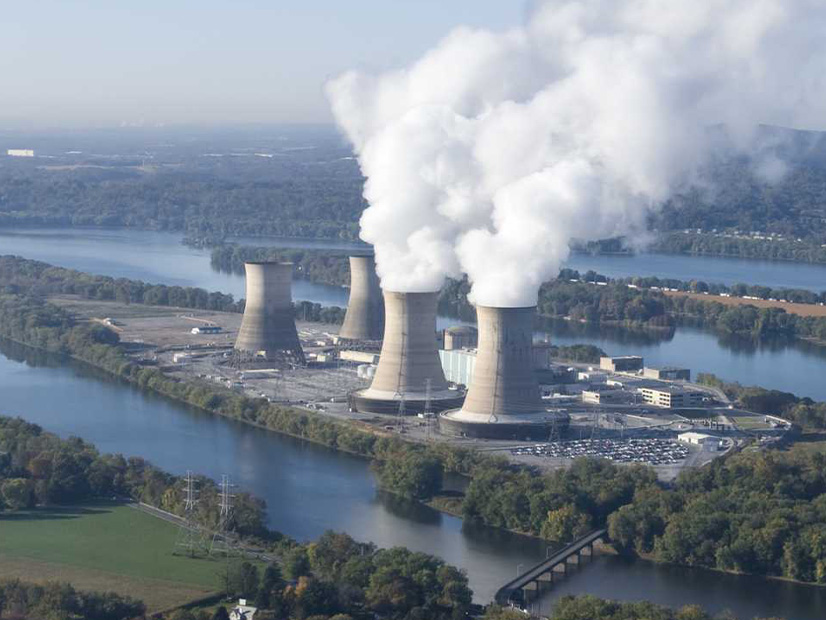
For example, Constellation Energy plans to reopen Three Mile Island Unit 1 under a power purchase agreement with Microsoft to sell about 835 MW to serve the company’s data centers. (See Constellation to Reopen, Rename Three Mile Island Unit 1.)
Amazon, meanwhile, has committed $1 billion to early stage development work, said Nate Hill, head of energy policy at Amazon.
“From Amazon’s perspective, we’re willing to put our capital at risk to help get some of these early stage projects off the ground,” Hill said. “Because, I mean, when you think about it, like some of the costs of these projects could be more than the market cap of some utilities. So, there’s going to have to be risk sharing.”
Katie Rogers, manager of reliability assessments at WECC, noted that the numbers could change as WECC learns more about how much of the demand will be realized.
Still, the industry must move toward holistic grid planning and share the burden, Rogers said.
“It feels very much like that we maybe need to have a different approach to how we plan the grid, and maybe not looking at, you know, one person carrying or one subset of people carrying all the risk if it has broader implications to the grid,” Rogers said. “It needs to be looked at holistically with everything.”