CARMEL, Ind. — After years of its Independent Market Monitor critiquing MISO for making too many out-of-market actions to tame congestion, the IMM congratulated the RTO for dramatically reducing such actions over this winter’s sustained cold.
Speaking at the Market Subcommittee’s meeting April 10, IMM Carrie Milton said MISO operators’ manual actions for congestion management fell dramatically over the winter. She said despite record peak loads over the winter, MISO trusted its markets more and paid minimal uplift payments. (See MISO: Better Preparations Clinched Winter Storm Operations.)
The IMM has long advocated for the MISO control room to allow market-based interventions rather than operators making what it calls inefficient, out-of-market actions to manually redispatch or cap generation output.
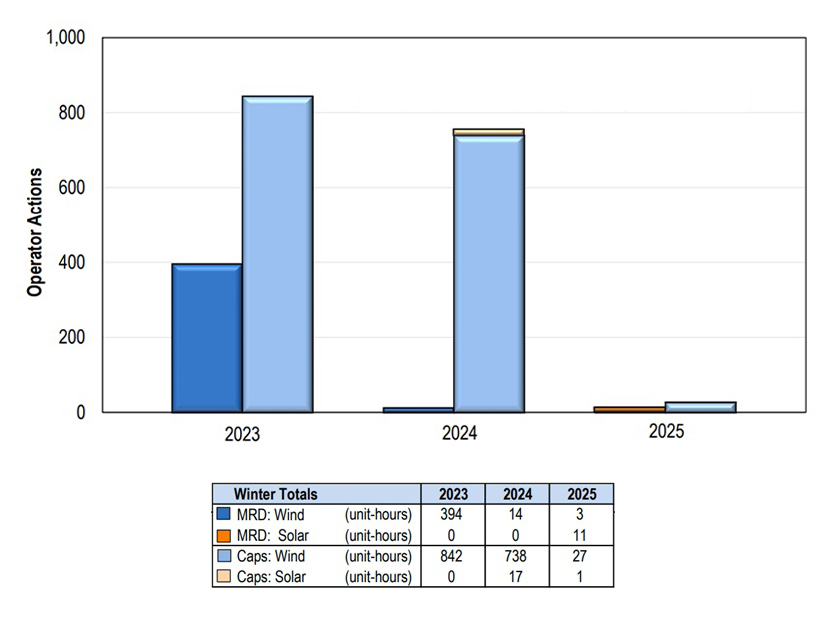
By the IMM’s count, MISO operators ordered just 42 manual redispatches and generation caps over winter 2025, compared to 769 in winter 2024 and 1,236 in winter 2023 that the IMM previously cataloged.
“It almost looks like we’re missing data,” Milton said of the IMM’s striking graph comparing the instances of actions in winter 2023, 2024 and 2025. Milton called it a “very impressive result.”
Milton said MISO has worked to make better data available and has congestion management guidelines among control room operators.
Stakeholders asked if the IMM believed that the minimal out-of-market actions could be an enduring trend.
Milton said she thought MISO can reduce its extraneous actions in the long run, even if actions outside of the market tick up during spring. She said maintenance outage season combined with volatile spring weather and high wind likely will lend itself to more out-of-market interventions March through May.
“We understand if we don’t see the same result in the spring quarter,” Milton said.
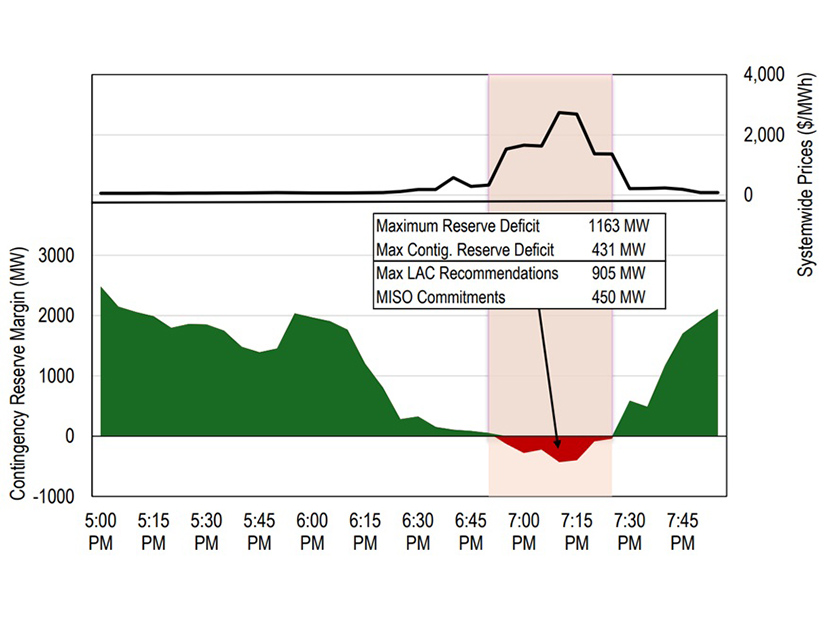
Finally, Milton advised the MISO operations team to put more trust into its look-ahead commitment tool to call up units. If control room operators had followed the tool’s recommendation to procure and committed an additional 905 MW around 7 p.m. ET on Feb. 19, they could have avoided a contingency reserve shortage that day, Milton said. MISO committed only 450 MW, she said.