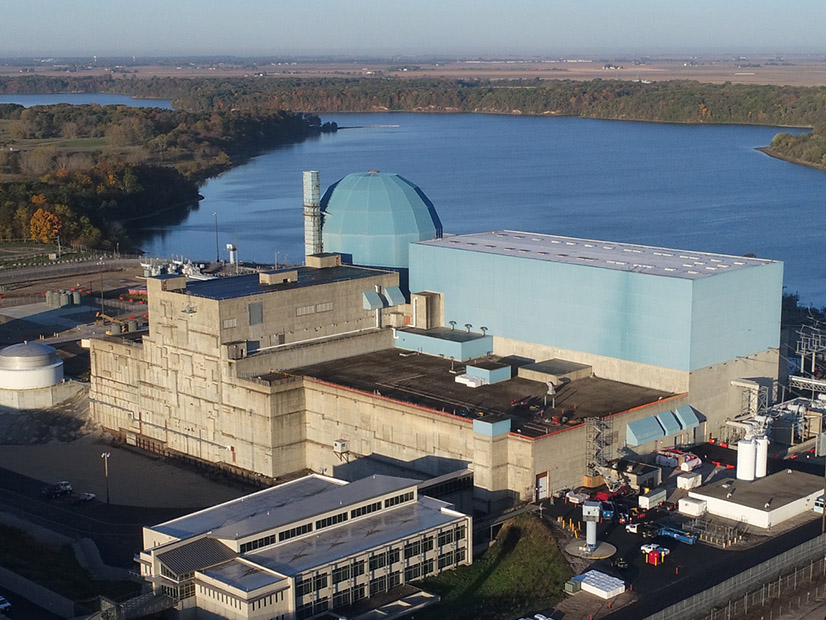
Meta signed a 20-year power purchase agreement for the output of Constellation Energy’s 1,121-MW Clinton nuclear plant in Central Illinois, the companies announced.
Meta has signed a 20-year power purchase agreement for the output of Constellation Energy’s 1,121-MW Clinton nuclear plant in Central Illinois, the companies announced June 3.
The deal will begin in June 2027, upon expiration of the state’s zero-emission credit program that has been subsidizing operation of the plant. The PPA in effect will replace the ratepayer-funded ZECs.
In their announcements, Constellation and Meta hailed the deal as a landmark market-based solution to keep older nuclear facilities online, producing high-capacity-factor baseload power without carbon emissions.
With 38 years in service, Clinton is among the youngest U.S. commercial reactors. It was operating at a continuing loss in the mid-2010s and was slated for early retirement, but Illinois created the ZEC subsidy in 2017, returning it to profitability.
The facility’s license extends through April 2027. Constellation in 2024 filed an application with the Nuclear Regulatory Commission for a 20-year renewal, with the caveat that how long it actually operated the reactor would depend on the economics and on policy support.
As part of the agreement with Meta, Constellation will perform uprates that will add 30 MW to the existing 1,092-MW nameplate capacity of the facility.
Constellation now is considering seeking an extension of Clinton’s existing early site permit or seeking a construction permit for an advanced reactor or small modular reactor to be co-located with the existing facility, located in Zone 4 of MISO’s capacity market.
In September 2024, the company announced a PPA with Microsoft for output from the Crane Clean Energy Center — the former Three Mile Island Unit 1, which it retired in 2019 for economic reasons. The company had begun the decommissioning process but is working to restart the reactor.
In Constellation’s news release, CEO Joe Dominguez asked rhetorically why Three Mile Island had shut down in the first place, and said Meta had asked a similar question about the future of Clinton.
“They figured out that supporting the relicensing and expansion of existing plants is just as impactful as finding new sources of energy,” Dominguez said. “Sometimes the most important part of our journey forward is to stop taking steps backwards.”
“Securing clean, reliable energy is necessary to continue advancing our AI ambitions,” said Urvi Parekh, Meta’s head of global energy.
Meta also provided an update June 3 on its advanced energy ambitions, as it seeks to match the electricity used in its data centers with 100% clean and renewable energy. It said that as it considers emergent technologies, it recognizes the value of the firm, reliable capacity offered by nuclear fission.
The tech giant said it has received more than 50 qualified submissions in response to its nuclear request for proposals and is in final discussions with shortlisted developers for potential projects.
Meta is focusing on sites where nuclear development can be advanced with speed and certainty as it tries to assemble a 1- to 4-GW portfolio of projects. It hopes to finalize the process this year.
All of this, and the Constellation PPA, are intended to send signals of support and demand to the nuclear sector, Meta said: “Our investments in nuclear energy ensure that we will have the robust energy infrastructure needed to power the AI innovations that are set to spark economic growth and prepare our communities for the future.”