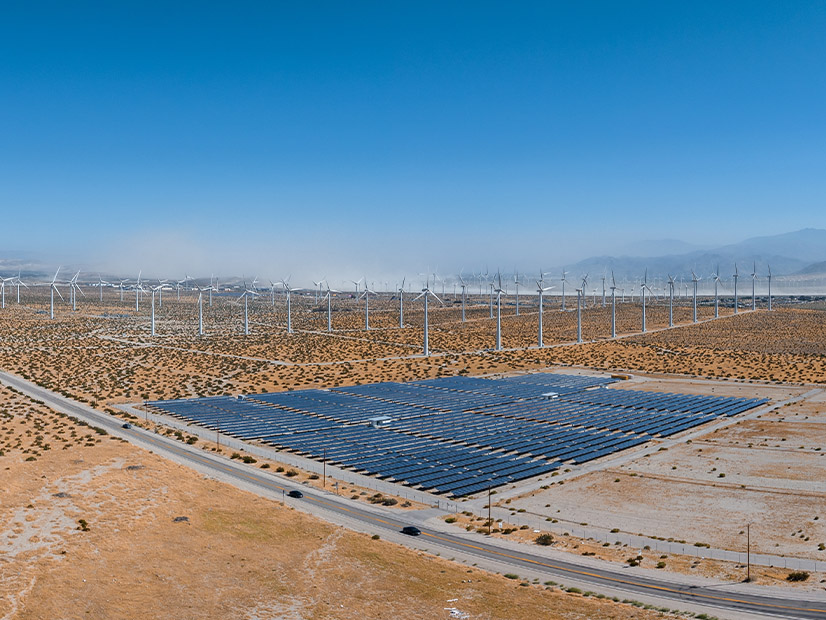
Every Department of Interior action pertaining to wind and solar energy development now must be reviewed and approved by the Office of the Interior Secretary — after two subordinate offices separately have reviewed them and signed off.
The new policy continues the Trump administration’s assault on renewable energy and sets up a potential logjam for any facilities proposed to be built on federal land.
An internal memo lists 68 specific actions subject to the new protocol, ranging from lease sales and records of decision to tribal impact reviews and visual impact assessments. The 69th and final entry on the list is a catchall: “any other similar or related decisions, actions, consultations or undertakings.”
Interior also said it would “eliminate longstanding right-of-way and capacity fee discounts for existing and future wind and solar projects, bringing an end to years of subsidies for economically unviable energy development.”
This is the polar opposite of the administration’s moves to speed and relax regulatory oversight for favored energy resources such as crude oil, natural gas, coal and uranium. In April, Interior went to an emergency footing, setting a 14-day target for standard environmental assessments of the favored energy projects and a 28-day time frame for more extensive environmental reviews.
The memorandum about the new wind and solar protocol was issued internally July 15. It was leaked to the media soon after, then officially announced July 17.
The American Council on Renewable Energy said: “Today’s announcement by the Department of the Interior amounts to a tsunami of red tape and road blocks for private investment in wind and solar energy projects. Requiring Interior Secretary Doug Burgum’s personal approval on at least 69 distinct permitting actions on potentially hundreds of projects represents an unnecessary and inefficient approach to permitting that will lead to significant delays and uncertainty.”
In the July 17 news release, acting Assistant Secretary for Lands and Minerals Management Adam Suess repeated the administration’s position on wind and solar, which provided 14% of utility-scale generation in the United States in 2023 and accounted for 78% of capacity additions in 2024.
“American energy dominance is driven by U.S.-based production of reliable baseload energy, not regulatory favoritism towards unreliable energy projects that are solely dependent on taxpayer subsidies and foreign-sourced equipment,” Seuss said.
Interior took the opposite tack during the Biden administration, cutting lease fees for renewables development on public land and streamlining oversight. In December 2024, Interior said its Bureau of Land Management had approved 45 renewables projects on public lands with a total capacity of 33 GW since January 2021 — well exceeding the 25 GW goal.
In January 2025, shortly before Biden left office, the National Renewable Energy Laboratory released an analysis showing federal lands hold the potential for 5,750 GW of utility-scale photovoltaics, 975 GW of geothermal and 875 GW of wind generation.
Boosting fossil fuels and sidelining renewables was a central plank in Trump’s campaign platform. He began to deliver hours after his inauguration, declaring a national energy emergency and inflicting limiting uncertainty on the struggling offshore wind industry.
The One Big Beautiful Bill Act he engineered through Congress inflicts sharp new limits on wind and solar, and his follow-up executive order directed Interior and other agencies to use the full extent of their powers to make those limits stick. (See Trump Executive Order Targets Renewable Energy Tax Credits and U.S. Clean Energy Sector Faces Cuts and Limitations.)
This led directly to the July 15 memo to Interior staff. The July 17 news release states: “This enhanced oversight will ensure all evaluations are thorough and deliberative.”
This language sets the stage for slow-walking anything related to wind and solar that falls under Interior’s review — which of course is exactly what conservatives accused the Biden administration of doing for four years with fossil fuel proposals.
Interior said in the news release the directive would “level the playing field” for dispatchable and secure energy sources such as “clean coal and domestic natural gas” after the assault on them in the Biden years.
ACORE was not the only organization unhappy with the changes.
The Solar Energy Industries Association said: “There’s no question this directive is going to make it harder to maintain our global AI leadership and achieve energy independence here at home. It is deeply unfortunate that this administration’s energy policy continues to favor specific technologies rather than advance true American energy dominance.”
The American Clean Power Association called the measure obstruction, not oversight: “In stark contradiction to the administration’s commitment to tackling bureaucracy, this directive adds three new layers of needless process and unprecedented political review to the construction of domestic energy projects. The Secretary of the Interior will apparently now be personally reviewing thousands of documents and permit applications for everything from the location and types of fences to the grading of access roads on construction sites across the country.”
The National Resources Defense Council said the directive is a deliberate attempt to snuff out renewable energy on public lands: “Interior is putting a shadow ban on the new energy projects we need more than ever, delivering a shameless gift to the fossil fuel industry. Hundreds, if not thousands, of individual clean energy project-level decisions will now be left to the whims of a secretary who is already handing out every free pass possible to polluters.”