The New York Department of Public Service proposes the state extend its subsidy program for its commercial nuclear facilities from 2029 to 2049 to help ensure the operators of America’s two oldest reactors seek to relicense them.
The move was not a surprise: Nuclear generation has less-than-unanimous support in the Democratic-led state, but there is wide recognition that the four operating reactors are a critical part of New York’s effort to reduce carbon emissions and an important part of the energy portfolio.
The Public Service Commission took steps May 15 to reinvigorate New York’s lagging progress on its clean energy initiatives (Case 15-E-0302), including a neutrally worded directive to the DPS staff to evaluate how a continuation of the nuclear Zero Emission Credit program might be structured. (See N.Y. Moves to Boost Lagging Clean Energy Development.)
The staff submitted the ZEC report July 31. It recognizes the economic and environmental importance of the existing nuclear fleet and recommends continuing the ZEC program with the same formula methodology and general structure, though with some revisions and potential for early termination, should the parameters on which it’s based change significantly. A public comment period will open for the report.
From the 2017/18 budget year through 2023/24, $3.69 billion in ratepayer-funded ZECs have been paid to nuclear operators. The program terminates at the end of the 2028/29 budget year; the staff proposal would extend it to 2048/49.
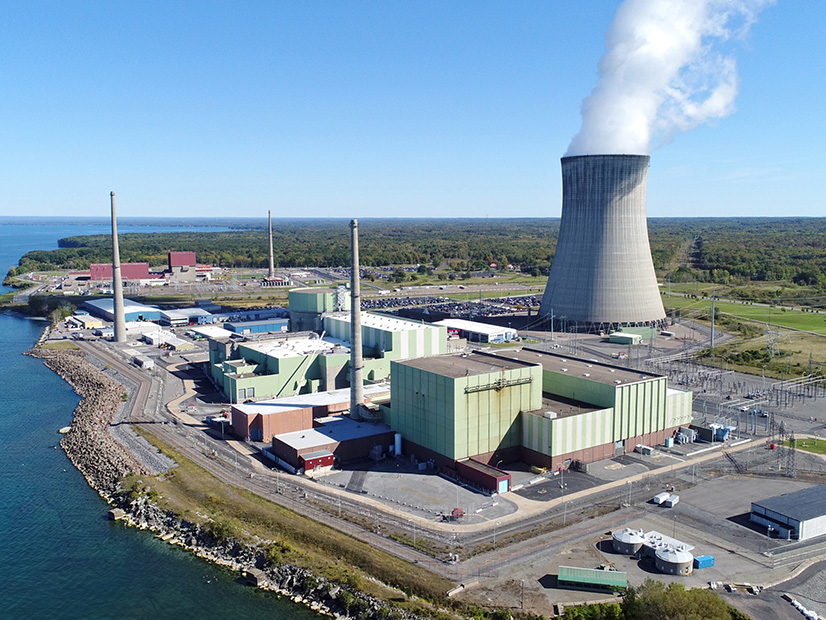
Constellation Energy’s Ginna, FitzPatrick and Nine Mile 1 and 2 reactors provided 22.2% of the electricity produced in New York in 2023 and nearly half its emissions-free electricity. Comparable fossil-fired generation would emit about 15 million tons of carbon per year.
The long-running state plan to bring large amounts of emissions-free wind and solar online has been progressing slowly and is facing significant new challenges under the Trump administration.
Further, these renewables are intermittent and highly variable — particularly solar, which drops to single-digit capacity factors in New York’s cloudy winters. By contrast, the four nuclear reactors have capacity factors in the mid 90% range.
They also are expensive to operate. Then-owners Entergy and Exelon made plans to shut down FitzPatrick and Ginna in the mid-2010s because they were not economical, and Nine Mile was facing the same pressures, the report notes. This was the impetus for the ZEC program.
Another issue facing New York’s fleet is its age. The reactors have been in service for an average of 50 years, and Nine Mile Unit 1, which entered commercial service in December 1969, has the distinction of being the nation’s oldest operating reactor.
Its license, already renewed once, will expire in August 2029, and Constellation has an August 2026 deadline to apply for a second renewal. Ginna’s license expires in September 2029. It is the nation’s second-oldest operating reactor, and the deadline to seek relicensing is September 2026.
The decision to invest in such facilities or continue their operation typically relies on certainty that the investment will be recouped, whether through public subsidies or private power purchase agreements. The 2049 sunset date in the new ZEC proposal is timed to the potentially extended operating life of Nine Mile 1 and Ginna.
The authors of the DPS staff proposal concluded by saying: “Staff recognizes the complexity in extending a 20-year forward-looking program that both protects and provides the best value to ratepayers while ensuring the continued operation of necessary zero-emission nuclear resources. Staff believes this proposal effectively balances the interests of ratepayers and ensures the Upstate nuclear facilities pursue a subsequent license renewal.”
Constellation and New York in January said they are collaborating to seek funding for early permitting for one or more advanced nuclear reactors that would be co-located with Nine Mile.
In June, Constellation applauded Gov. Kathy Hochul (D) on her announcement that the state would seek to add at least 1 GW of advanced nuclear capacity to the grid. (See N.Y. Pursuing Development of 1-GW Advanced Nuclear Facility.)
“It is yet another recognition of nuclear energy’s critical role in achieving the nation’s leading clean energy goals,” Constellation said. “We look forward to working with the governor and state leaders to ensure nuclear energy continues to power economic growth and a clean, affordable and reliable energy future for New York.”