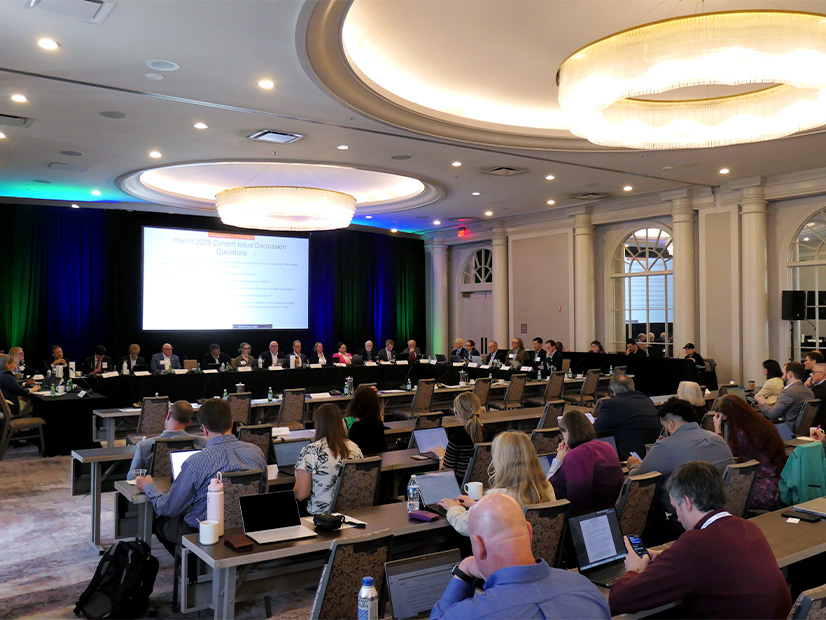
MISO stakeholders have adopted the spirit of MISO’s new code of conduct into their comprehensive rulebook while adding rules that empower committee chairs to shut down rude behavior or order attendees out of conference rooms.
MISO’s Steering Committee voted to include rules similar to MISO’s code of conduct in the Stakeholder Governance Guide at an Aug. 5 meeting.
A draft version of the guide now provides a “Respectful Conduct in Stakeholder Meetings” section that calls for “a foundation of mutual respect, professionalism, fair debate and dialogue.” It details a zero-tolerance policy for name-calling, sarcastic comments, demeaning remarks, repeated interruptions and disruptive behavior. MISO’s code of conduct, introduced in early July, similarly forbids rude or callous language, deliberate meeting disruptions or disregarding committee chairs’ instructions. (See New MISO Stakeholder Code of Conduct Forbids Rude or Callous Language.)
MISO Reliability Subcommittee Chair Ray McCausland, of Ameren, said while MISO published its own conduct rules, the list to be included in the Stakeholder Governance Guide is written by stakeholders and considered separate from MISO’s. The MISO Code of Conduct is set to be included in an appendix to the Stakeholder Governance Guide.
Steering Committee Chair and ITC’s Brian Drumm said stakeholders can think of the code as a notice to be on their “best behavior.”
The guide’s more detailed language that largely tracks MISO’s code replaces years-old and less specific conduct language that laid out MISO’s grounds for stakeholder removal due to abusive or disruptive behavior. The new insert goes a step further than MISO’s new code and confers responsibility on committee chairs and vice chairs to quell unruly meetings.
The guide says chairs and vice chairs can:
-
- Call a meeting participant to order “immediately upon a breach of decorum.”
- Warn an individual about consequences for continued disruptions.
- Refuse to recognize a participant “until order is restored.”
- Order a participant to leave for the remainder of a session.
- Initiate disciplinary procedures, “which may include formal censure, suspension or removal from the stakeholder group.”
“These rules exist, not to silence disagreement, but to preserve a space where all voices can be heard without hostility or harassment,” the guide’s draft wording concludes.
Market Subcommittee Chair Tom Weeks, of the Michigan Public Power Agency, said while he supports “civil and professional discourse” in meetings, he’s heard concerns from stakeholders that the code and accompanying guide changes could stifle conversation because some stakeholders’ points might be perceived as intimidating. He said while he didn’t oppose the new wording, stakeholders’ concerns are not “overblown.”
“We don’t want to swing the pendulum to the other side where people don’t feel free to make substantive comments,” Weeks said. He asked stakeholders to keep in mind that some stakeholders can deliver comments with more passion and enthusiasm than others.
The revisions concerning conduct were part of a larger batch of edits to MISO’s Stakeholder Governance Guide, which is altered as stakeholders deem necessary. The Steering Committee either adopted suggested edits and sent them along for final review from MISO’s Advisory Committee or determined that certain changes needed more refinement and sent them back to the Stakeholder Governance Working Group, which drafted the changes.
The Steering Committee did not approve another edit to the guide that would have allowed MISO itself to present motions during stakeholder meetings. Some questioned the appropriateness of MISO raising voting motions.
McCausland said the intent of the change was to spell out that MISO could introduce a motion but that a stakeholder is required to move such a motion to the floor for a vote. Some Steering Committee members said the wording wasn’t clear, and the committee ultimately sent the item back to the working group for revision.