Despite a state mandate to implement dynamic pricing, two of California’s publicly owned utilities told regulators they’re not ready to make the leap to rates that change hourly or more often.
The two utilities — Sacramento Municipal Utility District (SMUD) and the Los Angeles Department of Water and Power (LADWP) — outlined the challenges of dynamic pricing in reports submitted to the California Energy Commission.
The reports are intended to show utilities’ compliance with the CEC’s load management standards, which include a requirement to offer customer rates that can respond to hourly or sub-hourly price signals.
The commission on Aug. 13 approved compliance plans from SMUD and LADWP, as well as from two community choice aggregators: the Clean Power Alliance of Southern California and Ava Community Energy Authority, which serves the East Bay.
The dynamic pricing requirement is based on the idea that electricity customers can use smart devices, such as thermostats, water heaters and EV chargers, to reduce or shift their electric loads in response to price or other signals.
In addition to saving money for customers, the rates may encourage the use of energy at off-peak hours, improve grid reliability, decrease the need for new electrical capacity, and reduce fossil fuel consumption and greenhouse gas emissions.
SMUD, which was the first utility in California to implement time-of-day pricing, said in its plan that it is “fully supportive of the goals of the LMS regulations.”
“We are focused on scaling up programs, including programs that can help reduce the need to purchase costly resource adequacy and to avoid the need to upgrade neighborhood transformers as EV charging loads grow,” Katharine Larson, SMUD’s regulatory program manager, told the commission.
But with projected net annual costs of $2.4 million to $3.7 million to implement hourly or sub-hourly pricing, dynamic pricing wouldn’t be cost-effective, SMUD said.
Customer Interest Uncertain
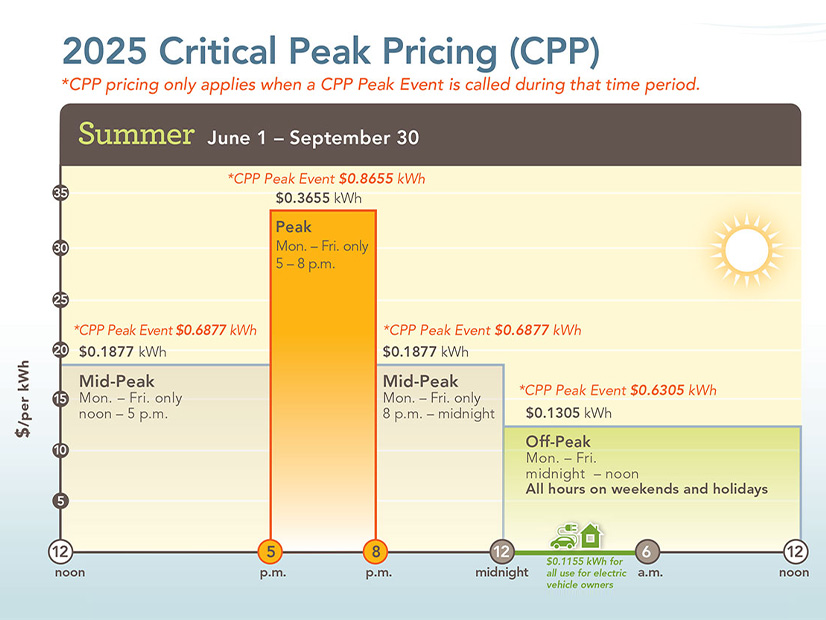
SMUD was also concerned about a potential lack of interest in such a program. The utility cited its experience with its critical peak pricing (CPP) plan, in which customers agree to pay a higher rate when the utility calls a “peak event” in exchange for discounted rates at other times.
The peak events can occur at any time of day during the summer and can last from one to four hours. Program participants must allow automatic adjustments of smart devices enrolled with SMUD.
After two years of active recruitment for CPP, fewer than 700 customers have signed up for the program.
The commission approved SMUD’s compliance plan with the condition that the utility provides an updated cost-effectiveness analysis for dynamic pricing by August 2028.
In its compliance plan, LADWP said implementing dynamic rates by the load management standard’s April 1, 2026, deadline wouldn’t be feasible and would cause an “extreme hardship” for the utility.
LADWP doesn’t have advanced metering infrastructure needed to implement dynamic rates, but its plan includes other programs to encourage customers to shift their loads. Those include an electric vehicle managed-charging program.
Among the CCAs, Ava said it doesn’t yet have enough information to know whether dynamic rates would be cost-effective or benefit customers.
Ava said “significant uncertainties exist” regarding the potential for load-shift under dynamic pricing, customer acceptance of a complex new rate and administrative costs of the program. To help answer those questions, Ava is participating in a dynamic pricing pilot program with PG&E.
Similarly, the Clean Power Alliance plans to participate in Southern California Edison’s expanded dynamic rate pilot through 2027.
Customizing Compliance
The commission’s vote Aug. 13 follows compliance plan approval for six other utilities in May. The commission will consider plans from another nine CCAs at a future meeting.
Commissioner Andrew McAllister said CEC staff had done a good job in “almost customizing” the implementation of the load-management standards for each utility, “responding to the realities on the ground.”
“We have a big, diverse state,” McAllister said. “We’re doing something new; we’re sort of creating a new playing field.”
The CEC approved an update to its load management standards in October 2022. (See California Moving to Dynamic Pricing for Retail Customers.)
In addition to requiring dynamic pricing, the update directs utilities to maintain up-to-date rates in a database called the Market Informed Demand Automation Server (MIDAS).
Utilities also must develop a standard tool to support third-party services’ access to rate information for their customers. The commission voted to extend the deadline for submitting the tool to May 8, 2026.