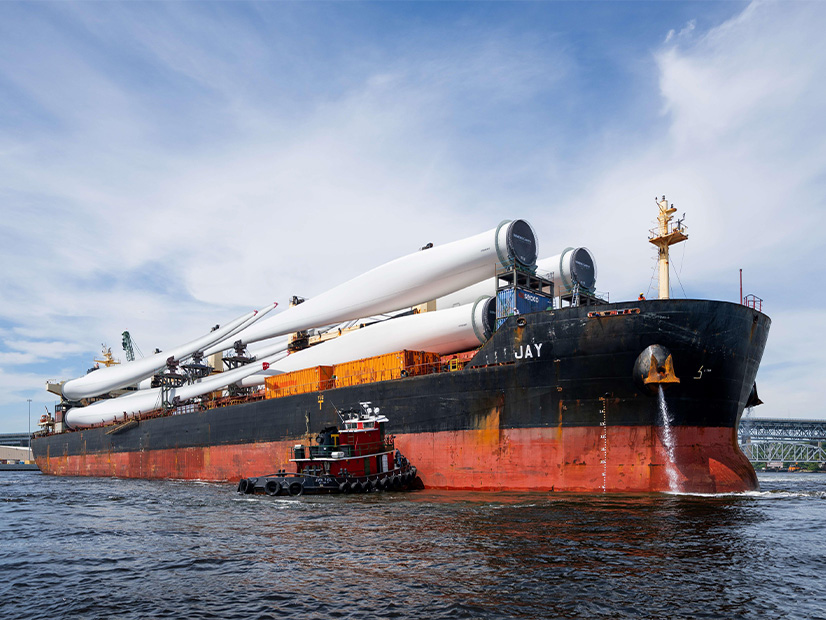
The Trump administration has slapped Ørsted with a stop-work order on Revolution Wind, a 704-MW project off the New England coast that is 80% complete.
The Aug. 22 order by the Bureau of Ocean Energy Management cites national security interests and potential interference with reasonable uses of territorial waters.
It is the latest move by the administration to thwart renewables development, and one of the harshest.
President Donald Trump delivered a pro-fossil, anti-renewable message during his campaign but reserved a particular contempt for “windmills.” Hours after his inauguration Jan. 20, he delivered on his rhetoric, directing a halt to future offshore wind leasing and a review of existing offshore wind permits.
Acting BOEM Director Matthew Giacona cited that Jan. 20 memorandum in his letter to Ørsted North America on Aug. 22. He forbade further activity on the Offshore Continental Shelf until BOEM completed a review.
Ørsted said later Aug. 22 it would comply with the order and is evaluating all options in a range of scenarios, including legal action.
It said the multibillion-dollar project was 80% complete, with 100% of turbine foundations and 45 of 65 of turbines installed. It had been targeting start of commercial operation in the second half of 2026; the 704-MW facility would send emissions-free electricity to Connecticut and Rhode Island.
During an Aug. 11 conference call with financial analysts, CEO Rasmus Errboe was asked if he was certain the Trump administration would not try to block Revolution or Ørsted’s other active project, the 924-MW Sunrise Wind, which is targeted for completion in 2027.
Errboe declined to speculate.
The administration slapped a similar stop-work order on Empire Wind 1 in April, causing hundreds of millions of dollars in losses for its developer, Equinor. (See Feds Move to Halt Construction of Empire Wind 1 and Equinor Takes $1B Impairment on U.S. Offshore Wind.)
The move against Empire, a project that was fully permitted after years of review, sent shock waves through the renewables industry. There was widespread speculation that it was an attempt to twist the arm of New York’s governor to allow permitting of two natural gas pipeline projects the state previously had rejected, as New York is counting on Empire (and Sunrise) as part of its decarbonization strategy. (See BOEM Lifts Stop-work Order on Empire Wind.)
But the Empire stop-work order never really was explained, other than a vague mention of flawed science and rushed approval. Journalists who requested a copy of a study that purportedly justified the move were repeatedly rejected, then were provided a fully redacted copy four months later.
Errboe cited the Empire stop-work order as a turning point — it immediately made Ørsted’s attempts to land a financial partner for Sunrise untenable, causing Ørsted to announce a need to raise $9.3 billion, causing its stock value to plunge. (See Ørsted to Raise $9.3B, Self-finance Sunrise Wind.)
The company said in a news release Aug. 22 it will in due course update the markets on the potential impact of this latest setback.
Giacona in his letter said BOEM is seeking to address “concerns related to the protection of national security interests” and “interference with reasonable use” of the offshore waters.
He did not elaborate, but both points speak to some of the many policy moves the Trump administration has taken to stop wind power development:
The Department of Commerce on Aug. 13 initiated an investigation to determine the effects on national security of imports of wind turbines and their parts and components.
BOEM’s parent agency, the Department of the Interior, announced a sweeping overhaul of offshore wind rules Aug. 7; an order to rein in wind and solar projects Aug. 1; cancellation of wind energy areas designated on 3.5 million acres of seabed on July 30; and an end to preferential treatment of wind energy July 29, among other steps. (See Dept. of Interior Launches Overhaul of OSW Regs, Trump Administration Takes Another Swing at Wind Power, and Feds Pile on More Barriers to Wind and Solar.)
Late Aug. 22, the National Ocean Industries Association decried this latest attack: “Revolution Wind is already under construction and nearly complete, representing years of planning, billions in private investment and significant progress for America’s offshore energy supply chain. Any pause or uncertainty at this stage could ripple across jobs, contracts and communities already benefiting from the project.”
The Oceantic Network called it an illegal move that threatened American jobs and energy dominance: “This dramatic action further erodes investor confidence in the U.S. market across all industries and undermines progress on shared national priorities — shipyard revitalization, steel and port investments, and energy dominance. In fact, halting work on Revolution Wind will drive up energy costs for consumers, idle Gulf Coast vessel operators that have invested hundreds of millions of dollars in new or retrofitted vessels and jeopardize the livelihoods of union workers.”