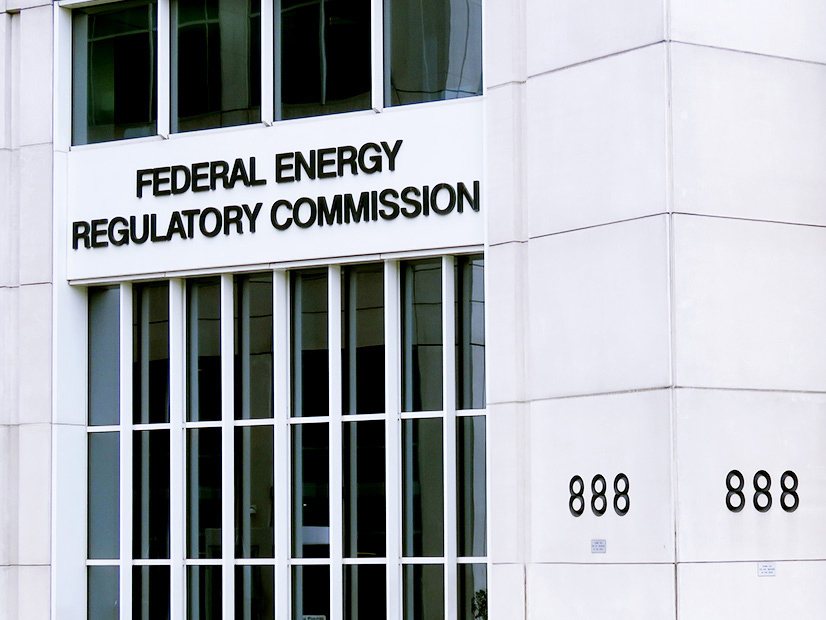
FERC issued a final rule and related Notice of Proposed Rulemaking on Oct. 1 to start “sunsetting” 53 outdated, seldomly used and duplicative regulations in response to an executive order from President Donald Trump (RM25-14).
Issued in April, the executive order, “Zero-Based Regulatory Budgeting to Unleash American Energy,” directed FERC and other energy-associated agencies to conditionally sunset regulations in an effort to trim the Code of Federal Regulations, which approaches 200,000 pages and “has imposed particularly severe costs on energy production.” (See FERC Faces Challenge in Balancing Executive Order and Legal Requirements.)
“Today’s steps are a common-sense commitment to a fast and fair regulatory process,” FERC Chair David Rosner said in a statement. “Periodically reviewing, updating and streamlining the commission’s regulations helps ensure that they continue to align with our statutory mandates and are focused on high-value activities that strengthen our nation’s energy system.”
The final rule gives parties a chance to comment on each of the 53 identified regulations, and if parties file “significant adverse comments” against sunsetting any of them, they would go into the NOPR proceeding, in which FERC can respond to those concerns.
A direct final rule is a way to expedite rulemakings and is used for noncontroversial regulatory amendments, allowing an agency to issue a rule without having to go through the review process twice (a NOPR first, then a final rule). The public still gets a chance to challenge the agency’s view that its proposed changes are not controversial.
“Because the commission does not anticipate significant public comments on this rulemaking and considers it to be noncontroversial, the commission is using the ‘direct final rule procedure’ for this rule,” FERC said.
If FERC gets any significant adverse comments on any part of the direct final rule, then it will publish a document removing any such part of the action and address them via the NOPR process.
The commission defines an adverse comment as one where a party explains why the action, or part of it, would be inappropriate, including challenges to its underlying premise, or how it would be ineffective or unacceptable without a change. Comments would have to provide a reason sufficient to require FERC’s substantive response in the notice-and-comment process.
FERC will have to respond if a comment causes it to re-evaluate or reconsider its position and to conduct additional analysis; if it raises an issue serious enough to warrant substantive response or to clarify/complete the record; or if it raises a relevant issue the commission had not previously addressed.
The sunsetting of each of the 53 regulations works independently so if any are moved into the NOPR proceeding, FERC can go ahead and sunset the noncontroversial rules.
The executive order gave FERC an independent justification for starting the rulemaking, but FERC noted that it did not direct the commission to rescind or reissue any particular regulation, nor alter its statutory responsibility to issue, alter or rescind rules in line with its core mission of ensuring reliability in an economically efficient manner.
“The commission has further determined, based on its independent policy judgment, that the sunset rule adopted herein is appropriate,” FERC said in the final rule. “Regulatory housekeeping, including streamlining and updating our regulations, helps ensure that they align with our statutory mandates, thus alleviating regulatory burdens and allowing regulated industries to focus more deliberately on the types of high-value projects that will augment and strengthen the nation’s energy supplies.”
The actual regulations proposed for sunset run the gamut of FERC’s authority, and many of them have not been used in decades.
One covers “regional transmission groups,” which have long since been replaced by ISOs and RTOs, FERC said. The commission proposed to remove “ratemaking treatment of the cost of emissions allowances” because most generators recover those costs through market-based rates.
One rule up for sunset implements the Powerplant and Industrial Fuel Use Act of 1978, which required power plants to switch from oil and natural gas to coal but was repealed in 1987. Gas-fired power plants have been the largest source of generation for years.
FERC also proposed to sunset rules on obsolete procedural and filing requirements such as requiring paper filings, which are no longer in general use at the commission.