

By Cihang Yuan
Every day, we push the grid harder — and expect it to keep up. Large new loads like data centers are arriving in clusters, EV sales continue climbing, renewables are growing quickly, and transmission and interconnection timelines run long. In fact, by the end of 2024, nearly 2,300 GW of generation and storage were waiting in interconnection queues.
The default solution to these challenges — building our way out of this only with new generation and higher-capacity wires — is expensive and slow. But there’s another critical lever to consider: managing when electricity is used, not just how much.
Industrial electrification can help ease grid pressures when it is designed and meaningfully incentivized for flexibility. When paired with thermal storage, electrified heat allows facilities to draw electricity when it is most cost-effective and clean and deliver heat whenever needed.
Industrial heat pumps add controllability, while targeted process scheduling and onsite resources can further smooth a facility’s net load. Together, these measures can turn portions of new industrial electrification demand into targeted, verifiable relief at the times and locations the grid needs most.
What’s Stressing the Grid
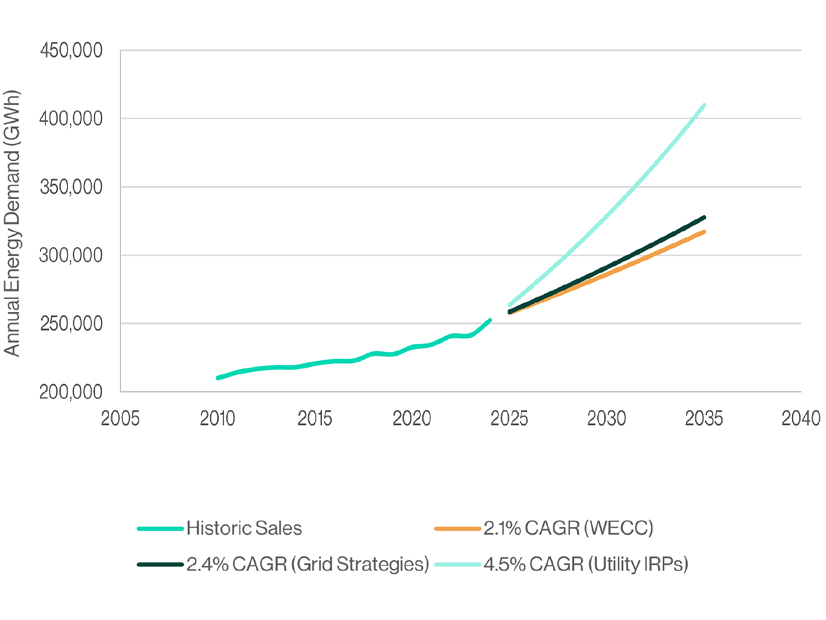
Today’s grid challenges are not just about growth, but about the nature of that growth. Demand is becoming spikier, more concentrated and less predictable.

Fast, lumpy load growth: Electricity demand from data centers is surging and is expected to double or even triple by 2028, according to the DOE projection. This growth arrives in large, geographically concentrated blocks, stressing local capacity and pushing resource adequacy to its limits. This dynamic dramatically elevates the value of locational, time-specific flexibility — the exact kind that flexible industrial loads are well positioned to provide.
Supply-side growing pains: As renewable penetration rises, the grid needs immense flexibility to manage steep ramps, absorb midday solar surplus and reduce costly curtailment. Simultaneously, interconnection backlogs are delaying the supply-side resources needed to meet demand. With the median time from a generation project’s grid request to its operation now at five years, demand-side solutions that can be deployed faster no longer are a luxury, but a necessity.
Peak-driven cost pressure: System peaks drive a disproportionate share of grid costs, from capacity procurement to transmission and distribution investments. Even a modest reduction in peak demand through targeted flexibility can yield significant savings.
Why Industrial Load is Different — and Useful
While data centers and EVs represent significant new loads, industrial facilities offer a unique combination of scale, predictability and inherent flexibility that makes them ideal grid partners.
Orchestrating flexibility at scale: A single industrial facility can offer megawatts of verifiable, dispatchable flexibility. This allows utilities to coordinate with a few large counterparties rather than attempting to aggregate thousands of smaller, less predictable residential devices. While data centers offer similar scale, their uptime and latency requirements limit their flexibility. Industrial processes, by contrast, often are better suited for deeper, more dependable demand-side response.
Harnessing intrinsic thermal flexibility: Most industrial processes rely on heat carried in water, steam or storage media. Electrifying heat and adding thermal storage decouple electricity draw from heat delivery. A thermal battery can be charged during low-cost — and usually renewable-abundant — windows while supplying steady 24/7 process heat from stored energy. This powerful load-shifting — further enhanced by controllable industrial heat pumps, hybrid systems and optimized process scheduling — transforms a constant thermal need into a flexible electrical load, well suited for shaving peaks and filling overnight valleys.
Delivering surgical grid support: Flexible industrial load can provide targeted relief exactly where it’s needed, serving as a non-wires alternative to defer or downsize costly grid upgrades. By adjusting demand at specific substations and during critical hours, these facilities can alleviate local congestion, absorb surplus renewable energy that otherwise might be curtailed and improve overall asset utilization.
What it Will Take to Unlock Flexible Industrial Load
Realizing this vision requires a strategic shift in how utilities, regulators and industrial customers collaborate. The following steps are critical:
Illuminate the path with data: Utilities and grid operators must provide more granular, accessible data on system conditions, such as through public hosting capacity maps. This visibility allows industrial customers to identify locations where the grid can accommodate new load and to right-size their investments in on-site storage and flexible equipment.
Foster proactive collaboration: Unlocking industrial flexibility begins with a transparent exchange of information. Utilities should communicate clearly where and when their systems are constrained and define the attributes of the flexibility they value most. In turn, industrial customers should share their electrification road maps and the operational flexibility they realistically can offer. This shared understanding prevents surprises, enables quicker wins and builds a foundation for scaling flexibility over time.
Price flexibility accurately: The value of flexibility must be reflected in the price of electricity. Regulators and utilities should design rate structures that align more closely with the real-time system value of flexibility. Today, most rates smooth out the real cost volatility between off-peak and peak hours. For flexibility to scale, pricing needs to move closer to reflecting real system conditions. This can be achieved through sharper, more granular time-of-use differentials, locational or congestion-based rate adders, or multipart dynamic rates that reflect real-time system needs. When industry sees the true value of shifting its load, it will invest to capture it.
Modernize demand response programs: For decades, industrial customers have been a critical part of demand response. But most existing programs were built for emergency, event-driven curtailments and haven’t kept pace with what newer technologies like thermal storage and flexible heat pumps can offer. Programs should be created or expanded to value load shifting as much as load shedding. By offering simple enrollment and predictable compensation for services like valley filling and peak shaving, utilities can give industrial customers the confidence to invest in the technologies that make their facilities dynamic grid assets.
Turning New Demand into a Grid Asset
Industrial electrification is coming, and how we choose to integrate it will define the American grid for a generation. Treating this new demand as “just more load” risks billions of dollars in avoidable grid upgrades and continued reliance on fossil-fueled peaker plants.
But a better path is available. For the first time, the very technologies driving new demand — smart heat pumps, thermal storage and advanced controls — also are the tools that can help manage it. By embracing this inherent flexibility, we can turn industry from an electricity consumer into one of the grid’s most reliable partners.
Proactive collaboration gives utilities a dynamic lever to manage system stress, offers manufacturers a competitive edge through lower energy costs and cleaner processes, and provides regulators a pathway to a greener grid without increasing energy costs for consumers. The time for collaboration is now.
Cihang Yuan is the World Wildlife Fund’s senior program officer for climate and renewable energy.


