LITTLE ROCK, Ark. — SPP’s Board of Directors has awarded its eighth competitive project and third in 2025 under FERC Order 1000, a 345-kV upgrade in the Texas Panhandle.
A panel of industry experts designated Transource Oklahoma and Southwestern Public Service as the transmission owners for the project, on a 150-mile line from Beckham County, Okla., to Potter County, Texas.
NextEra Energy Transmission Southwest was the only other bidder on the project in what the panel said were two high-quality proposals.
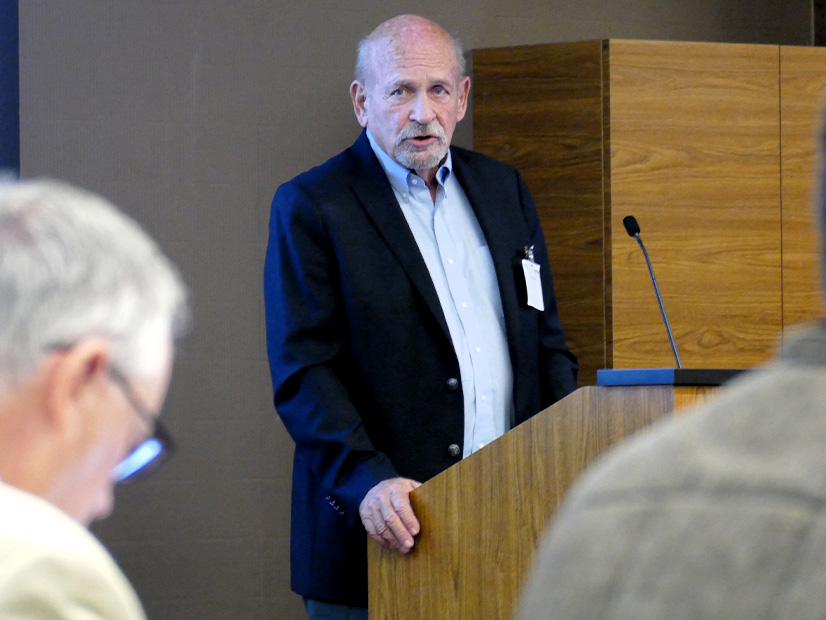
“Both proposals were from highly qualified, experienced entities with a successful history in the design, build and operation of similar and relevant projects,” said Tom Bozeman, chair of the industry expert panel (IEP).
That was apparent in the IEP’s scoring. The panel saw less than 3 points of difference between the two proposals, with NEET Southwest’s bid getting a slightly higher score than the Transource-SPS proposal: 1,088.54 to 1,086. However, Transource and SPS submitted a lower cost, or “present value requirement,” to customers: $248.68 million to $269.53 million.
Bozeman said the panel questioned the results but agreed the small difference between the bids was “reflective of two highly qualified respondents with very similar proposals.”
“We found [the Transource-SPS proposal’s] cost to customers’ savings of almost $21 million to be a distinguishing package,” he said.
SPP staff has given the project an estimated $429.73 million price tag and a projected November 2029 in-service date.
The Transource-SPS bid was the only one to offer a cap on the annual transmission revenue requirement. That also played a part in the IEP’s unanimous decision.
During questions by the board, the IEP said its requirements did not include information on cost caps and how to deal with them. Director Irene Dimitry, who leads an Order 1000 Strategic Review Task Force that is trying to improve the selection process’ effectiveness and reduce the cycle time, agreed more information and analysis is needed.
“There’s this need to make sure we’re getting all the information we need to make an informed decision,” she said. “We have work to do, especially in thinking about the projects that are coming out of the 2025 ITP. What can we do differently moving forward, so that the information is gathered from the bidders and that guidance is given to whoever’s doing the evaluation to deliver the analysis that we need?”
Dimitry said the task force is weighing the use of outside consultants to augment the IEPs and provide additional expertise to ensure they can handle the volume of projects coming out of the 2025 assessment.
“We’re presuming there will be some big projects coming in, including an expectation of our first [competitive] 765[-kV] projects,” she said.
The Members Committee unanimously endorsed the IEP’s recommendation with its advisory vote. The Advanced Power Alliance and Basin Electric Power Cooperative abstained.
The Beckham-Potter project was one of four competitive upgrades that were approved out of the 2024 Integrated Transmission Plan. It is a companion to SPS’ 765-kV Potter County-Crossroads-Phantom project, which also came out of the same ITP assessment but does not directly address any 2024 needs by itself.
Transource and SPS were both involved in the last two winning bids handed out by the IEP. Transource won the 38-mile Mathewson-Redbud project in Oklahoma in May, and SPS was awarded a 20-mile, 115-kV proposal in August. (See SPP Approves 6th Competitive Transmission Project and SPP Board of Directors/Members Committee Briefs: Aug. 5, 2025.)
Admin Fee Reduced in 2026
“We’re going back to the future as it relates to administrative fees,” CFO David Kelley said, unveiling a 2026-2027 budget that includes a nearly 5% reduction in the effective administrative fee (EAF) that members and customers pay for the RTO’s services.
The EAF will drop to 45.7 cents/MWh from 47.9 cents/MWh, effective Jan. 1, 2026, thanks to a net revenue requirement (NRR) of $216.5 million boosted by the RTO’s expansion into the Western Interconnection. The 2025 NRR was budgeted at $204 million, but SPP expects the expansion to add about $16 million of positive NRR in 2026.
Kelley said the Western RTO participants will bring in slightly more than 40 TWh of transmission billing units, about a 9.3% increase, when the market goes live April 1, 2026. That will help offset an 8.7% increase in budgeted operating expenses, from $273.9 million in 2025 to $297.7 million.
The board approved the budget following the MC’s unanimous endorsement. The board also approved a $27.6 million capital allocation to invest in artificial intelligence and associated hardware.
“We are investing in technology to make the organization more efficient and to limit future increases to our administrative fees,” Kelley said, “both from a staffing headcount perspective and outside services and future technology.”
The rate schedules that go into effect Jan. 1 are calculated by the NRR and the billing determinants for each schedule.
“What I’ve seen is the sophistication of our financial planning has increased over the seven years that I’ve been with SPP,” Director Susan Certoma said. “The complexity of the financials has increased also, but David, his team and all those involved in the budget process have been able to translate the complexity into clear and powerful messages, which provide all stakeholders with a clear understanding of the budget.”
Capacity Assessment Appeal
Board members approved Golden Spread Electric Cooperative’s appeal of a rejected tariff change (RR642) that would enable transmission customers and host TOs to access load-hosting capacity assessment in determining the amount of load the existing system can handle without requiring additional network upgrades.
Golden Spread’s Mike Wise brought the same appeal to the Markets and Operations Policy Committee in October, when it received only 29.51% approval. SPP’s TO members united to vote against the change, citing concerns over reliability issues with sharing load-hosting capacity and creating operational risks. (See Golden Spread to Appeal Rejection of Capacity Assessment Change to Board.)
Staff drafted the proposed change to tariff Attachment AQ’s screening process following a recommendation from the Holistic Integrated Tariff Team’s (HITT) 2019 report. It would allow SPP to proactively perform analysis to determine load capacity at each node on the system without incremental investment. Information gathered from the load-hosting capacity assessment would determine whether transmission customers would be required to go through an AQ delivery point network study.
“It’s my understanding that nobody opposes the tool, necessarily; that it’s a point in time where you have potential, available capacity,” Evergy’s Denise Buffington said. “The challenge we had was it should not replace the study, the need for a study, right? The hosting capacity is like a heat map at a point in time, but if you’re actually going to use it to connect something to the system, then the study needs to be performed. It’s not good enough just to rely on this tool.”
“This tool, as laid out, does not bypass the transmission owners’ right to ask for the study. It’s their prerogative,” Wise said. “This is not removing that decision.”
SPP staff said they would continue their work on the tool with the Transmission Working Group. They offered to gather technical feedback, fix the tool and come back to the board with another recommendation.
Members endorsed the successful appeal 21-1, with one abstention. Liberty Utilities voted against the measure.
Change to LTCR Market
The board approved a proposed tariff change (RR697) modifying the language to allow netting of flows in the long-term congestion rights (LTCR) allocation, giving more opportunities to all participants to receive the rights.
The revision request formalizes a policy approved by the Regional State Committee in February and completes one of the last remaining recommendations from the HITT. (See “RA, Congestion-hedging Recs Pass,” SPP Board/Regional State Committee Briefs: Feb. 3-4, 2025 and SPP Board Approves HITT’s Recommendations.)
“We’ve spent a lot of time trying to figure out how to improve our congestion-hedging process. I think this is just another step on that way,” SPP CEO Lanny Nickell said.
Eligible entities can nominate up to 50% of each path under the change and hold any awarded LTCRs for five years. All current awarded LTCRs will remain under the current rules and can be released yearly, if desired.
The MC endorsed the proposal 17-4, with two abstentions. Basin Electric, Nebraska Public Power District, Oklahoma Gas & Electric and Omaha Public Power District all opposed the measure, as did their state utility commissions (Nebraska, North Dakota and Oklahoma) during the RSC meeting.
The board approved three other revision requests that received a single dissenting vote between the RSC and MC:
-
- RR655 establishes clear outage-submission requirements, including definitions, data standards, timelines and rules for submission, extension and updates. Market participants will be required to provide accurate timely outage and capability information; transmission providers will review and potentially deny noncompliant submissions.
- RR707 incentivizes on-site fuel storage by applying a unique class average for resources that provide the capability. Newly constructed thermal resources and those that undergo a primary fuel conversion will be applied with a 0% equivalent forced outage factor (EFOF) for the first winter season; non-NERC registered resources will use class average EFOF for the 2022/23 and 2023/24 winter seasons.
- RR719 aligns cost allocation for deliverability by allowing network resource interconnection service’s delivery portion before the Consolidated Planning Process is deployed to also be eligible for base-plan funding.
Rew, Osburn, Ross Honored
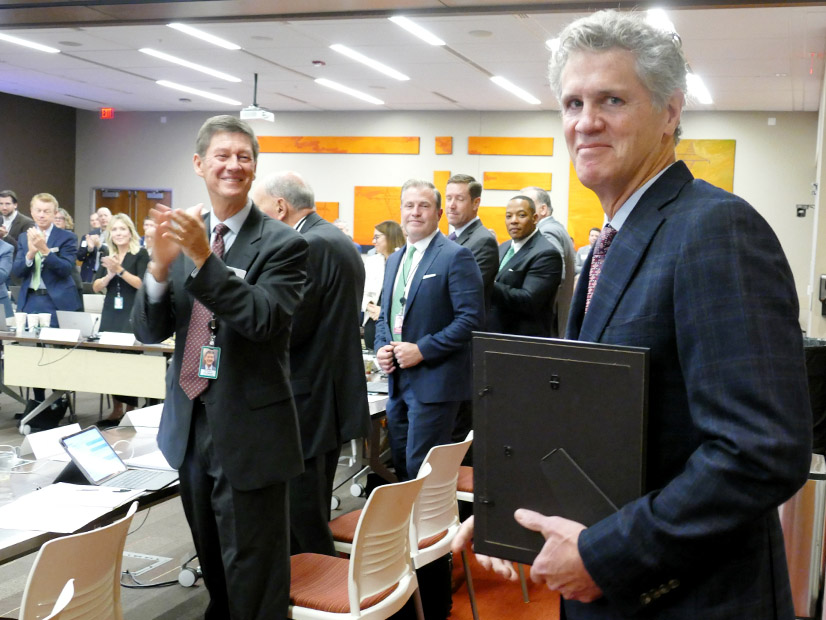
Stakeholders celebrated SPP’s Bruce Rew and Oklahoma Municipal Power Authority’s Dave Osburn, who are both retiring, with several standing ovations.
Nickell presented official resolutions to Osburn and Rew, one of SPP’s original 14 employees. Rew announced his retirement in April after 35 years with the RTO. Osburn is stepping away from the MC but plans to continue participating in the Resource Energy and Adequacy Leadership Team through February 2026.
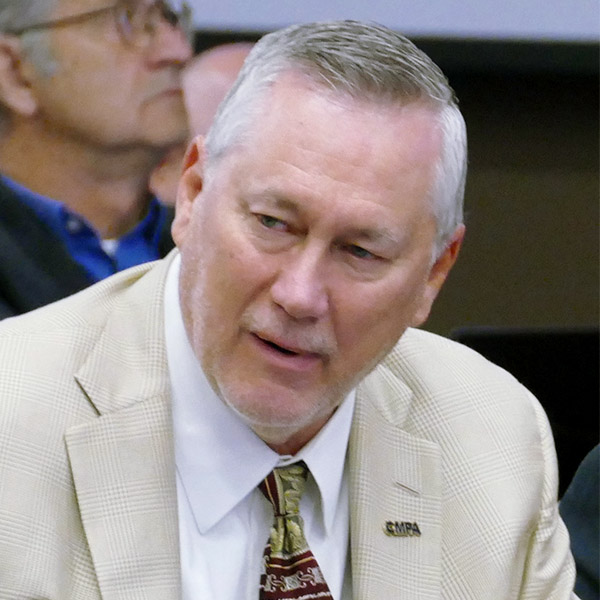
“One of the things that’s always impressed me when I came here and got involved with SPP is while we sometimes have different business goals when it came to the organization and what’s best for the power pool in general, people kind of came together, found a way to collaborate and reach consensus,” Osburn said. “And I just always appreciated what takes place at SPP and how we try to figure out a good solution for everybody, not just our system.”
“When I reflect back, a lot of things have changed, but a lot of things have stayed the same,” Rew said. “One of those things are meetings like this, where the members are passionately committed to making a difference for SPP and setting the future for SPP. Shortly after I started, SPP celebrated 50 years and a short 15 years from now, it will be 100 years for SPP. So I do want an invitation to the 100-year anniversary so I can see what difference this organization has made in the next 15 years while I’m gone.”
Nickell also called out American Electric Power’s Richard Ross, who is giving up the Market Working Group’s chair after 21 years in the seat.
“I want to call [Ross] a super chair because a lot of work was done under his leadership,” he said. “I remember what our Market Working Group secretary said about Richard: ‘You have guided the MWG with a boot, a gavel, a steady hand, sharp insight and a collaborative, feisty spirit that has left an undeniable mark on this group and on SPP’s market evolution.’”
“That’s the truth,” muttered an SPP staffer in the audience.
Nickell said he wanted to give Ross one of the Gold Stars that he hands out for work well done, except for one small problem: “I’ve just never been awarded one.”
Bastone, Hepper, Wright Re-elected to Board
Members re-elected independent Directors Bronwen Bastone, Ray Hepper and Steve Wright to new three-year terms on the board during the Annual Meeting of Members.
Bastone, Wright and Hepper were first elected in 2020, 2022 and 2023, respectively. Hepper, the board’s chair, said Stuart Solomon has agreed to serve as vice chair, effective immediately.
Members also elected four new members and six incumbents to the MC, which acts as a sounding board and provides input to the directors. The four new members and the sectors they represent are:
-
- Brad Hans, Municipal Energy Agency of Nebraska, and Paul Mahlberg, Kansas Municipal Energy Agency (Municipal);
- Chris Matos, Google Energy (Large Retail); and
- Ken Miller, OG&E (Investor-owned Utility).
The re-elected incumbents are:
-
- Buddy Hasten, Arkansas Electric Cooperative Corp., and Jeremy Severson, Basin Electric (Cooperative);
- Brett White, Pine Gate Renewables (Independent Power Producer/Marketer);
- Bleau LaFave, NorthWestern Energy, and Stacey Burbure, Public Service Company of Oklahoma (Investor-owned Utility); and
- Patrick Woods, ITC Great Plains (Independent Transmission Company).
The nominations were brought forward by the Corporate Governance Committee. Each member will serve two-year terms.
Competitive Project Proceeds
His seat at the table not yet warm, OG&E’s Miller pulled from the consent agenda a working group’s recommendation to make no changes to a construction permit for the 345-kV Sooner-Wekiwa competitive upgrade.
The Project Cost Working Group analyzed the project, awarded to Transource Oklahoma in 2020, but determined it couldn’t make a ruling on a reported cost increase that exceeded commitments because Transource included a confidential obligation in the proposal.
Miller said he had concerns about SPP’s competitive process but that his complaint was about not being able to see the cost overruns.
“We don’t know whether they’re reasonable and should be recoverable. We can’t see that,” he said. “I have concerns about the competitive process, but I also have concerns we are signaling to FERC that these cost overruns are reasonable.”
SPP assured the board and members that staff will continue to review the project and address any issues. The project has a Nov. 17 in-service date.
Miller abstained from the vote on the motion, which passed the MC 19-0, with three other abstentions.
The consent agenda, passed in a voice vote, included the violation relaxation limit analysis report; CGC’s nominations of Miller to the Strategic Planning Committee, and Western Farmers Electric Cooperative’s Rodney Palesano and OG&E’s Brad Cochran to the Human Resources Committee; and RR706. The tariff change adds the federal service exemption transfer point as a qualifying source for candidate LCTRs and auction revenue rights.
The agenda also included recommendations to accept new cost estimates for five projects as reasonable, nine out-of-cycle re-evaluations and two withdrawals.