The Organization of MISO States is warning NERC that its possible new resource adequacy standard would tread on states’ planning authority.
In draft comments, OMS said NERC’s potential standard positions it “for the first time beyond resource adequacy assessments, which Congress clearly mandated NERC produce, into enforceable resource adequacy standards” with corrective action plans.
NERC is developing a possible new approach to resource adequacy standards that may set new, actionable instructions to maintain reliability.
The organization opened a comment period through Dec. 10 on its plan, which would have planning coordinators conducting their own Long-Term Energy Reliability Assessments using an unserved energy basis and reporting the results to NERC. The plan would take a step beyond the customary one-day-in-10-years loss-of-load expectation metric.
NERC’s outline calls for resource planners and transmission planners to prove they have developed corrective action plans — enforced by the ERO — to address “unacceptable” levels of reliability risks in long-term assessments.
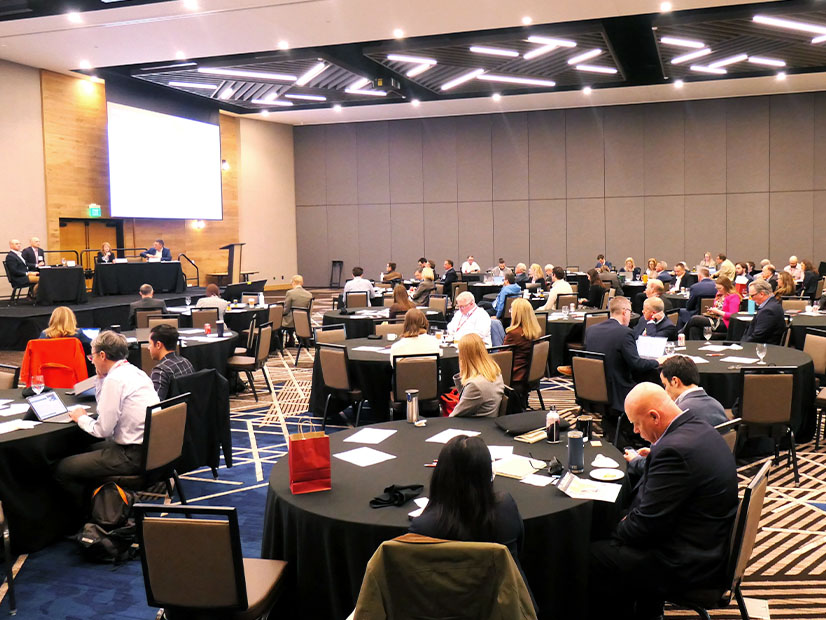
Speaking at the OMS Board of Directors’ meeting Nov. 10, Wisconsin Public Service Commissioner Marcus Hawkins told fellow regulators that states and RTOs already conduct the analyses NERC is advising and make their own resource adequacy plans.
‘Reinforce Rather than Override’
Hawkins said NERC “does not have the authority to issue the standard in its current form.” He called NERC’s effort a “renamed resource adequacy standard” that usurps authority from the states and transfers it to a planning coordinator.
“The draft appears to expand NERC oversight into areas reserved for state authority under the Federal Power Act,” OMS wrote in draft comments, adding that it could “shift state regulators from decision-makers to reviewers of federally enforceable actions.” The group of states said NERC should stay out of policymaking and stick to reliability assessments that “reinforce rather than override” state resource planning.
“It is essential that NERC’s standards not create de facto resource planning or procurement mandates that bypass the processes established under state and federal law,” OMS said.
Hawkins said OMS’ view is NERC is taking on new responsibilities that it doesn’t have permission to assume.
OMS wrote that utilities would be put in the “untenable position of being subject to conflicting obligations,” referring to enforcement risk at the federal level from NERC creating friction with state laws that govern least-cost planning, rate recovery and resource approvals. OMS said a utility could propose binding resource additions in a corrective action plan outside a state review process.
OMS Legal and Regulatory Director Brad Pope said that although there are varying interpretations of the draft standard, MISO states generally construe it to be “federal overreach into state jurisdiction.”
“I think it’s important that we come out strong in these comments,” Pope said.
Hawkins put other MISO state commissioners on notice at the OMS Annual Meeting in late October that the rollout of the new NERC standard could be problematic. At the time, Hawkins said his reading is that potential “binding corrective action plans” issued by NERC would entail some level of investment to bolster resource adequacy. He said he worried about the potential jurisdictional implications of the ERO essentially mandating certain entities to open their pocketbooks to bring more resources online.
“I think that is one potential negative outcome,” Hawkins said at the time.
On Nov. 10, NERC Manager of State Government and Regulatory Affairs William McCurry said the ERO recognizes that states are in charge of what is built within their borders.
McCurry also said NERC wants to engage more with stakeholders on the organization’s upcoming Long-Term Reliability Assessment and would take comments on the draft report.
“We realize there were data inaccuracies with the 2024 report,” McCurry told regulators and staff. “We’re trying to be thoughtful and collaborative in how we approach this year’s assessment.”
McCurry was referencing an apparent mix-up in NERC’s 2024 assessment where unforced capacity values for MISO were used when calculating a margin that NERC ultimately compared to an installed capacity requirement. (See IMM: NERC Reliability Assessment Still Overstating MISO Risk.) NERC fixed the mistake, and MISO was subsequently downgraded from “high risk” in the assessment to “elevated risk.”
At the MISO Market Subcommittee’s meeting in October, Independent Market Monitor David Patton again said the RTO is in a better place than NERC assumes in its long-term assessments, even without the errata.
“MISO was in a more reliable state than other control areas in the Eastern Interconnection,” Patton said of the slew of energy emergencies that occurred on June 24. He noted that PJM entered a weeklong string of emergencies June 23-30.
At the OMS Annual Meeting, Bryan Clark, director of reliability analysis for the Midwest Reliability Organization, said the regional entity is working to beef up its regulatory staff to prepare for more complex assessment work. He acknowledged reliability assessments are a “projection, not a prediction” and said MRO is open to working together with MISO and its stakeholder community on reliability initiatives.
During the American Council on Renewable Energy’s annual Grid Forum in late October, NERC Senior Vice President Camilo Serna said the industry needs to plan and operate the bulk power system from an energy adequacy perspective rather than a resource adequacy perspective. He said grid operators need to capture not only frequency of outage events, but also the magnitude and duration to find out what’s acceptable.