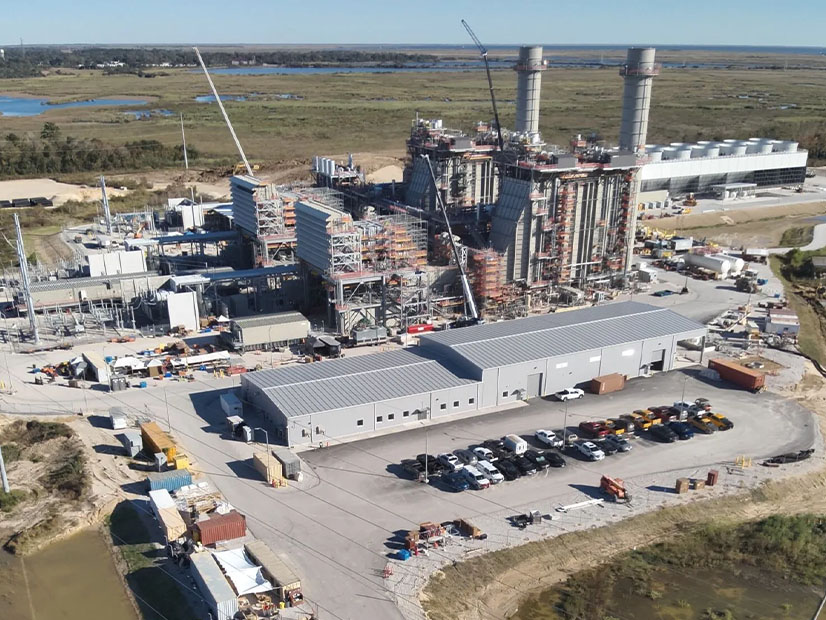
MISO announced it will study 6 GW of mostly natural gas-fired generation projects in the second group of entrants under its interconnection queue fast track.
The grid operator accepted 15 proposals totaling 6.1 GW of new installed capacity Dec. 1. Natural gas additions account for almost 4.3 GW of the projects. In-service dates range from Dec. 1, 2027, to Aug. 6, 2028.
Days before announcing the second list of projects for expedited study, MISO received FERC’s permission to increase the number of projects it can accept for study from 10 to 15 per quarter. (See FERC Allows MISO to Increase Project Count in Queue Fast Lane.)
MISO’s first expedited cycle of generation projects was similarly gas-heavy, representing about 4.3 GW of the 5.3-GW class. (See MISO Selects 10 Gen Proposals at 5.3 GW in 1st Expedited Queue Class.)
The largest gas plants MISO marked for study this time are Invenergy’s proposed 1.2-GW gas plant for Wisconsin Electric’s customers; Entergy Texas’ 820-MW Legend gas plant in Jefferson County, Texas, to serve industrial customers; and Entergy Mississippi’s pair of proposed 768- and 763-MW gas plants to accommodate load growth and data centers.
MISO agreed to study battery storage proposals from Ameren Missouri, Entergy Louisiana and DTE Electric that range from 208 MW to 350 MW. The second cycle study list includes solar and wind projects in Minnesota, Michigan and North Dakota.
“Cycle 2 builds on the momentum of Cycle 1 and reflects the continued demand for timely, reliable interconnection solutions. These projects are essential to meeting near-term reliability needs and ensuring new resource additions are online to meet load growth,” MISO Senior Vice President Aubrey Johnson said in a press release.
Johnson said MISO views the fast lane as “one of several tools we’re using to meet the evolving needs of our members and the communities they serve.” He added that MISO remains intent on cutting down the wait times in its regular generator interconnection queue through the annual megawatt cap and automated software.
Environmental groups have disputed MISO’s and SPP’s queue fast tracks at the D.C. Circuit Court of Appeals, arguing the processes are unfair and allow primarily fossil fuel generation to leapfrog lengthy queue lines while ratepayers fund grid upgrades necessary to host them. (See Enviros Challenge MISO, SPP Queue Express Lanes.)
MISO reported that so far, utilities and developers have submitted 51 projects totaling almost 30 GW for consideration in the expedited queue. The RTO accepts applications for the queue fast lane continually. It plans to leave its application window open until it has studied 68 interconnection requests or May 10, 2027, the application deadline for the final cycle.
MISO has committed to studying a maximum of 68 projects before it retires the temporary express lane process no later than Aug. 31, 2027. Of the 68 spots, 10 are reserved for submissions from independent power producers, with an additional eight set aside for entities serving MISO’s retail choice load in downstate Illinois and a percentage of Michigan.
The RTO said three of the first set of 10 fast-tracked projects have struck generator interconnection agreements, with the other seven poised to execute their agreements before the end of 2025.
MISO will announce another fast lane study cycle in early March 2026.