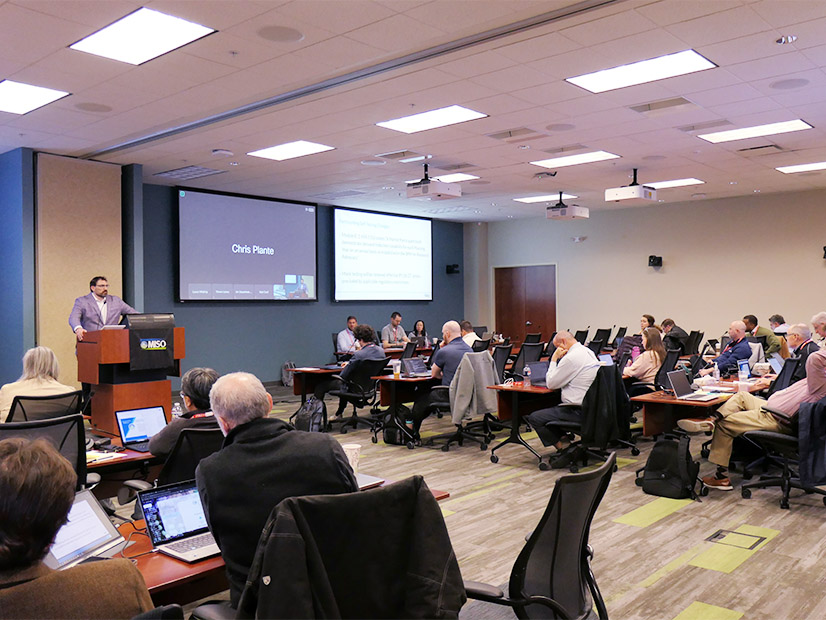
MISO is re-examining its longstanding policy that forbids stakeholders from recording meetings and is considering the possibility of some form of AI notetaking or transcription.
Counsel Jacob Krause told a Jan. 5 meetup of the Stakeholder Governance Working Group that MISO is investigating “tools” that would create a record of stakeholder meeting content. He promised more details after the RTO gathers its stakeholders’ opinions on the issue. It’s not clear if MISO would allow stakeholders to make their own recordings of meetings.
The grid operator prohibits anyone from recording meetings, save for a few self-recorded workshops throughout the year. In 2024, it banned the use of AI notetaking, and its Stakeholder Relations division has periodically expelled AI bots from meetings.
Multiple stakeholders voiced support for MISO’s re-examination.
Tyler Bergman, a senior manager of Clean Grid Alliance, said granting stakeholders the ability to review meeting discussions after the fact would help stakeholders balance their work and personal lives with MISO’s “very active stakeholder schedule.” He pointed out that CAISO records its meetings and makes the recordings and transcripts publicly available in a temporary archive on its website.
John Liskey, of the Citizens Utility Board of Michigan, said it’s difficult for his fellow members of the consumer advocate sector, including state attorneys general, to keep up with MISO meetings.
“It’s one thing to take notes, but it’s another thing to listen to a recording and really understand the dialogue,” Liskey said.
Mississippi Public Service Commission consultant Bill Booth said “several commissions in the South” would be interested in accessing transcripts of MISO meetings.
“We all take notes, but we don’t capture everything, so transcripts would be helpful,” Booth echoed.
But ITC Holdings’ Cynthia Crane said she has “strong concerns about changing historic practice” at MISO. Crane said conducting meetings with a recording device could have a chilling effect on discussion and lead to self-censoring and diminished participation in discussions. She said stakeholders could develop a “fear of misrepresentation and the use of sound bites” without context.
The Sustainable FERC Project’s Natalie McIntire disagreed that recordings would suppress discussion. She pointed out that MISO’s meetings are already open to the press, and reporters aren’t infallible and can misrepresent someone’s point. McIntire said stakeholders for years have been aware that they could be quoted while expressing their stances in meetings.
Liskey suggested MISO introduce a “trial period” of allowing recorded meetings and see if the practice dampens conversations.
WEC Energy Group’s Chris Plante said there’s perhaps a “middle ground” where, after MISO investigates notetaking tools, it allows summaries of meetings instead of verbatim transcripts. Plante said that way, stakeholders who inadvertently unmute themselves during meetings don’t have their embarrassing gaffes chronicled.
As if to illustrate the point, the teleconference was later interrupted several times by someone speaking in French.
MISO and stakeholders plan to again address the possibility of recording or allowing AI to summarize meetings at the April 20 meeting of the Stakeholder Governance Working Group.