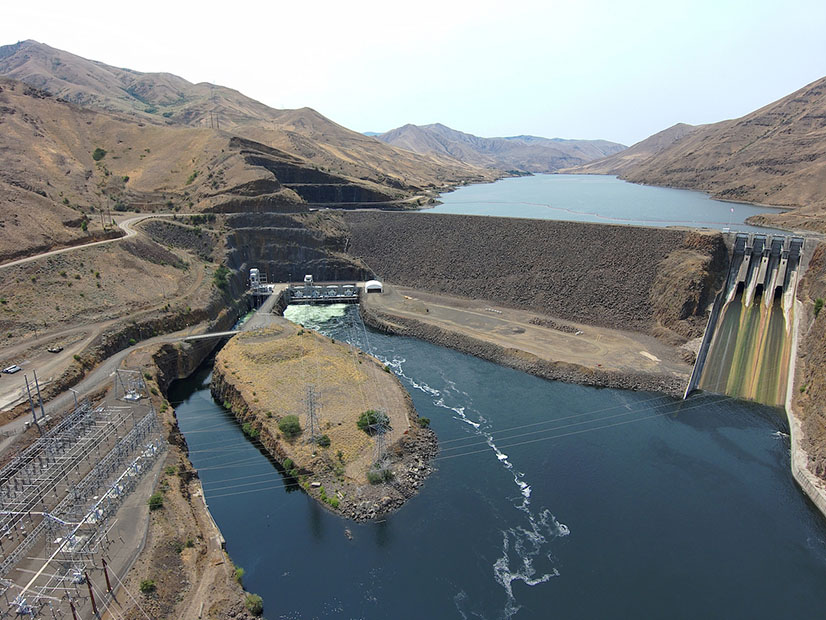
FERC staff recommended the commission relicense three Idaho Power-owned dams that have been operating under annual licenses since 2005, finding the company’s proposed measures adequately mitigate the environmental impact of the dams.
FERC staff said the commission should relicense three Idaho Power-owned hydroelectric dams that have been operating under annual licenses since 2005, finding the company’s proposed measures, along with staff recommendations, adequately mitigate the environmental impact of the dams.
Commission staff on Jan. 14 issued a draft supplemental environmental impact statement (SEIS) after Idaho Power filed proposed modifications for the 1,222.3-MW Brownlee, Oxbow and Hells Canyon dams, collectively the Hells Canyon Project.
The dams are located along the Snake River in Idaho and Oregon, and occupy about 5,270 acres of federal land, according to the draft SEIS.
“We are pleased to have reached this milestone in the relicensing process for the Hells Canyon Complex, which is an essential part of Idaho Power’s resource portfolio,” Idaho Power spokesman Brad Bowlin told RTO Insider.
The company will provide detailed answers to FERC by March 2, which is the deadline to submit public comment on the draft SEIS.
Idaho Power applied for a new license in 2003 to operate the Hells Canyon Project. The company has operated the dams under annual licenses since the current one expired in 2005, the SEIS states.
FERC issued the final environmental impact statement for Hells Canyon in 2007, but following several new developments, including settlements with key stakeholders, FERC prepared a supplemental environmental review to account for these changes.
Among the recent developments is a 2019 settlement between the company and Oregon and Idaho that resolved disputes over water quality and protections of Chinook salmon and steelhead. Following the settlement, Oregon and Idaho issued 401 certifications for Hells Canyon under the Clean Water Act.
In 2020, Idaho Power filed a supplement to its license application that included new environmental measures proposed under the 2019 settlement.
In 2022, FERC issued a notice of intent to prepare a final SEIS to address the new measures. Following the notice, Idaho Power filed a settlement agreement with the U.S. Forest Service in 2024 related to the company’s use of federal land.
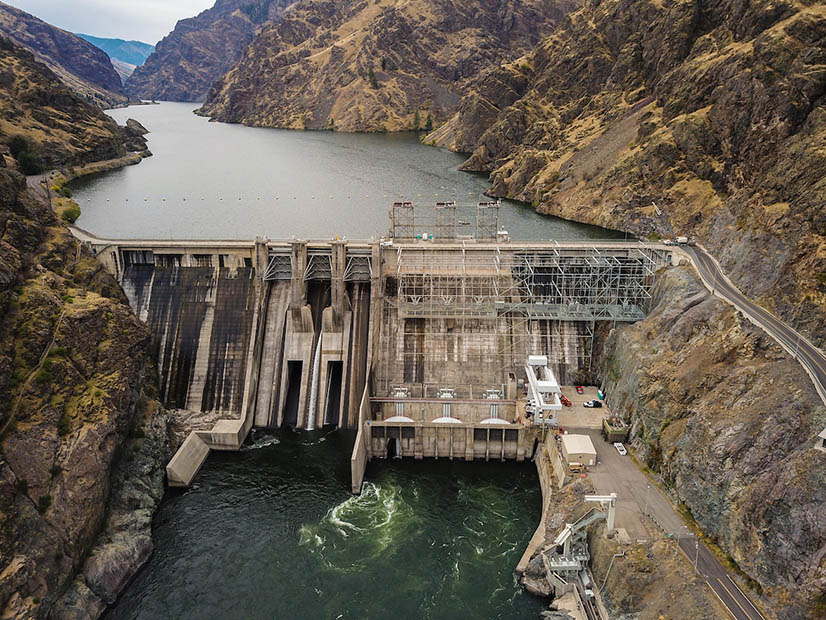
In the Jan. 14 draft SEIS, FERC staff wrote the main concerns with relicensing are the effects on sediment supply and transport, water quantity and quality, aquatic resources, terrestrial and cultural resources, and the adequacy of recreational facilities to meet expected demand over the term of any new license.
FERC staff recommended relicensing the project under most of Idaho Power’s proposed measures and “certain mandatory conditions and recommendations made by state and federal agencies and some staff-recommended modifications to further minimize project-related effects on aquatic and terrestrial resources, threatened and endangered species, recreation resources, and cultural resources,” a news release stated.
The approach recommended by staff includes all conditions in the 401 certifications issued by Oregon and Idaho except for three: implementation of three phosphorus load-reduction programs, implementation of a program that consists of completing habitat restoration projects in the Snake River Basin upstream of the project and implementation of a mercury and methylmercury study.
“Because there is no project nexus associated with these conditions, staff concluded that there would be no project-related benefit to implementing these measures and does not include them in the staff alternative,” the draft SEIS states.
The draft SEIS estimates power generated by Hells Canyon under the staff-recommended approach could “cost $120,748,800, or $21.67/MWh, less than the likely alternative cost of power.”
“We chose the staff alternative as the preferred alternative because: (1) the project would continue to provide a dependable source of electrical energy for the region (5,571,005 MWh annually); (2) the public benefits of the staff alternative would exceed those of the no-action alternative; and (3) the proposed and recommended environmental measures would protect and enhance environmental resources affected by the project,” the draft SEIS states. “The overall benefits of the staff alternative would be worth the cost of the proposed and recommended environmental measures.”