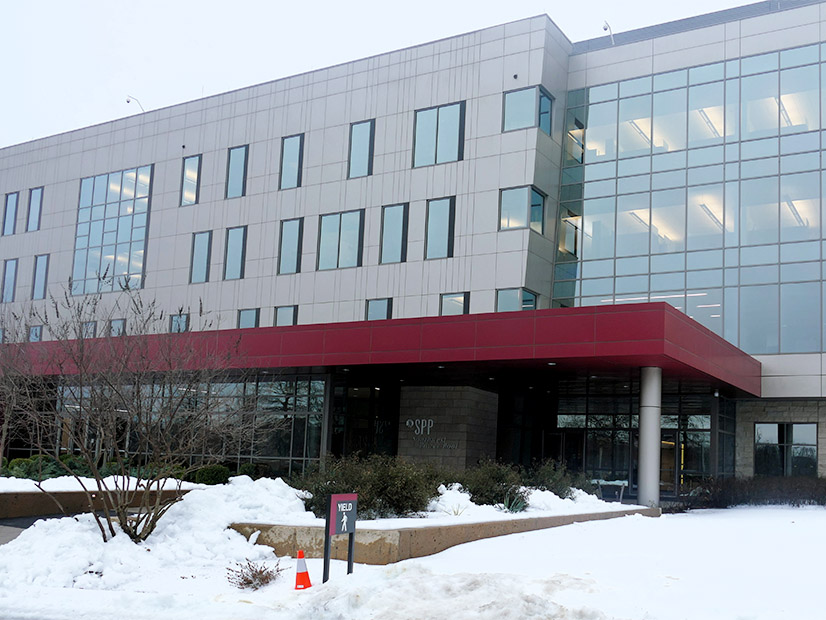
LITTLE ROCK, Ark. — In preparing his first presentation to stakeholders as SPP’s operations vice president, C.J. Brown said he found himself staring at a blank slide.
“What am I going to talk about?” he had asked himself.
“I’ve regretted that statement because as soon as I thought that, I got a message about Winter Storm Fern,” Brown told stakeholders during the RTO’s quarterly update Feb. 2, referring to the late January frigid precipitation and cold. “Anytime a storm has a name that early in a week, it’s just not going to be a good deal.”
SPP issued a conservative operations advisory — the final notice before calling an energy emergency alert — during the storm, but above-average wind generation saved the day. Brown said forecasts of 11 GW were threatened by a risk of more than half that being knocked offline. However, the lack of icing conditions allowed wind resources to meet projections.
“Wind produced above accreditation by a significant amount … pretty much throughout the event,” Brown said. “Ultimately, we were very strong in that category, which allowed us to be able to support a lot of those in the Eastern Interconnection that were short. Wind was a large part of the story.”
The RTO continually exported energy to the east during the event, Brown said, peaking at around 3,500 MW. Thermal outages reached about 15 GW during the storm, but SPP was able to lean on its extra generation to help other grid operators.
The lowest temperatures came in the morning hours of Jan. 26, when demand reached a winter high of around 46 GW. Brown credited infrastructure investments and generation, system and transmission operators working together to help SPP breeze through the storm.
“It certainly takes a village to get through these storms,” Brown said.
SPP staff and the Market Monitoring Unit have both promised full reports on the grid operator’s storm response.
Nickell Thanks Members
More than 10 inches of snow and sleet fell on Little Rock during the storm. The wintry mix was then sealed by a layer of ice that made removal difficult. A week after the storm, many of the city’s side streets were still impassable, and mounds of white slush were piled high in parking lots.
The city’s school district canceled classes for the week, leaving many residents stranded in their homes amid sub-freezing temperatures. Chuck Hutchison, a member of the Nebraska Power Review Board, noted temperatures were lower in Little Rock than in Omaha the day before the quarterly briefing.
“We really wanted to make our commissioners from North Dakota and South Dakota feel more at home. Plenty of snow,” SPP CEO Lanny Nickell said in welcoming the Regional State Committee. “I’m sure [the snow] makes a lot of you feel more comfortable if you’re coming from the northern part of our region. We don’t like it down here.”
He thanked members with “heartfelt gratitude” for their efforts and collaboration in avoiding regionwide outages.
“It does mean a lot to be able to work as closely as we do with all of you who serve customers and have that responsibility to work with us to keep the lights on,” he said. “The fact that it was a significant winter storm and we survived says a lot [about] the hard work that we have been doing since [2021’s] Winter Storm Uri, the policies that we put in place, [and] the procedures that I know our operators and your operators have improved to make better decisions well ahead of time so that we can keep the lights on, keep people warm and make sure that lives are saved.”
Accelerating Grid Infrastructure
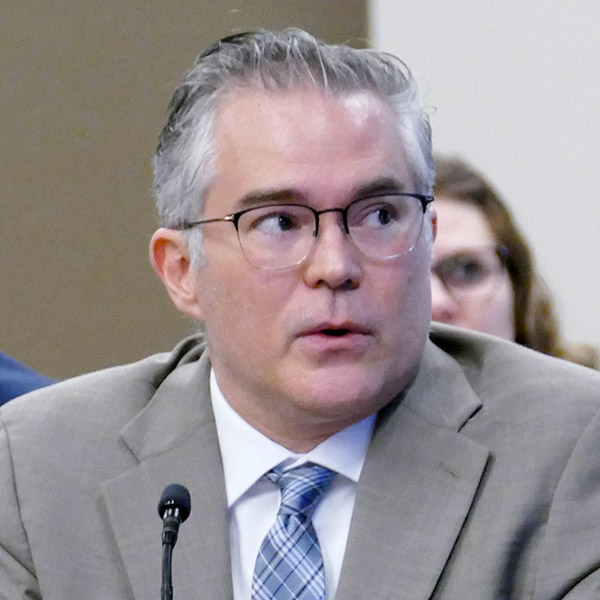
Casey Cathey, vice president of engineering, said staff are hoovering “all things transmission” to accelerate grid infrastructure and capacity through its Project Keystone, including 765-kV and other large transmission projects, the 2026 transmission plan, cost allocation and the transition to the Consolidated Planning Process. (See SPP ‘Blazes Trail’ with Consolidated Planning Process.)
“We’re scooping those up and making sure that we’re working those in tandem and collectively for a successful implementation of what we may need moving forward as a region,” he told stakeholders.
SPP is working with the Economic Studies and Transmission working groups to modify the 2026 Integrated Transmission Plan’s scope and address confusion over the proposed 765-kV overlay. The board approved four 765-kV projects in November 2025 but deferred several others from the $8.6 billion portfolio and committed to analyze the 765-kV overlay in the 2026 ITP assessment. (See SPP Board Approves 2025 ITP with 4 765-kV Projects.)
Staff will codify the overlay’s explanation for the Markets and Operations Policy Committee’s meeting in April. The 2026 assessment is on track, Cathey said, with the 30-day submission window for project proposals opening in late February.
“The 2026 ITP is looking to be our largest portfolio. We are anticipating tens of thousands of needs to solve,” he said. “The forecasts that we see in the 2026 ITP are that much greater than what we see in the 2025 ITP and what drove our four 765 facilities.”
Cathey dismissed talk of an AI bubble and said load requests from the 2025 assessment remain, with some accelerating from Year 5 to Year 2 in plans.
Hanging over Project Keystone is what Cathey calls the “cost problem.”
“It’s billions of dollars that we’re talking about on top of billions of dollars that were already approved, and that’s a lot more than we’re used to as a region,” he said. “We need to do whatever we need to do to make sure that we’re balancing encouraging these loads to show up with the region, but also that we’re fair to the existing ratepayers.”