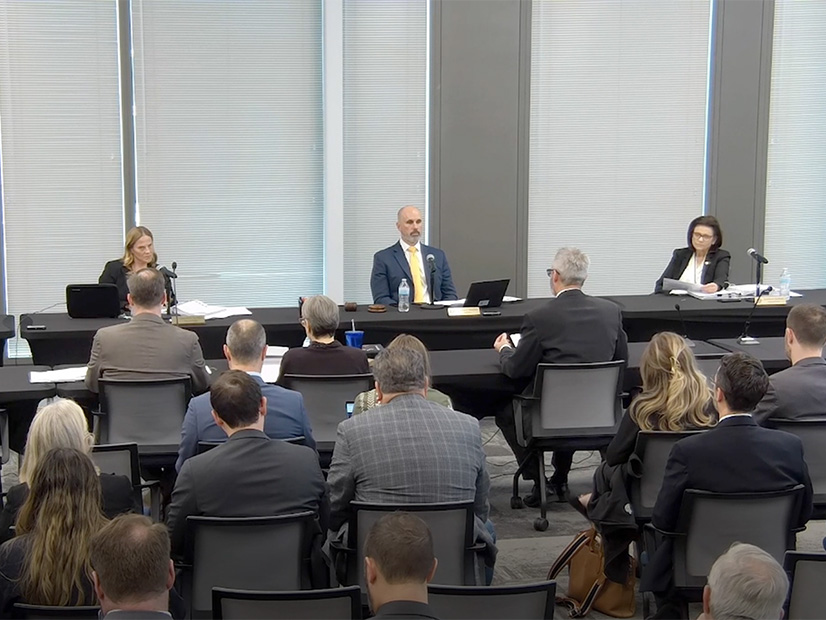
ERCOT staff have promised more clarity on the link between the initial batch study process for large loads and the subsequent studies and existing planning structure during a workshop scheduled for Feb. 26.
Jeff Billo, the grid operator’s vice president of interconnection and grid analysis, told the Texas Public Utility Commission at its open meeting Feb. 20 that several open questions remain from the first of two previous batch study workshops and the stakeholder input gathered since (59142).
“There’s still things we need to work through … to try to address that feedback,” he said.
Chief among them is the linkage between the batch studies and ERCOT’s Regional Planning Group, the primary forum for discussion, input and comment on issues related to planning the system for reliable and efficient operation. He said stakeholders want to know how “Batch Zero,” the first study, will link directly to “actionable” transmission project approvals by the RPG.
Also at issue is how controllable load resources (CLRs) and co-located generation should be treated within the batch study.
Billo said ERCOT expects four sets of revision requests will be needed to resolve those questions and fully implement the batch process:
-
- the transitional Batch Zero study, with a filing targeted for March 4;
- the ongoing study process referred to as Batch One+;
- co-located generation; and
- the CLR concept.
Stakeholders have coalesced around a six-month cadence for batch studies; more proactive, structured and transparent communication; and including operation readiness and financial commitments for Batch Zero eligibility, Billo said.
ERCOT is targeting the Board of Directors’ meeting June 1-2 to receive approval for Batch Zero. It has scheduled four workshops on the filing, with the later meetings narrowing in on specific topics with deep-dive discussions.
The grid operator also is attempting to bring the co-located generation and CLR revisions to the same board meeting.
“There is just a lot of technical details to work through with those,” Billo said. “It’s possible that those don’t make it to June, but we’re at least going to start off with the anticipation that we’re going to try for that.”
He said staff will work with the Technical Advisory Committee’s leadership and schedule additional meetings to ensure protocol changes for another ancillary service, Dispatchable Reliability Reserve Service, and voltage ride-through requirements don’t fall through the cracks. ERCOT plans to bring both to the board in June.
“I think the key to being successful here is listening to stakeholders about the questions … specifically around transparency into this process,” PUC Chair Thomas Gleeson said. “I think ERCOT heard loud and clear from the commission that this needs to be a public process with a lot of input.” (See Batch Study Job No. 1 for ERCOT Stakeholders.)
PUC Rejects EPE Cost Recovery for Newman
The PUC approved an administrative law judge’s proposed decision in El Paso Electric’s first fully litigated base-rate case since 1991, but not before directing revisions to 10 items in the order primarily related to cost recovery.
EPE was seeking 100% recovery of $47 million in cost overruns for Newman Unit 6, with 100% allocation to its Texas retail jurisdiction. The gas-fired unit, which serves parts of neighboring New Mexico, was brought online in 2025.
The commissioners agreed with Gleeson’s recommendation to reject the utility’s request. They added a finding that EPE’s off-system sales margins “are being used in a way that benefits both New Mexico and Texas customers.”
EPE filed the rate case in January 2025, seeking a $129 million increase in Texas-jurisdictional retail rates. The utility cited about $1.55 billion in investment in new and existing generation, transmission and distribution capacity and was attempting to set all customer class base-rate levels at the total cost of service.
The ALJ issued its decision in December.