IESO’s plan to require synchrophasor data from storage resources prompted cost concerns during an educational session at the ISO’s Technical Panel meeting March 3.
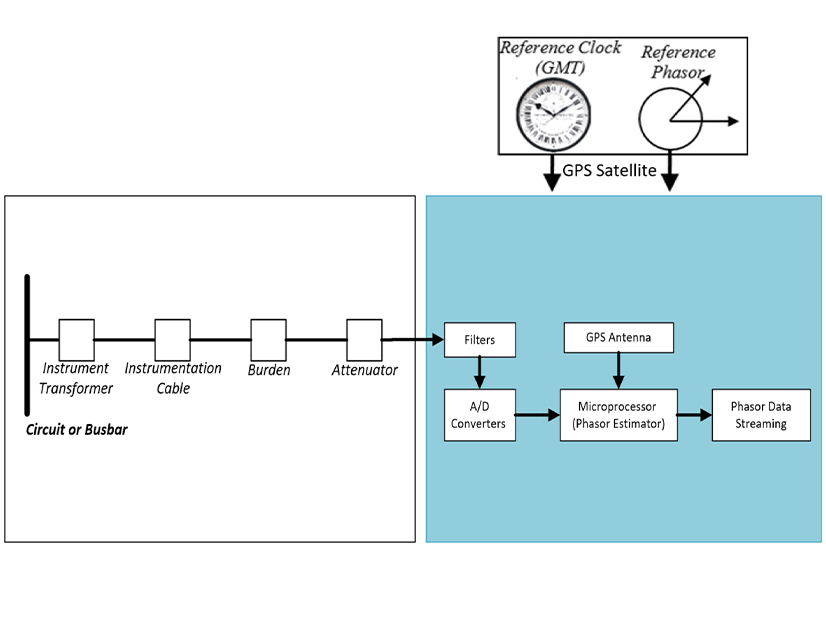
IESO announced in 2025 it will require phasor measurement units (PMUs) at all grid-connected storage units rated at least 20 MVA, including aggregations. PMUs, which collect data including voltage, current and frequency, already are required for generators of 100 MVA and larger. The new requirement also would apply to any size storage or generation facility that can impact a NERC interconnection reliability operating limit.
As part of the changes, the ISO will move its PMU requirements to the market rules from the market manual, and the minimum reporting rate will increase from 30 to 60 samples/second.
IESO’s supervisory control and data acquisition (SCADA) system, which collects data from grid-connected facilities every two to 10 seconds, cannot provide real-time monitoring for the “oscillation phenomena” that can be caused by the growing number of inverter-based storage facilities.
“Going to 60 samples a second allows us to be able to see any oscillations that might occur between zero to 15 hertz in the field,” said Dame Jankuloski, lead power system engineer in IESO’s Performance Validation and Modeling unit. “We’re just trying to be a little bit proactive here and go with a higher sampling rate because that’s what other jurisdictions in North America have done.”
IESO, which currently has 86 PMUs at 36 facilities, expects that to increase to 240 PMUs at 111 facilities in the next five years.
Jankuloski said written comments submitted following an engagement session in December “raised no material concerns” with the new requirements. (See IESO Seeks Comment on Revised Monitoring Requirements.)
But stakeholders expressed concern over costs during Jankuloski’s presentation.
“I don’t have any idea what the [cost] is here. … Is it a million bucks or is it 100 million?” asked Dave Forsyth of AMPCO, which represents industrial power users. “Who’s going to pay for this and how much [is it] going to cost? And are we asking for a Rolls Royce when we only need a Chevy?”
Robert Reinmuller, of transmission and distribution utility Hydro One, said most of the PMUs in IESO’s system today were installed by his company. Many of the future installations will be for facilities that win upcoming IESO procurements, he said.
He said the utility will file rate requests for 2028 to 2032 within a couple of months. “And if I don’t have, say 150 PMUs accounted for … for this change that you’re proposing, we’re going to have a hard time finding that money after the fact,” he said.
Reinmuller said Hydro One spent tens of millions of dollars installing the existing PMUs. “The PMU itself is not an expensive device. … But the infrastructure to collect the data … behind the scenes is not trivial.”
Jankuloski acknowledged that doubling the sampling from 30 to 60 readings/second will require more data storage capacity but said Hydro One officials had not expressed “any major concerns” in their discussions with the ISO.
IESO sized its system to handle 60 samples/second for up to 400 PMUs, he said.
“So, we left a little bit of spare [room],” he said. “Right now, we are sort of at the half[way] point in terms of requirements that we have proposed to date.”
Jankuloski said “it is a bit of a challenge to put a [cost] number” on the new requirements. “But from a reliability perspective, we don’t want an outage, right? And so, if an oscillation were to cause an outage [without] having this data, we would not be able to first prevent it, or even just see it and see what kind of actions we need to take.”
The Technical Panel is expected to vote on recommending the changes at its May 12 meeting, teeing up an IESO board vote on June 11. The tentative effective date is Dec. 2.