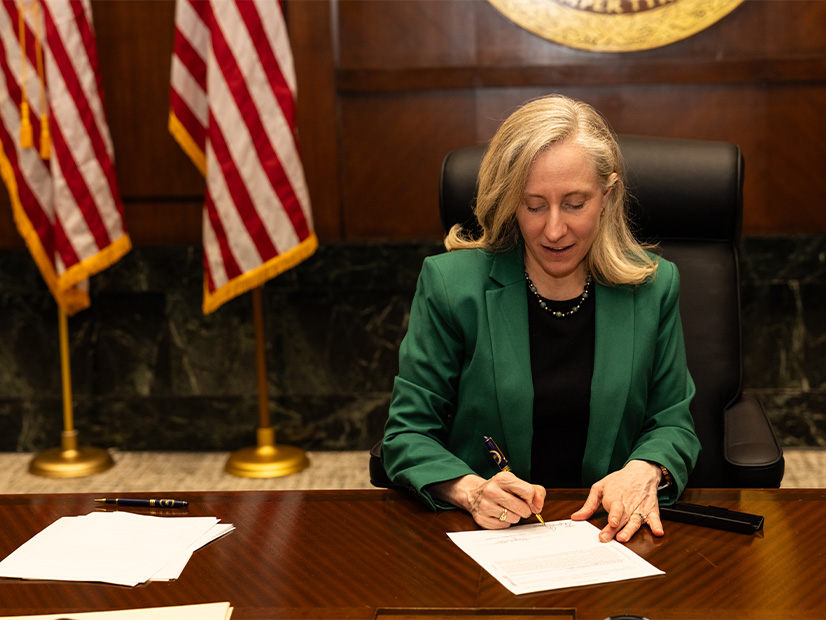
Virginia Gov. Abigail Spanberger (D) signed her first set of bills into law March 31, and they included legislation meant to address the rising cost of energy in the state. (See Virginia Legislature Wraps Up, Passes Clean Energy Bills.)
“No Virginian should ever have to choose between seeing their doctor, paying their rent or mortgage, or keeping their lights on,” Spanberger said in a statement. “I am signing this legislation to respond to the real, pressing concerns I have heard from Virginia families across the commonwealth about high costs — particularly at the pharmacy counter, in the housing market and on their utility bills. I’m grateful to the lawmakers who made addressing rising costs a priority during this legislative session.”
The new laws include:
-
- HB 1191 and SB 377, which permit high-energy-use customers to invest in substations that cooperatives need to serve them that are then turned over to the co-op upon completion;
- HB 369, which encourages investment in cutting-edge energy technology, like fusion and nuclear;
- SB 505, which evaluates how to best protect ratepayers from excessive costs from spikes in fuel market prices;
- HB 562, which encourages co-ops to provide more reliable power for customers and help ease demand elsewhere on the grid;
- HB 889 and SB 497, which streamline permitting of new high-voltage infrastructure in existing utility and highway corridors; and
- HB 1225 and SB 407, which support the development of electric vehicle charging stations.
Spanberger said she would take additional action, including signing more legislation meant to cut costs for consumers.
To submit a commentary on this topic, email forum@rtoinsider.com.
Less than a week before signing the bills, Spanberger signed an executive order that creates a new cabinet-level position, the chief energy officer, and named Josephus Allmond to the new role. He will work with Spanberger, other state officials, PJM and utilities to address rising energy costs, increase clean energy and develop a statewide energy strategy.
“It is critical to make sure families and businesses have access to affordable, reliable energy so that Virginia businesses can stay competitive, while also meeting our long-term clean energy goals,” Spanberger said in a statement. “Throughout his career, Mr. Allmond has gained extensive experience in Virginia’s energy industry — through litigating numerous regulatory cases and successfully advocating for legislation to bring Virginia into our energy future.”
Allmond is an energy lawyer, most recently working as staff attorney at the Southern Environmental Law Center, for which he litigated dozens of utility regulatory cases before the State Corporation Commission.
“By maximizing the use of our existing grid, making sure high-energy-use customers are not driving up energy bills for everyone else, and prioritizing the deployment of more homegrown clean energy and battery storage, we will ensure that our energy future remains sustainable, predictable and — most importantly — affordable for Virginians,” Allmond said in a statement.