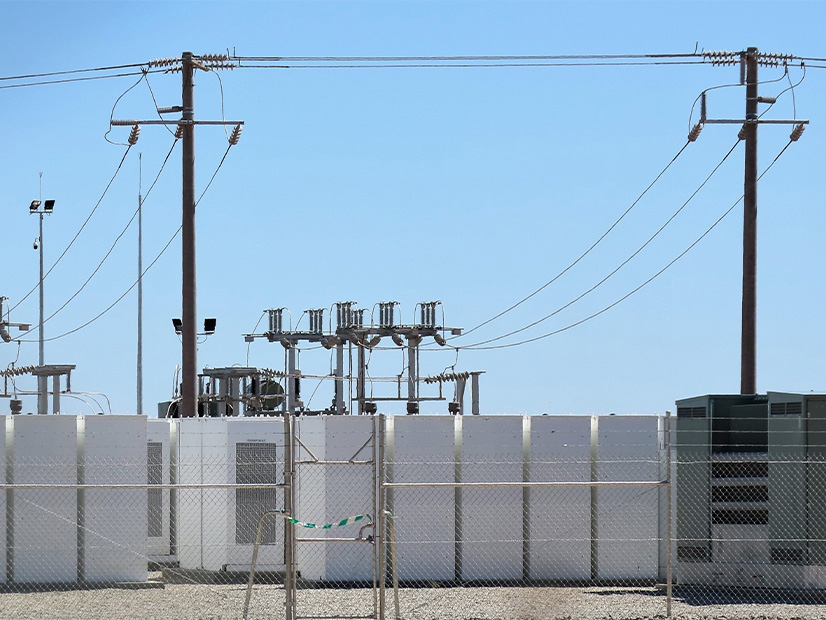
The Massachusetts Department of Energy Resources (DOER) and the state’s investor-owned electric utilities have issued a request for proposals to procure up to 1,500 MW of mid-duration energy storage, a key step toward the state’s goal of contracting 5,000 MW of energy storage by mid-2030. The procurement marks the largest energy storage solicitation issued to date in New England.
The state also outlined its expected timeline for future storage solicitations, noting that it plans to issue additional 1,000-MW mid-duration storage procurements by July 31, 2026, and July 31, 2027, and wrote that “all remaining energy storage systems capacity shall be procured by July 31, 2030.”
The Massachusetts Legislature in 2024 passed a law requiring electric distribution companies to enter long-term contracts for 5,000 MW of energy storage by mid-2030, including 3,500 MW of mid-duration storage (between four and 10 hours), 750 MW of long-duration storage (between 10 and 24 hours) and 750 MW of multi-day storage (greater than 24 hours).
The RFP is intended to procure projects “that have a strong likelihood of being financed and constructed and that will provide a reliable and cost-effective source of beneficial, reliable energy storage systems to the Commonwealth,” the DOER and the utilities wrote.
In the first solicitation, the state seeks only to procure the environmental attributes associated with storage projects. This includes credits for the state’s Clean Peak Standard, which incentivizes emissions reductions during peak demand periods.
The bid submission deadline is noon on Sept. 10, 2025. Bidders are allowed to propose projects at or above 69 kV that can supply between 40 and 1,000 MW and can propose long-term contracts running through the end of 2050.
The RFP requires projects to have a scheduled in-service date earlier than Jan. 1, 2030, and directs each bidder to “demonstrate that its proposal can be developed, permitted, financed and constructed within a commercially reasonable timeframe.”
Projects must commit to achieving capacity interconnection rights and qualifying for the ISO-NE capacity market. The RFP requires bidders to “include a realistic and specific plan to implement any transmission system upgrades or other work anticipated to be needed to achieve CCIS-equivalent interconnection.”
Developers also must provide a nonrefundable bid fee of $500/MW of proposed nameplate capacity, which is intended to cover the cost of evaluation.
Projects will be evaluated based on quantitative and qualitative criteria. They will be graded on a 100-point scale, with 80 points for direct and indirect costs to ratepayers and 20 points for qualitative factors, including project viability, climate and environmental benefits, grid reliability and resilience effects, and stakeholder engagement.
The DOER, working with an independent evaluator, will select winning bids. The utilities will be responsible for executing contracts, which will be subject to the approval of the Massachusetts Department of Public Utilities (DPU).
The DPU approved the procurement framework in late July, writing that it “represents a reasonable balancing of interests and demonstrates progress toward achieving the Commonwealth’s statutory energy storage systems requirement as well as seeking to contract for low-cost energy storage systems.”
Under the current solicitation timeline, winning bids are to be selected by Dec. 9, and long-term contracts are set to be executed by March 27, 2026.