As 2025 opened, there was no uncertainty surrounding Donald Trump’s opinion of the wind power industry. The question was how soon the opinion would turn to action and how damaging it would be.
The answer: “immediate and significant.”
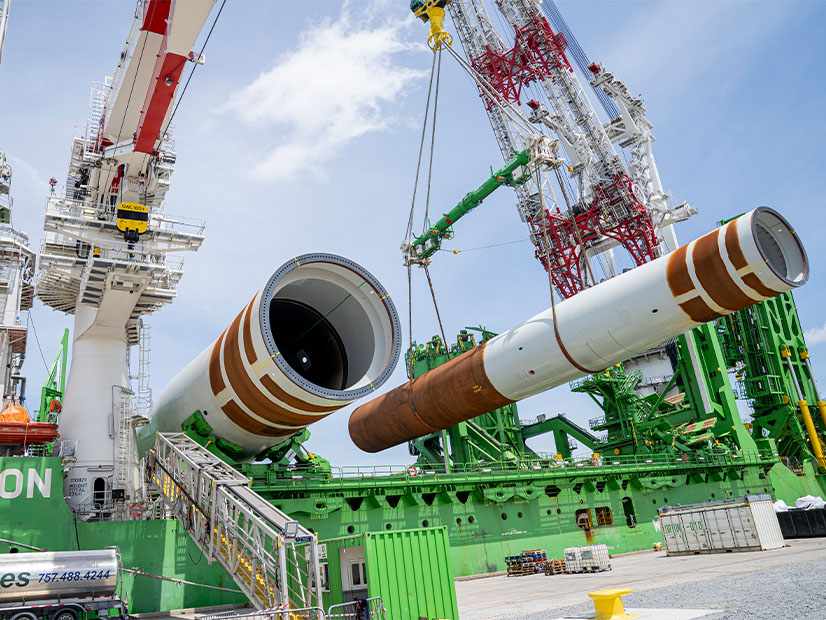
As 2026 opens, we have a clearer view: Every onshore wind project that falls within federal purview is delayed, and the U.S. offshore wind pipeline is a shadow of its former self, reeling from a blanket stop-work order on all remaining projects in late December. (See All U.S. Offshore Wind Construction Halted.)
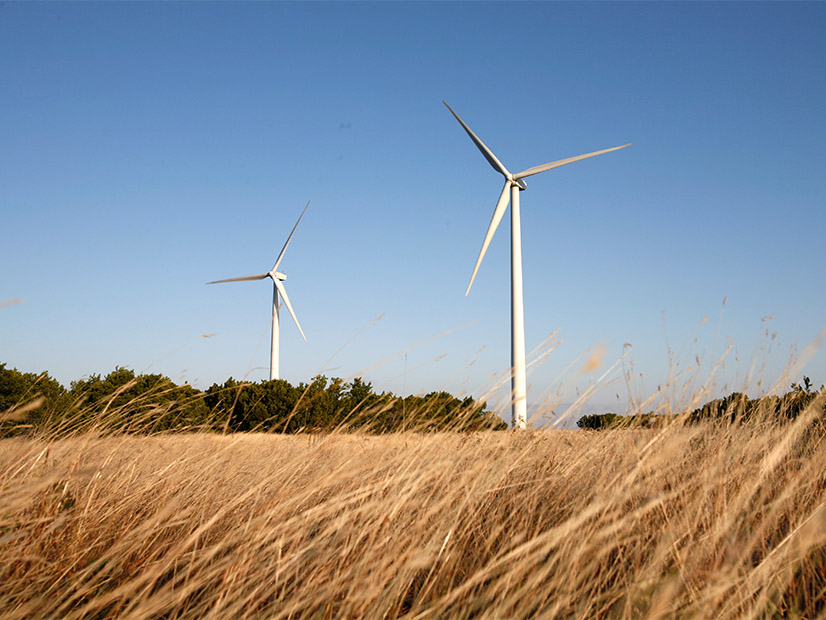
Onshore wind is an established sector of the U.S. energy market, unlike offshore wind, and seems better able to ride out the hostile policy changes of Trump 2.0. Land-based wind turbines for years have been the leading U.S. source of renewable energy. The pace of construction slowed in recent years, and photovoltaic solar was poised to surpass it as the leader in installed renewable capacity.
But with its higher capacity factor, wind still produces far more electricity: 451,904 GWh, compared to 219,834 GWh from utility-scale solar arrays in 2024, according to the U.S. Energy Information Administration.
This compares with 232,896 GWh from conventional hydropower, 652,156 GWh from coal combustion, 718,865 GWh from nuclear reactors and 1,869,892 GWh from natural gas combustion.
John Hensley, senior vice president of markets and policy analysis at the American Clean Power Association, said U.S. onshore wind experienced a marked regulatory slowdown in 2025. The restrictions on wind and solar projects on public land included multilayered review processes that extend to projects on private land for things such as incidental eagle take permits and U.S. Army Corps of Engineers permits. Approvals essentially halted as a result.
“To date, we have not heard of any [wind] project that’s actually received any approval to move forward,” Hensley told RTO Insider.
The slowdown for onshore wind in the early 2020s came despite the Biden administration’s support for renewables and has several underlying factors, Hensley said.
The extensive buildout from 2005 to 2020 saturated some markets; filled up some of the prime locations; and left utilities and large offtakers wanting some diversity in their generation mix.
Solar construction took off synergistically: Solar typically is strongest at midday, when onshore wind often is weakest, and interest was growing in renewables in regions with good solar irradiance but weak wind speeds, including the Southeast and Mid-Atlantic.
Importantly, the cost of solar components plummeted, Hensley said.
As a result of all this, installed capacity grew 90.5% for solar and just 8.3% for wind from the first quarter of 2023 to the third quarter of 2025, by ACP’s count.
But there was a rebound for onshore wind in 2025, which ACP expects will end with 36% more additions than in 2024.
There is more to come in 2026 and beyond, Hensley said, reiterating what ACP and other clean energy advocates have been saying for the past year: The U.S. demand for electrons is too great to sideline the fastest, least-expensive source of new generation — solar and wind — at a time when gas turbine orders are backlogged for years, no one is building coal or large conventional hydro, and new nuclear will not come online until the 2030s at best.
In their fourth-quarter wind report, ACP and Wood Mackenzie predict 46 GW of new wind installations through 2029, plus 2.5 GW of capacity additions via upgrades through 2028, thanks to a strong repowering market.
BloombergNEF, meanwhile, has reduced its 2025-2035 U.S. onshore wind projection by 46% but still expects 74 GW of new capacity in that period.
“We’re in this interesting moment in the market where, because of a lot of the electricity growth that we’re seeing and the resource adequacy concerns that a lot of these markets are showing, there’s just a voracious appetite for new power plants across the entire technology stack,” Hensley said.
The demand exists for additional onshore wind, and the industry can meet it, he added, but this is subject to external influence.
“I think it becomes a question of how long [the hostile policies] stay in place, and how much of the project pipeline is impacted,” Hensley said. “Even though wind has been growing slower than solar and storage, it is still a very large and mature industry in the U.S., with a substantial manufacturing base.”
He conceded that a large enough regulatory burden and high enough costs could slow the onshore wind industry.
Just look at offshore wind.
Whatever chance the industry had of meeting President Joe Biden’s aspirational 2030 goal of 30 GW of wind capacity in U.S. waters was gone well before Trump was elected to his second term, because of cost, logistical and other factors.
But 2025 saw a series of policy crackdowns by the Trump administration aimed at fulfilling his campaign promise to block offshore wind development. Amid this, a series of developers put their projects on hold or quit the U.S. market altogether.
There were a few bright spots. In September, a federal judge threw out a stop-work order the Department of the Interior slapped on Revolution Wind. In early December, a different federal judge threw out Trump’s Day 1 pause on wind power permits in a case brought by the attorneys general of New York and 17 other states.
The Alliance for Clean Energy New York joined that lawsuit as a plaintiff intervenor. Alicia Gené Artessa, director of ACE NY’s New York Offshore Wind Alliance (NYOWA), told RTO insider a week later that the ruling was a sign of hope for the offshore wind industry in its battles with Trump, providing a foothold for states and the industry to take the federal government to court over permit denials.
That conversation was a week before Interior ordered a halt to all U.S. offshore wind construction activity — five projects with 5.8 GW of combined nameplate capacity costing tens of billions of dollars, some of them very close to completion.
The latest stop-work order is a dramatic escalation of Trump’s war on wind. As of press time, the order’s full impacts are still unclear, and the next steps by the government and industry has not been announced.
But Gené Artessa’s takeaway message on the offshore wind sector is relevant regardless of the blow-by-blow with Trump and its ultimate outcome: The industry and its partners in state government need to fix the problems that afflicted U.S. offshore wind before Trump returned to office, and they need to prepare for the next tranche of projects to follow his departure from office — particularly in a state like New York, which is counting on offshore wind to decarbonize its grid.
“That’s one thing that I think the state recognizes, we have to protect this industry,” Gené Artessa said. “So to get through the next few years of federal hostility, we need to look inward, because we had attrition before Trump took office. We had issues with our procurement process that needed to be solved. That’s what we are hyper-focused on for 2026.”
The Trump administration already has scared away investors critical to future offshore wind projects in U.S. waters. The question remains whether they will come back during the future administration of a wind-friendly president, because even the fastest project could extend beyond a single four-year presidential term.
Gené Artessa acknowledged that some developers will quit the U.S. offshore wind market and others will struggle mightily, which she said directly contradicts Trump’s stated desire to boost jobs and increase power generation. But there is the opportunity to fight back in court, she said, and the opportunity for states to improve their own processes.
“To me, it doesn’t make any sense,” she said, “but we are alive for another day, and we’re keeping the good fight going over here at NYOWA.”