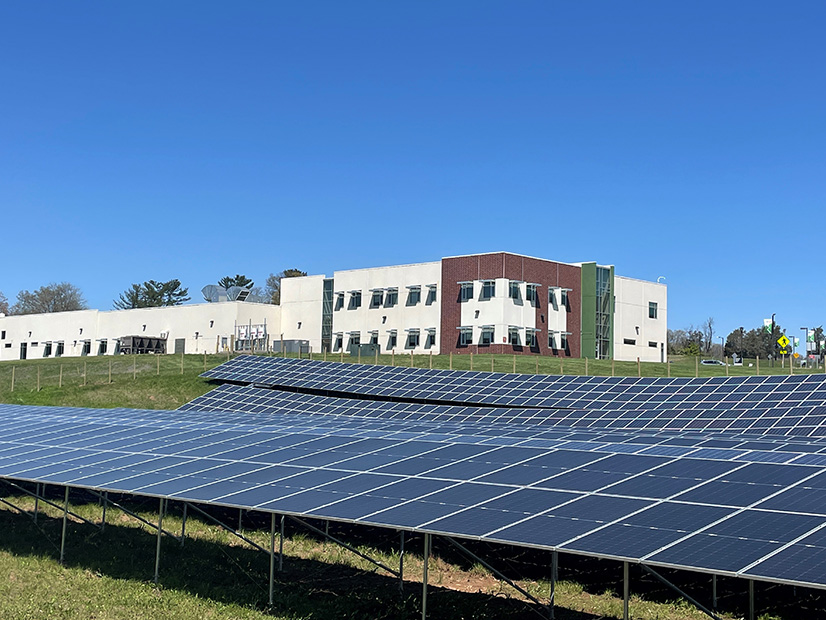
New Jersey’s Board of Public Utilities is asking the state’s four utilities for thoughts on how to help waive regulations and speed up the connection of distributed energy resources as it seeks to modernize its grid.
A Request For Information seeks written responses from the utilities on five topics the state hopes will illuminate how to enhance the capacity of DERs to help meet a predicted dramatic increase in electricity demand. Utilities must file their responses by March 5.
Several of the questions ask how the utilities are complying with updates to grid modernization rules approved in May 2025 meant to reduce delays in the distribution grid interconnection process and speed up the timeline for projects to come online. (See N.J. BPU Backs New Grid Modernization Rules.)
The RFI also asks utilities to identify opportunities for the BPU to “modify or waive existing regulations in order to improve efficiency and speed of interconnecting new projects.”
Other questions ask how the BPU can improve hosting capacity maps, identity constrained circuits within the company’s service territory and address “other means of supporting development of DERs on constrained circuits.”
“New Jersey has seen a rapid expansion of solar deployment,” the RFI states, in part due to the development of its Community Solar Energy program and the Competitive Solar Incentive program, which seeks to stimulate grid-scale solar projects. “This progress, however, is hindered by an electric distribution grid with severe hosting capacity constraints on key circuits.”
ACE: Infrastructure Modernization
The RFI stems from one of two executive orders issued by Gov. Mikie Sherrill (D) on her first day in office, in line with her campaign promise to address the state’s rapidly rising electricity rates. The average electricity bill rose by 20% in June.
Analysts say the price hike stems in part from the state’s generating capacity shortfall due to the rapid closure of aging, mainly fossil fuel generators and the much slower uptake of clean energy resources. New Jersey is an energy importer, and analysts predict a dramatic rise in demand due to energy-intensive data centers, significantly worsening the state’s energy shortfall.
Asked about the governor’s RFI, Atlantic City Electric (ACE), one of the state’s four utilities, and one that has faced criticism for delays in connecting electricity projects, welcomed the “continued engagement with regulators and stakeholders.” (See Solar Developers: New Jersey’s Aging Grid Can’t Accept New Projects.) The other utilities are PSE&G, Central New Jersey Power and Light, and Rockland Electric Co.
“We are committed to modernizing our energy infrastructure to further improve energy service for our customers,” ACE said in response to an inquiry by RTO Insider. The utility noted it’s executing its Powering The Future initiative. That’s a multiyear infrastructure investment plan that will facilitate the “interconnection of approximately 385 MW of new solar generation — equivalent to 50,000 average residential solar arrays — enabling more distributed energy resources at a time when demand continues to increase,” the company said. Included in the plan is $33 million to enable “the deployment of additional solar and other DER projects,” of which $20 million would go toward solar/DER distribution line improvements, according to the plan.
“We are reviewing the Board of Public Utilities’ request on accelerating DER interconnections and look forward to identifying additional ways to help customers adopt cleaner energy resources,” a statement released by ACE, a subsidiary of Exelon, said. “At the same time, we recognize the strain of high energy costs.”
New Solar Capacity Slows
Sherrill’s executive order requires the BPU to accelerate solar generation with a new solicitation for grid-scale solar and an extra 3,000 MW of generation under the Community Solar Program. (See New N.J. Governor Rapidly Confronts Electricity Crisis.)
The governor’s executive order acknowledges that the excess of demand over supply facing the state is a “significant driver of the electricity crisis,” and identifies solar and storage generation resources as the quickest way to address the problem. New installed capacity has slowed in the past two years, with 307,225 kW added in 2025, about 30% lower than two years earlier. Installed solar resources, which totaled 5.38 GW at the end of 2025, account for about 7% of New Jersey’s electricity generation.
The order adds that solar and storage projects are delayed “often by electric distribution utilities, as they are responsible for reviewing and approving applications from electricity generation facilities to interconnect to the power grid, including applications from renewable energy projects.”
The BPU, seeking to illuminate the reason for connection delays, asks the utilities to identify at least two circuits that “receive high numbers of interconnection application requests (either by total capacity requested or number of applicants), that are either closed or close to being closed due to voltage constraints.”
The RFI also asks the utilities to “provide a list of circuits with the worst reliability performance based on outage data that should be prioritized for infrastructure upgrades.” And it asks them to “include the metrics, methods and criteria used for selecting the worst-performing circuits.”
The issue of how to improve the ability of DER projects to get connected has been “perennial” in New Jersey and elsewhere, said Paul Patterson, an energy analyst for Glenrock Associates. Central to the issue are questions over whether “resources are being hooked up fast enough, and what’s causing the delays,” he said.
“It’s the context that makes this more significant,” he said. That includes the dramatic price hike stemming from PJM’s capacity auction, and Sherrill’s embrace of utility affordability at the center of her campaign.
“It’s very preliminary. They just seem to be asking for information,” he said of the RFI. “The real question is, what does Sherrill and her administration really come up with in the way of a policy to actually deal with the issue of rising electricity prices?”