A bill in the Colorado legislature seeks to reduce the environmental impact of federal orders delaying the retirement of coal-fired power plants.
House Bill 26-1226, introduced Feb. 18, would require utilities to report quarterly on the costs of running coal plants beyond their retirement dates. It would limit nitrogen dioxide and sulfur dioxide emissions from coal plants that are still operating in 2031.
The bill also would direct the Colorado Public Utilities Commission to approve new resources to help the state meet its 2030 climate goals.
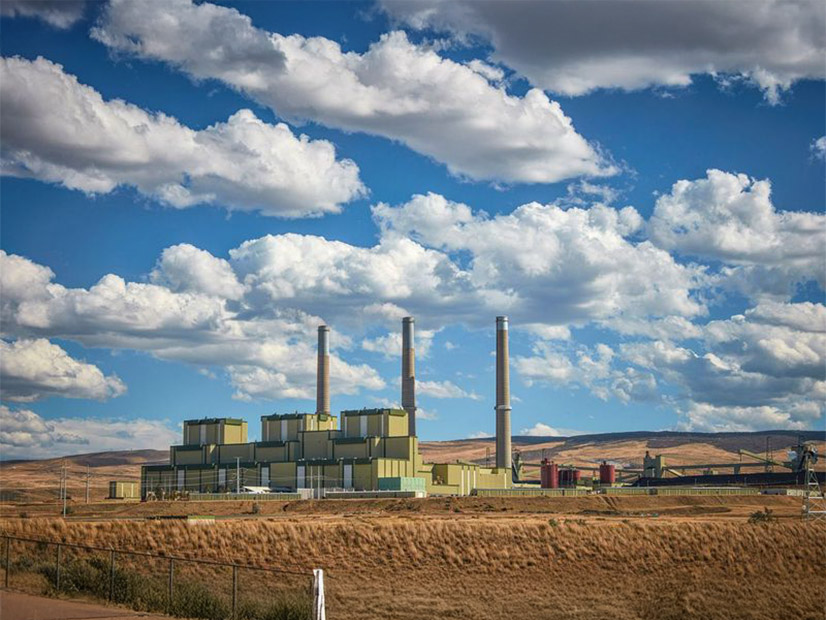
HB26-1226 follows a U.S. Department of Energy order under Section 202 (c) of the Federal Power Act to keep Unit 1 of the coal-fired Craig Generating Station operational for 90 days, which the department said was needed to prevent blackouts. The order was issued Dec. 30, a day before the unit was set to retire, as had been planned since 2016. (See DOE Blocks Retirement of Another Coal-fired Plant.)
State Sen. Mike Weissman (D) said the Trump administration was using the order “to turn years of careful planning on its head.”
“This will result in increased air pollution, higher energy costs and a delay in achieving our renewable energy goals,” Weissman said in a statement. HB26-1226 “gives the state tools to address these impacts.”
In addition to Weissman, the bill’s major sponsors are Rep. Jenny Willford, Rep. Meg Froelich and Sen. Lisa Cutter, all Democrats. The bill has been referred to the House Energy and Environment Committee.
The Sierra Club supports the bill, pointing to the costs of keeping aging coal plants running. A Grid Strategies report, commissioned by the Sierra Club and other environmental groups, found that the cost to ratepayers of keeping Craig running past its retirement date would be about $80 million/year.
“We urgently need laws like this to protect our state against the high price — both financial and environmental — the federal government is trying to foist on us,” Sierra Club Colorado Director Margaret Kran-Annexstein said in a statement.
Tri-State Generation and Transmission Association, co-owner and operator of Craig Unit 1, announced in January that it had completed repairs to return Unit 1 to operational condition. Tri-State declined to disclose the cost.
HB26-1226 would require investor-owned utilities and wholesale electric cooperatives to file a report every 90 days after a federal order to keep one of their coal-fired units running past its retirement date. The report must include capital costs and maintenance and operations expenses to keep the unit online. It also must state the number of hours the unit ran over the past 90 days, the amount of electricity generated, and the resulting amount of resource curtailment and its cost.
An IOU that owns but does not operate the coal-fired unit would report its share of the costs. The bill would allow an IOU to apply for a financing order to recover the costs of complying with an order.
DOE’s order to Craig said there is an energy emergency in the WECC-Northwest assessment area. The order pointed to projected load growth in the area paired with planned retirements of baseload generation.
Although the order expires March 30, some are concerned it will be extended.
On Jan. 29, Tri-State and Craig Unit 1 co-owner Platte River Power Authority filed a request for rehearing of the order, arguing it disrupts their “carefully considered reliability planning.” (See Fight Heats up over Colorado’s Craig Coal Plant Extension.)
Challenges to the order were also filed separately by the Colorado attorney general and a coalition of environmental groups. DOE has 30 days to respond; if it does not, the request is automatically deemed denied.