As Tucson, Ariz., weighs whether to take over part of Tucson Electric Power’s electric system to form a municipal utility, a new study said such a move would cost the city more than $4 billion.
The Brattle Group study, commissioned by TEP, found that the additional cost to city residents would average about $290 million per year for the next 20 years under a municipal utility compared to sticking with TEP.
“Municipalization can be lengthy, litigious and costly,” said the paper, by Brattle principals Toby Bishop and Ann Bulkley and associate Adam Wyonzek.
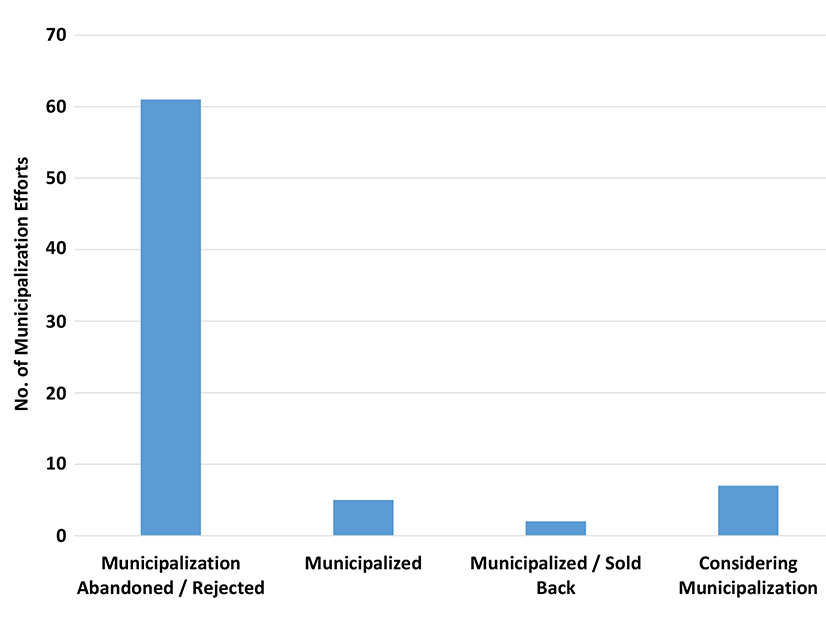
The authors noted that of 68 electric utility municipalizations attempted in the U.S. in the last 25 years, only seven succeeded. And in two of the seven cases, the utilities were later sold back to the original investor-owned utility.
In announcing the new study Feb. 24, TEP CEO Susan Gray said a city takeover of the utility’s system would be “an unrealistic, unaffordable and unnecessary distraction.”
“A forced takeover would jeopardize reliability, slow clean energy development and create roadblocks for economic development initiatives that depend on TEP’s proven ability to deliver power safely, reliably and sustainably,” Gray said in a statement.
TEP serves 457,000 customers in Tucson and surrounding areas. TEP and its parent company, UNS Energy, are subsidiaries of Canada-based Fortis.
The city has been exploring formation of a municipal utility as one potential way to rein in electric rates and meet climate goals. The 25-year franchise agreement between the city and TEP expires in April.
Residents in support of a Tucson municipal utility are upset by rising electric bills and TEP’s backing of new data centers in the area, according to a group called Tucson Democratic Socialists of America. The group said it has collected more than 4,000 signatures on a “public power for Tucson” petition.
“Let’s put it to a vote, TEP. Let Tucson decide on public power,” the group said in a release.
Conflicting Reports
The city commissioned its own study of forming a municipal utility. An April 2025 draft report found that a Tucson municipal utility would be financially feasible, and average residential customers would see their electric bills drop by $241 per year within the first five years. The report was prepared by engineering and consulting firm GDS Associates and law firm Best Best & Krieger.
The Brattle researchers noted several reasons their findings differed from those of GDS Associates. GDS assumed municipal service would start in 2028, which Brattle called unrealistic. Brattle went with a 2032 start date instead, noting that acquisition costs will increase over time as TEP invests more in its system.
GDS estimated it would cost between $1.4 billion and $3.6 billion to buy TEP’s electric system in Tucson; Brattle pegged acquisition-related costs at $4.05 billion. And TEP’s costs to serve Tucson customers would be lower than a municipal utility’s costs over the 20 years examined, Brattle projected.
In another difference between the two studies, GDS assumed TEP’s rates would increase 3.5% per year, based on an inflation rate “calculated during a period when inflation was at its highest in the past 40 years,” Brattle said. By contrast, Brattle estimated future rates through a breakdown of generation, transmission and distribution components.
Data Center Impacts
Brattle also looked at impacts of the Project Blue data center that has been proposed within TEP’s service area — but outside of Tucson. TEP expects the data center to bring in significant revenue that might create rate benefits for other customers.
“[The data center’s] exclusion from the area served by a municipal utility would make municipalization even more financially infeasible,” Brattle said.
A $3.6 billion Phase 1 of Project Blue would consist of 10 data center buildings that could begin operation as soon as 2027. A Phase 2 of data center development could follow.
The Arizona Corporation Commission voted 4-1 in December to approve a 286-MW energy supply agreement between TEP and the Project Blue developer. (See TEP Wins Approval for Data Center Energy Supply Agreement.)