The war in Iran is not expected to lead to higher domestic natural gas prices in part because higher oil prices tied to the closure of the Strait of Hormuz mean more oil production and related gas supply from the Permian Basin, the U.S. Energy Information Administration said.
In its monthly Short-Term Energy Outlook, released March 10, EIA explained how Iran’s closure of the strait in response to a bombing campaign by the U.S. and Israel raised global oil and LNG prices.
The Brent crude oil spot price was up sharply since the start of military action in the Middle East, settling at $94/barrel March 9, a 50% boost since the start of the year and the highest since September 2023.
“We make the assumption in our modeling that the effective closure of the Strait of Hormuz will cause oil production in the Middle East to fall further in the coming weeks,” EIA said. “We assume this shut-in production will gradually ease as transit through the strait resumes.”
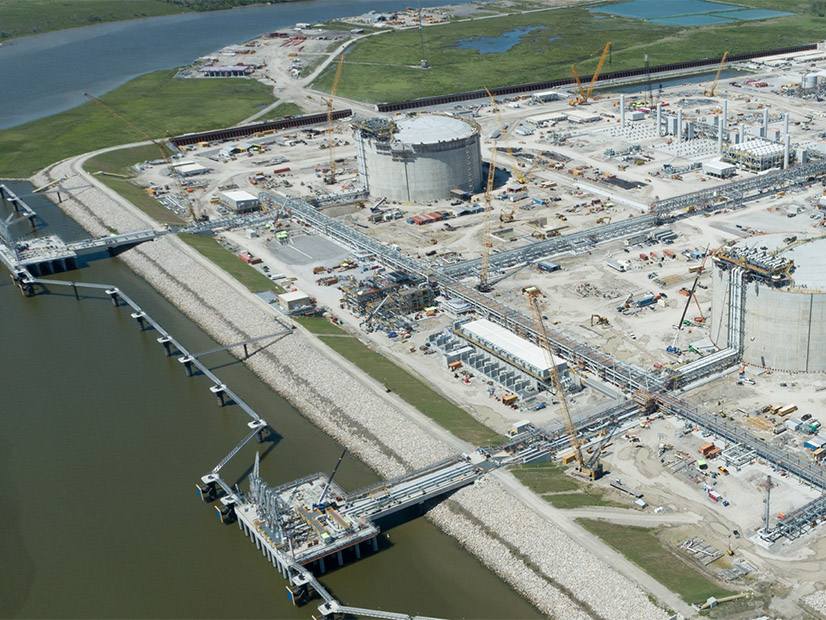
Nearly 20% of global oil trade flows through the strait, which is between Iran and the Arabian Peninsula, along with about 20% of global LNG, mainly from Qatar to East Asia. Global LNG prices have shot up, but U.S. export capability was already operating near capacity before the bombing began.
In the short term, EIA predicts national average natural gas prices of $3.80/MMBtu, 13% lower than last month’s figure, as more of the fuel was left in storage than it had expected.
“The Henry Hub spot price averages nearly $3.90/MMBtu in 2027, 12% lower than our forecast last month,” EIA said. “Lower prices in 2027 mostly reflect more associated natural gas production as a result of the recent increase in oil prices and the related increase in production later in the forecast.”
Higher crude production results in more associated natural gas production, and EIA expects the latter to rise 2% from 2025 to 121 Bcfd this year and an additional 3% in 2027 to 124 Bcfd. The 2027 figure is 2 Bcfd higher than EIA forecast a month ago.
“Elevated oil prices will drive more oil-directed drilling in the Permian, which will contribute to greater volumes of associated natural gas production,” EIA said.
National average residential electricity prices are expected to rise slightly this year and next, going from 16.5 cents/kWh in 2025 to 17.3 cents/kWh in 2026 and 18 cents/kWh in 2027.
“We expect U.S. electricity generation will grow by 1.2% in 2026 and by 3.1% in 2027, which follows recent upward trends in generation to meet growing electricity demand,” EIA said. “Between 2010 and 2019, electricity generation was essentially unchanged, as electricity demand from a growing population was offset by the use of more efficient appliances and heating and cooling equipment. But since 2021, U.S. generation has been growing [at] an average of about 2% per year.”
The biggest growth is in ERCOT, where EIA said generation is expected to grow by 7.3%, leading to increases across all technology types. The rest of the country is expected to see less generation from natural gas plants, as the delivered price of the fuel for generators is up 8%.
Higher gas prices tend to favor generation from coal plants as a substitute, but with operators currently planning to retire 4% of coal capacity and the growth of renewables, EIA forecasts coal generation will drop 7% this year, mostly in the Midwest and Southeast. Plans to retire coal plants are subject to change, the agency noted.