Renewable Power
Community solarHydropowerOffshore Wind PowerOnshore Wind PowerSolar PowerRooftop solarUtility scale solar

Shutterstock
Puget Sound Energy and Avista told the Washington Utilities and Transportation Commission they have taken steps to build clean energy resources quickly to qualify for expiring federal tax credits, while voicing concern that limited transmission capacity and the state’s greenhouse gas targets pose challenges.

© RTO Insider
The Department of the Interior announced an agreement with TotalEnergies for the company to give up offshore wind leases.

Meta
New Jersey legislators backed a bill that would require operators of AI data centers and crypto mining facilities to run them with clean energy and submit an energy use plan to the state.

Ørsted
One New England offshore wind farm has completed construction, and another has begun sending electricity ashore as it finishes construction.
Virginia Department of Historic Resources
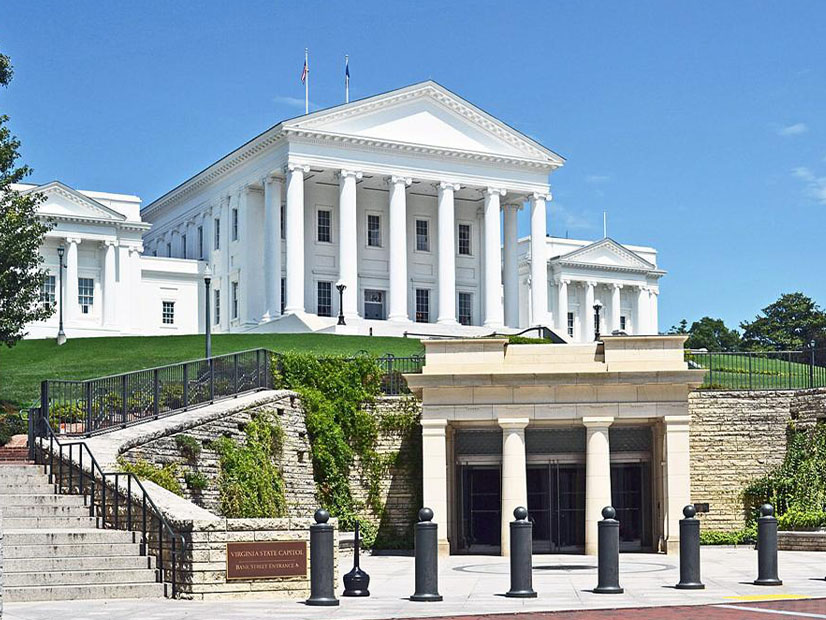
The Virginia General Assembly wrapped up its session and Democrats used the power they won in November's elections to push through bills favoring clean energy as the state faces significant load growth from data centers.

Shutterstock
A new MIT study posits that while retail electric rates are higher in states that have renewable portfolio standards, the standards are not to blame.
Wood Mackenzie
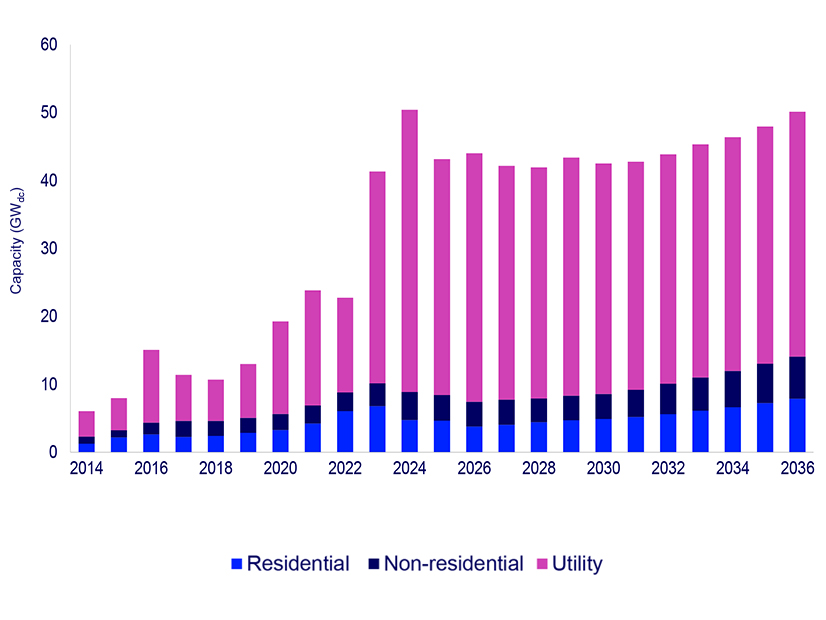
Nearly 40% fewer U.S. solar power projects reached completion in the fourth quarter than in the third quarter as developers pivoted to start new projects in time to qualify for tax credits.

Tucson Electric Power
Arizona regulators have repealed the renewable energy standard for electric utilities in the state, saying it's time for renewables to "stand on their own two feet."

Shutterstock
The New Jersey Board of Public Utilities approved the state’s first incentivized storage projects and launched new community and grid-scale solar solicitations.
Shutterstock
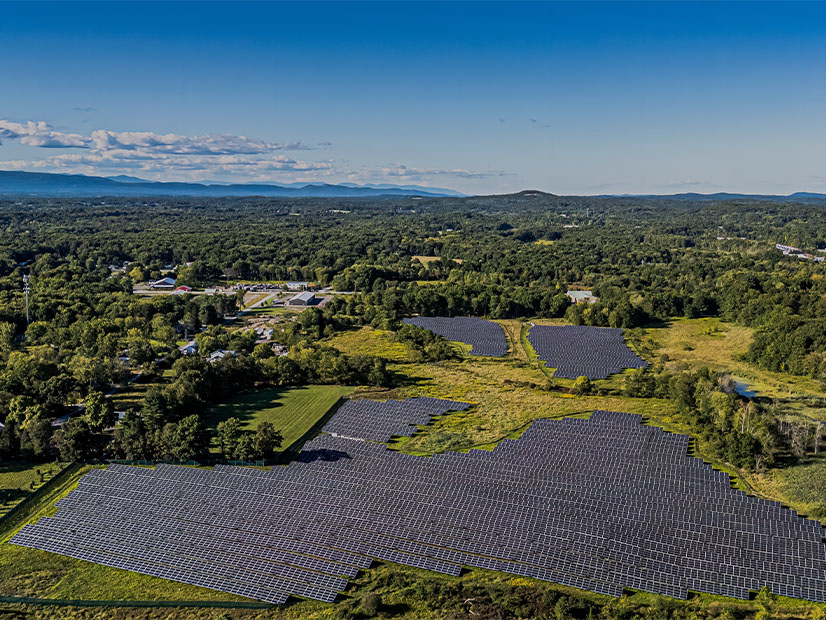
The state authority managing New York’s clean-energy transition estimated one part of complying with the state’s climate law could carry a gross impact of more than $4,000 per year per household in some cases.
Want more? Advanced Search