MISO is seeking judicial review of two FERC decisions preventing the RTO from recouping costs or revising a joint procedure with SPP over a shared North Dakota transmission line that has become congested by a new cryptocurrency mining facility.
MISO is seeking judicial review of two related FERC decisions preventing the RTO from recouping costs or revising a joint procedure with SPP over a shared North Dakota transmission line that has become congested by a new cryptocurrency mining facility.
The RTO on May 1 filed a petition for review with the 8th U.S. Circuit Court of Appeals over the commission’s previous orders declining a request that SPP refund MISO members or change procedures around the overworked 230-kV Charlie Creek flowgate (ER24-1586, et al).
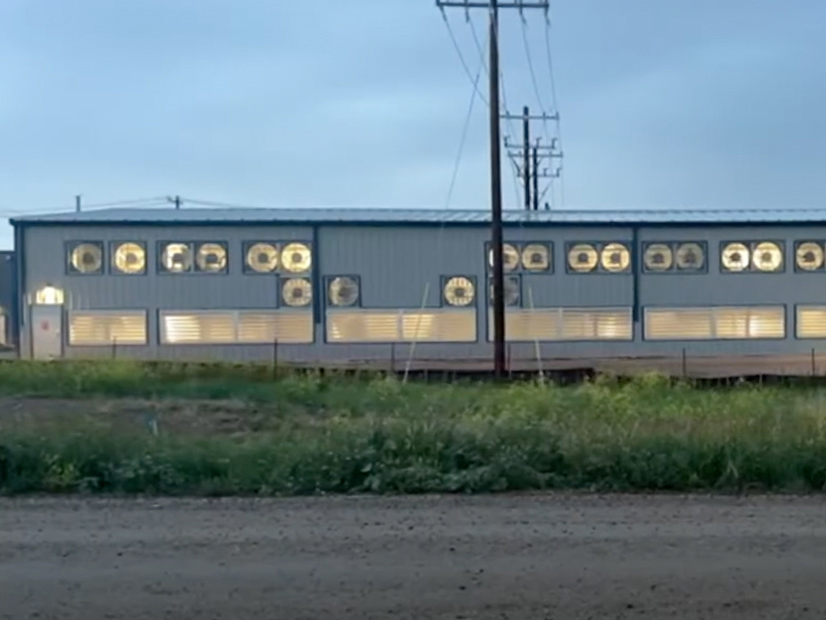
The flowgate ran up tens of millions of dollars in congestion costs after the Atlas Power Data Center in Williston, N.D., activated on the SPP side of the line in 2023. MISO and its member Montana-Dakota Utilities maintain that associated market-to-market (M2M) settlements unfairly involved MISO in SPP’s localized issue brought on by 200 MW of poorly planned data center growth.
FERC in March denied requests by both MISO and Montana-Dakota Utilities for rehearing to obtain refunds from SPP or cancel eligibility for the flowgate’s ongoing M2M coordination. The commission said the Charlie Creek Flowgate passed the RTOs’ flowgate eligibility studies for such coordination. (See FERC Again Declines Changes, Refunds on Crypto-burdened MISO-SPP Flowgate.)
According to the agreement between the RTOs, MISO must secure SPP’s permission to remove M2M coordination from the flowgate.
MISO also unsuccessfully sought for FERC to alter the MISO-SPP interregional coordination process — which manages flowgates — to make it easier for one RTO to revoke M2M status on a line if it doesn’t think the designation can assist with relieving a constraint. FERC decided that while a section of the two RTOs’ interregional coordination process says M2M coordination should be reserved for issues that are regional — rather than local — that requirement is not an explicit prerequisite for a flowgate to hold an M2M designation.
MISO has claimed that unwarranted M2M coordination has cost its members $38 million in charges to manage congestion on the flowgate, even as its members can offer only less than 1 MW of relief. However, FERC said SPP’s evidence shows that revoking Charlie Creek’s M2M flowgate status might risk the RTO needing to resort to transmission loading relief or load shedding.
MISO did not return RTO Insider’s request for comment on how much the RTO estimates its members are owed in refunds or whether it believes growing data center load would produce more flowgate issues at its seam with SPP.