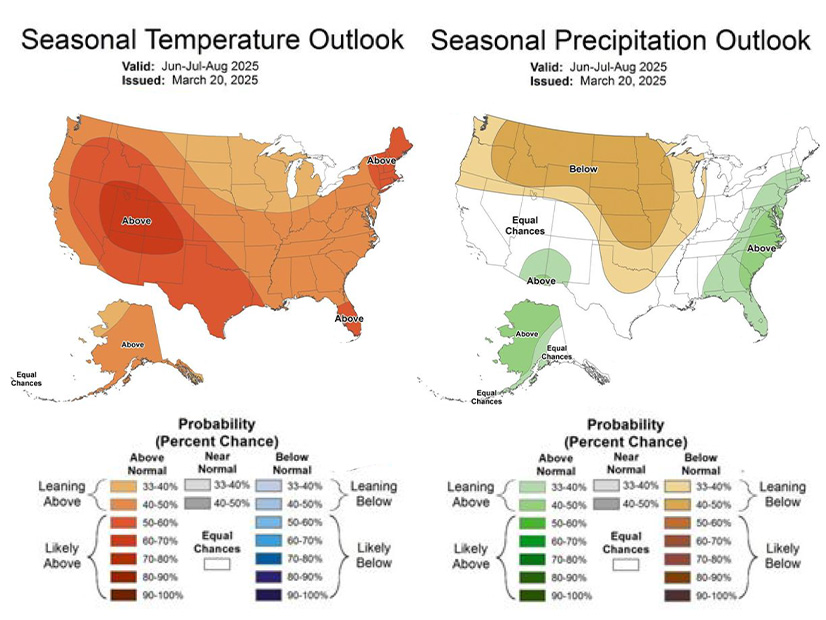
SPP says it expects it will have a “high probability” of enough generation to meet demand during peak-use hours this summer, despite predictions of a 40 to 60% chance of higher-than-average temperatures in the RTO’s 14-state footprint.
The grid operator said there are similar chances that rainfall will be below average in most of its region. However, SPP’s analysis does not consider the use of energy imports or demand response programs or the potential effects of voluntary conservation programs.
“Pending no unforeseen weather events, we’re confident in being able to reliably serve demand over the summer months,” Bruce Rew, SPP’s senior vice president of operations, said during the RTO’s biannual seasonal preparedness and emergency communications user forum May 19. “We’re ready for this summer and confident in our ability to keep the lights on.”
Staff said weather models indicate persistent heat in much of SPP’s footprint, with lower temperatures showing up in August.
Staff said SPP has nearly 68 GW of accredited capacity available, based on data submitted by load-responsible entities. With an expected net peak demand of 56.25 GW, the grid operator will be working with a 20.6% planning reserve margin this summer (June through September).
SPP’s all-time coincident peak is 56.18 GW, set in 2023.
In preparing its twice-yearly assessments of the summer and winter seasons, SPP said it collects data from past grid events and applies lessons learned to better prepare for future operational challenges. The analysis includes historical and predicted future electricity use, weather forecasts, variable wind energy availability, drought conditions, and generation and transmission outages.
NERC’s recent summer reliability assessment included the SPP region among those facing an “elevated” risk, defined as the potential for insufficient operating reserves in above-normal conditions. (See NERC Warns Summer Shortfalls Possible in Multiple Regions.)
SPP spokesperson Derek Wingfield said NERC’s forecast essentially aligns with the grid operator’s.
“We have a high degree of confidence, but if there are unexpected conditions, it’s always possible we could be looking at energy emergency alerts or load shed,” he said. “We take those things seriously and prepare for it.”