The California Public Utilities Commission has proposed a new framework that would take a “more programmatic approach” to load-serving entities’ resource procurement requirements compared with the agency’s recent practice of issuing procurement orders as needed.
The California Public Utilities Commission has proposed a new framework that would take a “more programmatic approach” to load-serving entities’ resource procurement requirements compared with the agency’s recent practice of issuing procurement orders as needed.
CPUC released the proposal, called the Reliable and Clean Power Procurement Program (RCPPP), in late April. It is intended to cover procurement to meet both reliability needs and greenhouse gas emissions-reduction targets.
“The goals … are to build on prior procurement experience and to establish a clear and predictable set of long-term procurement requirements that will allow LSEs to better plan and implement their procurement of reliable and clean electric resources,” the CPUC proposal stated.
CPUC staff held a workshop on the proposal May 16. RCPPP also was a topic of discussion during the California Energy Transition Summit in Sacramento on May 6-7.
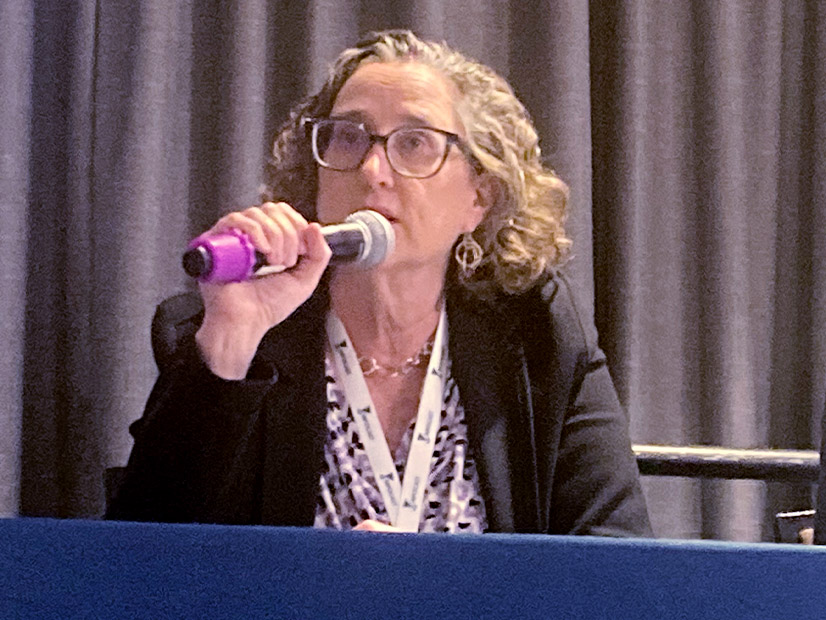
During the conference, Molly Sterkel, CPUC’s electric market program manager, described RCPPP as a bridge between CPUC’s resource adequacy program, which is focused on the availability of resources in CAISO markets, and the 10- to 15-year planning time frame of utilities’ integrated resource plans.
She recalled CPUC’s first procurement order to all LSEs, including investor-owned utilities, community choice aggregators and electric service providers, in 2019. That order, for 3.33 GW, was followed by a 2021 decision ordering a record-breaking 11.5 GW and a 2023 order for 4 GW. (See California PUC Orders 4 GW of New Resources for Reliability.)
“We were kind of tired of doing all those orders,” Sterkel said. “We knew we needed to have a more durable approach.”
CPUC staff issued proposals for a procurement framework in 2020 and 2022. The release of the current proposal was accompanied by a summary of comments on staff’s 2022 options paper.
The CPUC is accepting opening comments on the proposal through June 5. Reply comments will be due June 26. Commissioners are expected to consider the proposal later in 2025.
RCPPP Requirements
RCPPP would apply to all LSEs under CPUC jurisdiction, including IOUs, CCAs and ESPs, but not publicly owned utilities. The reliability portion of the RCPPP framework has four components: a determination of how many resources will be needed over a specified period, how much of the needed resources will be allocated to each LSE, reporting requirements and enforcement provisions.
The CPUC has proposed two options for reliability procurement. Under both options, the Reliability Procurement Need (RPN) would be calculated based on the accredited capacity to meet the 0.1 loss-of-load expectation using marginal effective load-carrying capability, plus a 2.5% buffer.
In Option I, the scope of the need determination would include both new and existing resources.
Option II would adopt a rolling 10-year “new” resource vintage, defined as resources that came online or will come online no more than 10 years before the compliance year. This would give LSEs credit for proactive and early procurement, the proposal stated.
For need allocation, both options would allocate RPN to each LSE using LSE-specific hourly load forecasts and each entity’s pro rata share of load during critical hours.
On the GHG reduction side of the framework, CPUC staff have proposed a clean energy standard, which would be a percentage calculated to meet the electric sector GHG target. An LSE’s allocated need then would be its retail sales forecast multiplied by the annual CES percentage.
California Senate Bill 100 of 2018 requires all electric retail sales to come from renewable energy and zero-carbon resources by 2045.
“How do you get to that 100% clean energy goal?” Sterkel said. “You can’t just keep putting more and more clean capacity in the system. You also have to make sure that the energy mix of each of the entities gets us from here to the 100% clean energy goal.”
Even with a new framework, procurement orders still may be needed to meet SB 100 objectives, according to a presentation during the CPUC workshop.