

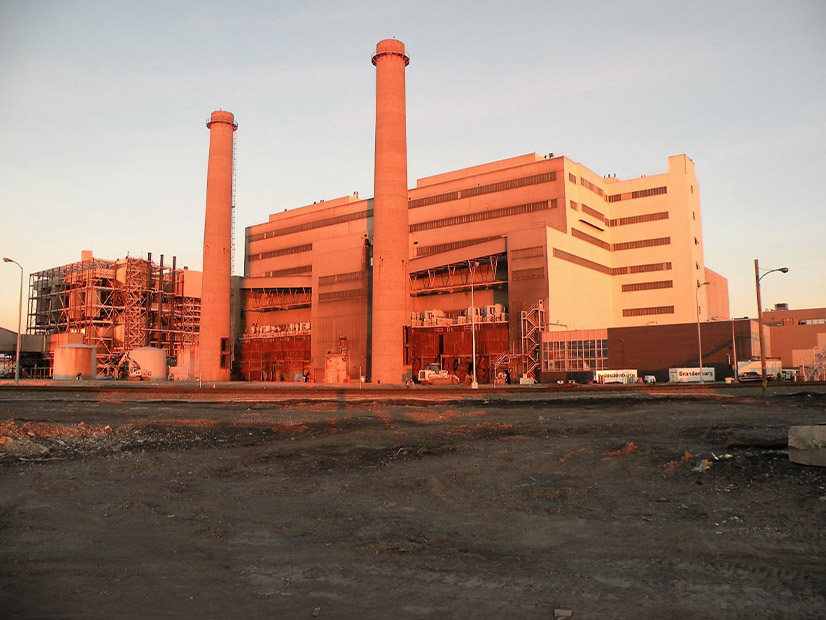
The U.S. Department of Energy issued an emergency order to keep Constellation Energy’s Eddystone Units 3 and 4, located outside Philadelphia, online under Section 202(c) of the Federal Power Act.
The U.S. Department of Energy has issued an emergency order to keep Constellation Energy’s Eddystone Units 3 and 4, located outside Philadelphia, online under Section 202(c) of the Federal Power Act. The order directs Constellation and PJM to keep the units available for dispatch through Aug. 28.
The order states that retaining the two gas-fired generators, with a combined output of 760 MW, is necessary to prevent emergency conditions in PJM “due to a shortage of facilities for the generation of electric energy, resource adequacy concerns and other causes.”
“Maintaining access to affordable, reliable and secure power is always our top priority, particularly during the summer months when electricity demand reaches its peak,” U.S. Secretary of Energy Chris Wright said in a May 31 announcement of the order. The generators were scheduled to be retired that day.
The order cited PJM CEO Manu Asthana’s March congressional testimony that reliability is challenged by a combination of government policies prompting generation deactivations, data center load growth and an interconnection queue composed mostly of non-dispatchable generation. It also pointed to PJM’s February 2023 “Energy Transition in PJM: Resource Retirements, Replacements & Risks” position paper, which found the RTO could face a capacity shortfall in 2030. (See PJM Whitepaper to Highlight Future RA Concerns.)
PJM voiced its support for the emergency order in a May 31 statement, in which it calls the order a “prudent, time-limited step” that will allow the department, RTO and Constellation to further analyze whether there is a long-term need to retain the Eddystone generators.
“For over two years, PJM has repeatedly documented and voiced its concerns over the growing risk of a supply-and-demand imbalance driven by the confluence of generator retirements and demand growth. Such an imbalance could have serious ramifications for reliability and affordability for consumers,” PJM said.
In its 2025 Summer Outlook, PJM stated it could fall short of peak loads under an “extreme planning scenario,” requiring the deployment of demand response and increased risk of emergency procedures. The extreme scenario looks at maintaining PJM’s reserve requirement under a 90/10 peak load, which is set at 166.6 GW for summer 2025, whereas the Operations Assessment Task Force’s report focuses on the ability to reliably serve the 50/50 forecast peak of 161 GW. The latter report did not identify any reliability violations in the summer. (See “Summer Outlook Finds Possible Reserve Shortage,” PJM OC Briefs: May 8, 2025.)
Constellation requested PJM authorization to bring Eddystone offline on Dec. 1, 2023, on the grounds that “continued operation of these units is expected to be uneconomic.” PJM responded a year later that it found no transmission reliability violations associated with the deactivation, clearing Constellation to retire the units on May 31, 2025.
“Constellation is pleased to work with the Department of Energy and PJM and is taking emergency measures to meet the need for power at this critical time when America must win the AI race,” the company said in an emailed statement. “Constellation is taking immediate steps to continue to operate Eddystone Units 3 and 4 throughout the summer.”
PJM spokesperson Jeff Shields told RTO Insider that PJM does not hold the authority to require generation owners to continue operating when needed for resource adequacy.
“We can only request reliability-must-run to provide us enough time to build transmission to address system issues that will be created by the removal of the resource from the grid. It is not meant for resource adequacy; we can’t ask an owner to continue to run based on current supply/demand challenges,” he said.
The order directs PJM to submit the steps it’s taking to ensure Eddystone remains available by June 15, as well as to provide information as requested about the environmental impact of the order. Both the RTO and Constellation also are directed to file with FERC any necessary tariff revisions or waivers.
Noting that when Section 202(c) emergency orders may conflict with environmental standards, generation run hours should be limited to hours needed to resolve the emergency, the order limits dispatch to “the times and within the parameters determined by PJM for reliability purposes.”
“To minimize adverse environmental impacts, this order limits operation of dispatched units through the expiration of the order. PJM shall provide a daily notification to the department reporting whether the Eddystone Units have operated in compliance with the allowances contained in this order,” it continues.
The order states the department will continue to evaluate whether Eddystone is needed for reliability under an April 8 executive order that widens how the Section 202(c) authority may be used. (See Trump Seeks to Keep Coal Plants Open, Attacks State Climate Policies.)
DOE is developing a methodology “to identify current and anticipated reserve margins for all regions of the bulk-power system” regulated by FERC. The EO “requires this methodology to be published by July 7, 2025, and be used to establish a protocol to identify which generation resources within a region are critical to system reliability and prevent identified generation resources from leaving the bulk-power system.”
Earlier in May, DOE issued another emergency order to keep Consumers Energy’s 1,560-MW J.H. Campbell coal plant in West Olive, Mich., operational beyond its May 31 retirement. The company entered into an agreement with the Michigan Public Service Commission to stop burning coal by the end of 2025. (See DOE Orders Michigan Coal Plant to Reverse Retirement.)
Environmental Organizations Object to Emergency Order
The NRDC wrote that the orders in PJM and MISO are part of a larger effort to promote fossil fuel generation at the expense of impacts to health and consumer rates.
“The Department of Energy’s move to keep these zombie plants online will have significant public health impacts and increase electricity costs for people in Michigan and Pennsylvania,” said Kit Kennedy, power sector managing director at NRDC. “These orders are about a power grab, not a power emergency. These dirty and expensive fossil plants were slated to close because they could not compete with cheaper, cleaner alternatives.”



