CAISO is proposing a new method for verifying how much energy thermal resources can provide during peak conditions on California’s grid for resource adequacy purposes.
CAISO is proposing a new method for verifying how much energy thermal resources can provide during peak conditions on California’s grid for resource adequacy purposes.
CAISO presented the proposal at a June 11 meeting as part of its resource adequacy (RA) working group, which reviews RA rules, requirements and processes for grid reliability and operations.
Under current rules, a resource’s seasonal ambient derate data is not consistently reflected in that resource’s net qualifying capacity (NQC) value. This inconsistency creates challenges in reliably operating the grid, CAISO said in its proposal. For example, a 50,000-MW peak load contains about a 4% ambient derate, compared to a 20,000-MW peak load on the system, which has about a 2% ambient derate, CAISO said.
In California, RA programs began in 2004 under the California Public Utilities Commission to ensure the state’s grid always had enough power to meet demand. CAISO’s RA initiatives are intended to complement the CPUC’s RA programs.
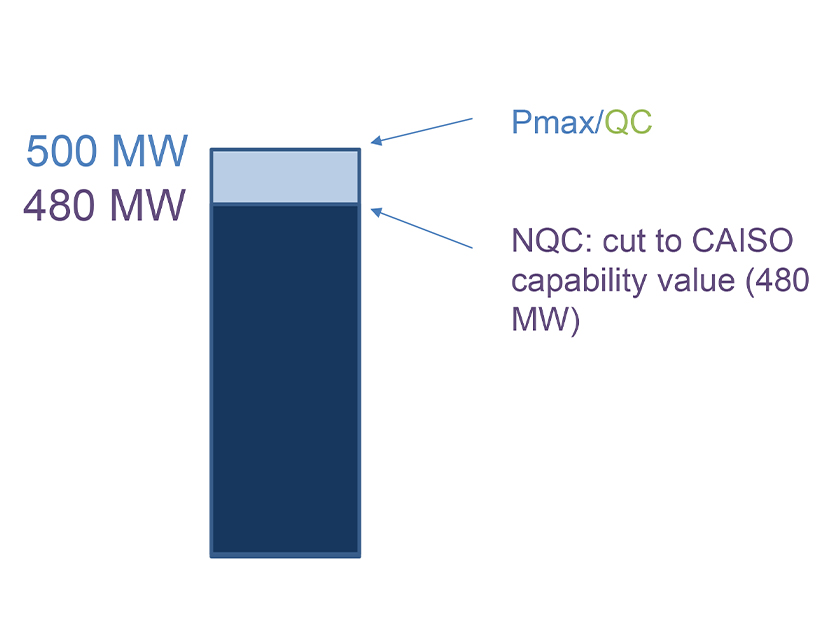
In the proposal, CAISO would verify an RA resource’s qualifying capacity (QC) value based on that resource’s historic outage data. The proposed method “ensures RA resources’ operational capabilities during peak load conditions are reflected in NQC values,” CAISO said in the proposal.
More specifically, CAISO would produce monthly “capability values” as part of its NQC process. These capability values represent a resource’s availability during peak load conditions, which often happen during times of high ambient temperatures.
To calculate a capability value, CAISO would review a resource’s ambient derates due to temperature during peak demand in recent years with existing outage management system data, CAISO said in the proposal. Each year, CAISO publishes RA NQC data to its reliability requirements webpage.
However, the proposed method has a “notable drawback,” CAISO said. Forced outages are “not consistently reported by resource SCs when a resource is experiencing multiple overlapping outages,” CAISO said.
To address this potential issue, scheduling coordinators (SC) could adjust proposed QC values based on site-specific generator performance information under typical peak system conditions, thereby establishing monthly capability values for thermal resources. If weather data is not available at a generator’s site, SCs could pull data from nearby weather stations. SCs then could verify that a generator’s maximum output is feasible. This maximum value could reveal the generator’s likely performance under typical peak system conditions, CAISO said.
The proposed method would apply only to thermal resources — i.e., gas, oil, coal, nuclear, biomass, geothermal and biogas fuel types — and represents resource availability during median peak load conditions, not extreme conditions.
American Clean Power-California, in comments to CAISO, said it is concerned about double counting under the proposed method. The group encouraged CAISO to avoid including historic ambient derates into NQC processes if those historical derates already are accounted for in other processes.
CAISO also considered using performance test data from each thermal generator, rather than historical data, to verify an RA resource’s QC value. However, stakeholders viewed the potential benefits of such a testing program as “providing limited value compared to the administrative costs of such a program,” CAISO said.
“Given the challenges and administrative burden of developing an NQC testing program in accordance with CAISO [tariffs], CAISO is not moving forward with a testing-based proposal,” CAISO said in the proposal.
Stakeholder comments on the proposal are due by June 25.