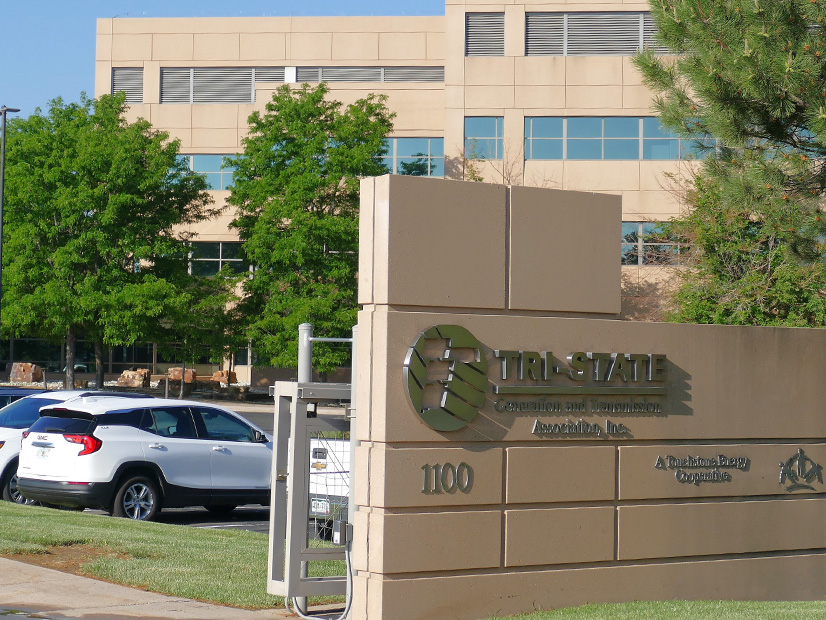
Tri-State Generation and Transmission Association asked the Colorado Public Utilities Commission to find it would be in the public interest for the power supplier to join SPP, saying integrating with the RTO woud bring significant benefits.
Tri-State said in a June 17 news release that it is preparing to fully integrate with SPP’s RTO West expansion in April 2026 together with six other Western utilities and that it has filed an application for a public interest determination with the commission.
By joining the RTO, Tri-State would bring resources located in the power supplier’s Colorado, Nebraska and Wyoming Western Interconnection system, totaling more than 20 generating units, more than 3,100 miles of high voltage transmission and portions of 23 of Tri-State’s members’ loads, “representing 67% percent of gross load across the Tri-State system,” according to the release.
Additionally, Tri-State touted the benefits of joining the RTO, saying it would bring an estimated $20 million in annual net benefits and increased ability to meet energy demand and greenhouse gas reduction targets, among other benefits.
“The expansion of the SPP RTO is the most cost-effective pathway to organized market benefit for Tri-State’s members,” Duane Highley, Tri-State’s CEO, said in a statement. “Our participation will support our members’ goals for reliability, affordability and a cleaner energy future, with cost savings shared by all members.”
“SPP welcomes Tri-State’s announcement about their expanded participation in the SPP RTO,” Carrie Simpson, SPP vice president of markets, told RTO Insider. “As a long-standing SPP member and key energy provider in the West, Tri-State’s deeper involvement strengthens our shared commitment to responsibly and economically keep the lights on today and in the future.”
“This announcement formalizes plans announced years ago and applies only to Tri-State’s Colorado facilities outside the Xcel system. It does not impact Tri-State’s continued participation in Markets+ for facilities within Xcel,” Simpson added.
FERC on March 20 accepted SPP’s proposed revisions to its tariff that will incorporate seven Western Interconnection entities as transmission-owning members of the RTO, making the grid operator the first to provide full market services in the grid’s two major interconnections. (See FERC Approves Tariff for SPP RTO West.)
SPP has targeted April 2026 as when the entities, including Tri-State, will begin participating in its Integrated Marketplace, transmission planning, reliability coordination and other RTO services. They all are members of the Western Energy Imbalance Service market, which SPP has administered since 2021:
-
- Basin Electric Power Cooperative
- Colorado Springs Utilities
- Deseret Power Electric Cooperative
- Municipal Energy Agency of Nebraska
- Platte River Power Authority
- Western Area Power Administration
SPP has said RTO West will provide more than $200 million in annual benefits to its members, primarily through the optimization of DC ties with the Eastern Interconnection.
In the June 17 news release, Tri-State said the RTO will reduce seams between providers in “Colorado, Wyoming, Montana and Nebraska through the consolidation of seven transmission providers’ tariffs into an SPP RTO common tariff, also reducing the costly “pancaking” of transmission rates.”
Tri-State noted that seams will continue to exist between the Western Area Power Administration’s Colorado-Missouri balancing area and that of the Public Service Company of Colorado, which is seeking to join SPP’s Markets+ day-ahead market offering. (See PSCo Seeks to Join SPP’s Markets+.)
Tri-State has been one of the signatories to a series of “issue alerts” touting the purported advantages of Markets+ over CAISO’s extended day-ahead market and the Western Energy Imbalance Market (WEIM). (See 7th ‘Issue Alert’ Highlights Markets+ Footprint.)
“We greatly value the full benefits of the SPP RTO, including day-ahead, real-time and ancillary services markets, efficient regional transmission planning, reliability coordination, a common transmission tariff and a participatory governance model that help us reduce costs and advance clean energy goals,” Highley said.