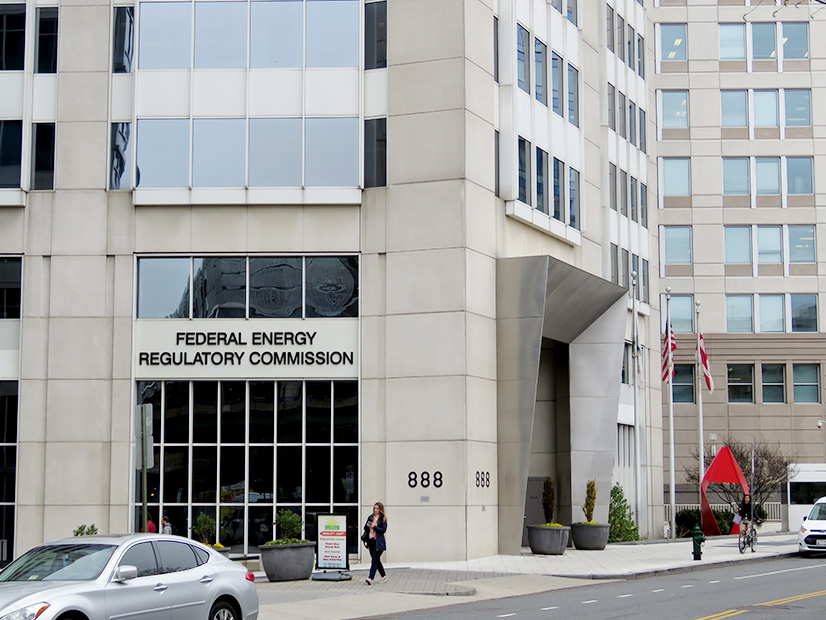
FERC on June 30 changed its regulations implementing the National Environmental Policy Act (NEPA) in compliance with President Donald Trump’s Executive Order 14154, “Unleashing American Energy” (RM25-11).
Trump ordered the Council on Environmental Quality to rescind its regulations implementing NEPA; FERC’s action eliminates references in its own rules to those now-defunct regulations.
“We will continue to ensure our environmental reviews are legally durable so projects stand up in court and get built,” FERC Chair Mark Christie said in a statement. “Thanks to the leadership of President Trump, our new staff guidance on NEPA will inform all interested parties on our process and should be a useful tool in making the permitting process more efficient and transparent.”
Enacted in 1970, NEPA established the CEQ and required all federal agencies, including FERC, to craft environmental assessments (EA) and environmental impact statements (EIS) that evaluate their actions’ effects on the environment. Trump’s Day 1 executive order repealed one issued by President Jimmy Carter in 1977, Executive Order 11991, which made CEQ the lead agency to develop the process agencies should follow to comply with NEPA and to manage conflicts between agencies over their responsibilities.
The CEQ’s authority to write regulations was rescinded in November 2024 by the D.C. Circuit Court of Appeals, which found NEPA did not provide it. In his order, Trump directed the CEQ to instead provide guidance on how each agency should update their environmental review processes.
The details on how FERC’s process will change are laid out in a manual prepared by its staff. The manual includes details on how staff will determine what actions are subject to NEPA’s requirements and the level of review required by the law. It describes how staff will “ensure that relevant environmental information is identified and considered early in the process in order to support informed decision-making” and “conduct coordinated, consistent, predictable and timely environmental reviews while cutting unneeded burdens and delays.”
The manual spends several pages describing exclusions from the NEPA process and then explains that if a project is found to have a foreseeable effect on the quality of the human environment, staff will craft an EA. The text of the assessments is not to exceed 75 pages (not including citations or appendices with data such as scientific tables or statistical calculations).
Staff will have a year to prepare the assessment, with the deadline starting when hydropower projects are issued a Notice of Intent to Prepare an Environmental Assessment, or when natural gas projects get issued a Notice of Schedule. The assessment will determine whether an EIS, which is required when a project’s environmental impacts cannot be mitigated, is needed.
The EIS process will include the chance for other interested parties to make comments on the proposed infrastructure and any NEPA mitigations required. Each EIS is to be limited to 150 pages of main text, with actions of “extraordinary complexity” getting up to 300 pages.
The deadline for an EIS will be two years, but staff can get extensions if that schedule is not possible to meet.