Regulators Approve SPS, SWEPCO System Resiliency Plans
The Texas Public Utility Commission has approved system resiliency plans for Southwestern Public Service and Southwestern Electric Power Co. (SWEPCO), as it continues to meet a requirement from the 2023 legislative session.
Both plans were the result of agreements with intervening parties. SPS, an Xcel Energy subsidiary, reached a settlement over its three-year plan with the Office of Public Utility Counsel (OPUC), Alliance of Xcel Municipalities, Texas Industrial Energy Consumers (TIEC), Walmart, the International Brotherhood of Electrical Workers Local Union 602, Golden Spread Electric Cooperative and PUC staff (57463).
The SPS plan includes distribution overhead hardening, distribution system protection modernization, communication modernization and wildfire mitigation. The utility proposed $538.3 million of investments to be implemented from 2025 to 2028.
The settlement removed the five lowest benefit-cost ratio projects from the distribution overhead hardening measure, totaling $5.9 million by the agreement. However, the commission agreed to reinstate the projects, saying they also were designed to strengthen overhead infrastructure to prevent, withstand and mitigate wildfire risks.
In February 2024, downed power lines from a broken SPS utility pole ignited the Smokehouse Creek Fire in the Texas Panhandle. It became the largest wildfire in recorded state history, burning more than 1 million acres before being contained.
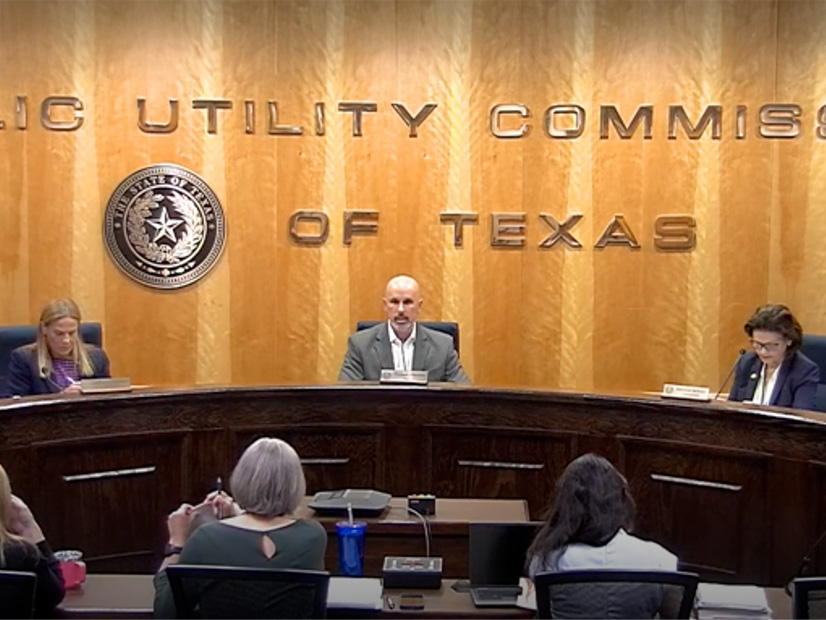
“Given where this is and the recent history in the area, I think adding those measures back in makes sense to me,” PUC Chair Thomas Gleeson said during the commission’s July 10 open meeting.
Xcel has acknowledged its role in the fire and has settled 151 out of 225 claims filed through a dedicated claims process.
SWEPCO’s plan was included on the PUC’s consent agenda. The American Electric Power subsidiary reached a unanimous agreement in March with commission staff, OPUC, Cities Advocating Reasonable Deregulation, TIEC and Walmart. The commission modified the plan to remove several “enhanced vegetation management” measures with benefit-to-cost ratios below 1.0, reducing its estimated cost from $88.9 million to $83.7 million (57259).
The four-year plan also includes distribution feeder and lateral hardening, and increased distribution automation circuit reconfiguration.
The 2023 Texas Legislature’s House Bill 2555 allows the state’s electric utilities to file resiliency plans for approval with the PUC. The plans must include measures that would “help the utility prevent, withstand, mitigate or more promptly recover from resiliency events, which include extreme weather, wildfires, and cybersecurity or physical security threats.”
Oncor was the first utility to secure approval of its resiliency plan in November 2024. (See Texas PUC Approves 1st System Resiliency Plan.)
Wildfire Mitigation Plans
The commission established a July 25 deadline for utilities, municipalities and cooperatives that own transmission and distribution facilities to provide input on PUC rules for wildfire mitigation plans, as required by a new state law (56789).
“I know it’s a short timeline, but please provide … your input,” Gleeson said. “As you hear us say often up here, the best outcomes happen when we get as full participation as possible, so please avail yourselves of this opportunity to provide input to commissioners.”
Staff plan to bring a formal proposal for publication to the PUC’s Aug. 21 open meeting.
Status Quo for FFSS Program
After consulting with the grid operator and its Independent Market Monitor, PUC staff have proposed maintaining the same parameters for ERCOT’s firm fuel supply service (FFSS) program during the winter 2025/26 contract period. That will retain the program’s $54 million budget, $12,240/MW offer and 48-hour deployments (56000).
The program has procured 3,319 MW and 4,194 MW in its first two years, at a cost of $29.4 million and $42.4 million, respectively.
Staff plan to gather feedback from ERCOT, the IMM and stakeholders to develop rule language before future contract periods, allowing the commission to consider next phase options before the 2026/27 winter.
The FFSS program provides additional grid reliability and resilience in the event of fuel disruptions during extreme cold weather, compensating generation resources that meet a higher standard.
SB6 Workshop July 21
The PUC has scheduled a workshop for July 21 to gather public and stakeholder input as it prepares to implement Senate Bill 6.
The “seminal piece of legislation” from the 2025 biennial session, as Gleeson described it, directs the commission to determine a cost allocation for large loads to ensure they pay their fair share of infrastructure expenses and requires their developers to pay a $100,000 fee for the initial screening studies (58317).
Gleeson said it will be important to standardize how load is counted for transmission purposes and to focus on the bill’s co-location and net-metering agreements. He urged staff to work with ERCOT staff on transmission and resource adequacy issues.