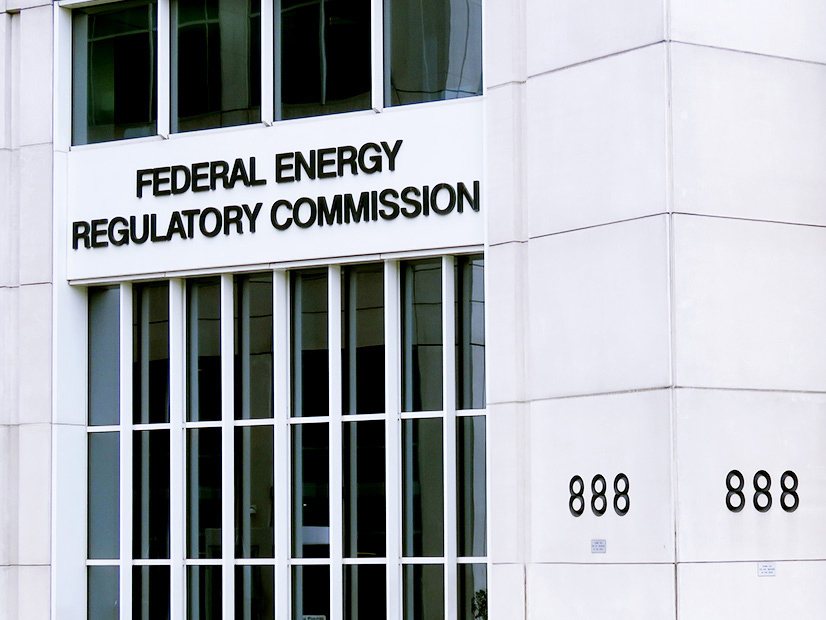
FERC is working to comply with an executive order from President Donald Trump requiring a review of all regulations it’s issued under its major governing statutes. The commission’s former general counsel warned it could be a boondoggle if handled incorrectly.
The order directs FERC and other energy agencies to include sunset provisions in its regulations, to the extent permitted by law. That would require FERC to re-examine them periodically or allow them to lapse, said Matt Christiansen, who was general counsel at FERC during the Biden administration and now is a partner at Wilson Sonsini Goodrich & Rosati.
“The CFR [Code of Federal Regulations] that pertains to FERC is like three or four inches thick,” Christiansen said in an interview with RTO Insider. “It’s at least 1,000 pages. So, we’re talking about a lot of regulations that are potentially subject to this order. That means FERC staff has to spend a huge amount of time determining what would stay, what would go, what would happen to the industry and what would need to follow on if certain regulations are removed.”
That includes fundamental rules that regulate the power industry such as allowing wholesale transactions using market-based rates.
“If the market-based regulations just disappear, it’s not clear what would fill that vacuum and what would happen to regulated entities,” he said.
The U.S. Code is more than 60,000 pages and “unelected agency officials” wrote most of the legally binding rules, which often stretch the statutory provisions beyond what Congress enacted, said the executive order called “Zero-Based Regulatory Budgeting to Unleash American Energy.”
“In particular, the previous administration added more pages to the Federal Register than any other in history, with the result that the Code of Federal Regulations now approaches a staggering 200,000 pages,” the order said. “These regulations linger in such volume that serious reexamination seldom occurs. This regime of governance-by-regulator has imposed particularly severe costs on energy production, where innovation is critical. The net result is an energy landscape perpetually trapped in the 1970s.”
Another big challenge to implementing the order is the Administrative Procedure Act (APA), which under Supreme Court precedent requires agencies to use the same procedures to amend a regulation that they used to enact it, said Christiansen.
“FERC uses notice-and-comment rulemaking to amend the CFR, which entails an opportunity to be heard on every aspect of every provision that’s added or removed from the CFR,” he added. “Then FERC, as part of its reasoned decision-making obligations under the Administrative Procedure Act, owes a non-arbitrary, non-capricious response to all those comments, which is a huge amount of work. I don’t think you can just insert a sunset clause and stop enforcing those provisions or [remove] them altogether.”
That’s potentially a huge task for an agency that has lost staff and is dealing with a federal hiring freeze. Christiansen said FERC already was understaffed, compared to its growing responsibilities, under the Biden administration.
“I think adding such a big task as the EO at least seems to contemplate on its face would be really taxing on staff and could complicate FERC efforts to do some of its bread-and-butter statutory requirements,” Christiansen said.
Christiansen said that there are regulations that could be streamlined, but FERC needs to get the process correct so it doesn’t lead to extended litigation. Chair Mark Christie said the same thing in his press conference following the April open meeting just after the order was released.
“I think the idea of a regulatory house cleaning where you look at all your regulations is a very, very good idea,” Christie said. “We’re already in the process of looking at — for example, we’re starting with regulations that were proposed that never got a final vote. They’re sort of like zombie proposals that somebody at one time thought was a good idea. They got them out as a NOPR [Notice of Proposed Rulemaking], but they just sort of have been there for years.”
Christie was describing proposals that never advance to a final rule because of leadership changes or changing priorities of the chair. But when it comes to rules that actually are finalized, the APA needs to be followed.
“You’ve got to follow it. And whatever we do, I want it to be effective. And I want it to stand up in court, because losing in court is not something I like to do,” Christie said in April. “I want to win in court.”
E&E News by POLITICO published a story on the executive order and got hold of a document circulating among commissioners that offers a potential response. However, FERC votes publicly and, especially with a looming leadership change at the agency with a new chair awaiting confirmation, much could change by the White House order’s deadline of Sept. 30.
Executive orders can have short shelf lives depending on who wins the next election. If this one were to stay in place, it would require regular reviews of major FERC rules such as Order 888, which set up the open access transmission rules, and other foundational orders. Those rules have helped to establish the entire market-based regulatory structure that governs most of the power industry.
“There might be pockets of the industry that are OK with big changes, but I think on the whole the industry would prefer stability rather than the upheaval that I think this rule at least contemplates,” Christiansen said. There are strategies that FERC, if so inclined, “could employ to mitigate some of that uncertainty.”