California lawmakers on Sept. 10 shifted the legislation designed to transition governance of CAISO’s markets to an independent “regional organization” (RO) into a different bill: AB 825.
The “new” bill replaces SB 540, which sought to implement the West-Wide Governance Pathways Initiative’s plan to create a regional organization (RO) to oversee CAISO’s Western Energy Imbalance Market and soon-to-be-launched Extended Day-Ahead Market — and authorize the ISO to participate in the RO.
The move is the product of considerable legislative maneuvering over the past week. AB 825, which passed out of the Senate Appropriations Committee on Aug. 29 and is poised for a full Senate vote, previously was an “energy affordability” bill intended to limit the rate impact of utility investments in transmission infrastructure needed to prevent wildfires and meet California’s clean energy goals. Those provisions have been removed from AB 825, which has been renamed “Independent System Operator: independent regional organization” to reflect its new purpose.
The new version of AB 825 importantly strips out a controversial provision added to the original version of SB 540 that would have authorized a new Regional Energy Market Oversight Council to force CAISO and the state’s investor-owned utilities to withdraw from a regional energy market if it found participation no longer served the interests of the state. The amendment prompted many of SB 540’s backers to pull their support in July. (See Calif. Pathways Bill Delayed After Orgs Withdraw Support, While Newsom Signals Backing for Effort.)
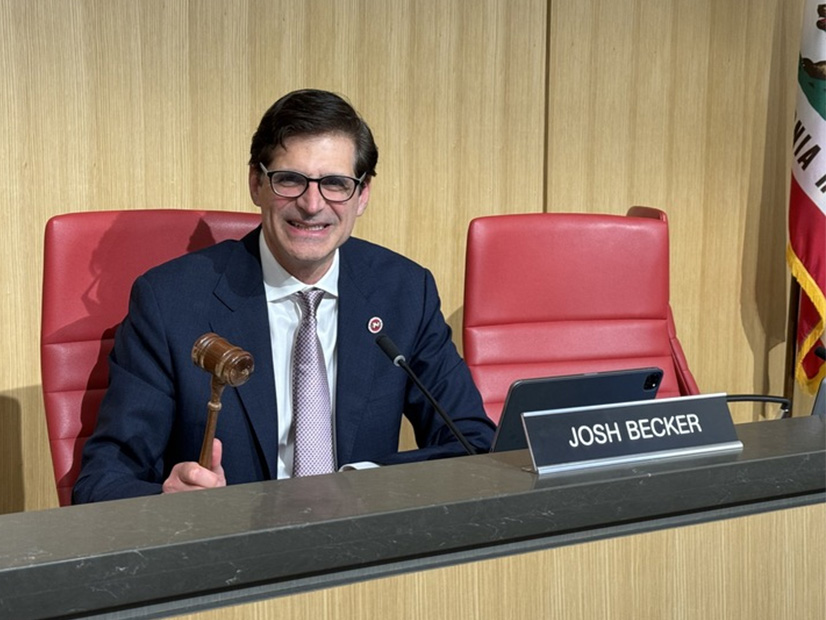
Sponsored by Assemblymember Cotti Petrie-Norris and Sen. Josh Becker, AB 825 “would authorize the ISO and the electrical corporations that are participating transmission owners whose transmission systems are operated by the ISO to use voluntary energy markets governed by an independent regional organization, only if specified requirements are satisfied.”
The 13 requirements outlined in the bill largely align with the principles and plans set out by the Pathways Initiative during its “Step 2” process for designing the new independent RO.
Among them is a guarantee that the RO will be a nonprofit whose governance documents and FERC-approved tariff include provisions “to respect the authority of each state that has a load-serving entity or balancing authority participating in the market to set its own procurement, resource adequacy, environmental, reliability and other public interest policies and exercise oversight over its regulated entities.”
Another requirement calls for the RO’s governing board to maintain a public policy committee of the governing board “that engages with states, local power authorities and federal power marketing administrations about potential impacts to state, local or federal policies before it approves a tariff change” for filing with FERC.
The bill would require CAISO to continue to operate its energy markets “subject to the market rules determined by the independent regional organization as accepted by” FERC. The bill would also require that the RO “provide greenhouse gas emissions information and protocols sufficient to enable compliance with the requirements of any state agency.”
The legislation also stipulates that the RO’s tariff provide “a procedure for unilateral withdrawal from the independent regional organization’s energy markets by any participant on their own accord, or as required by an applicable regulatory authority or state statute, with reasonable prior notice and without any penalties, unreasonable costs or further discretionary approvals.”
The bill would authorize the ISO to implement tariff changes needed to transfer its governance to the RO and join the entity on or after Jan. 1, 2028.
Renewed Support
Sources close to the Pathways process have expressed confidence about the prospects for the AB 825, telling RTO Insider the bill appears to have the approval of the Assembly, Senate and Gov. Gavin Newsom.
“As we move toward achieving California’s 100% clean energy goals, we must look at every opportunity to reduce costs, improve reliability and cut emissions,” Sen. Becker said in a press release. “AB 825 strikes that balance by unlocking the benefits of a regional energy market while safeguarding California’s public policy priorities. This is a win-win for California families, our economy and our climate future.”
Becker’s release said the amended AB 825 includes “rigorous annual legislative oversight by relevant California legislative policy committees to ensure the new market operates in line with California’s clean energy and reliability goals” and “provides strong protections for state authority, including California’s right to withdraw at any time if participation ceases to benefit the state.”
“We got it done :-),” Becker said in a more unvarnished comment responding to a post on LinkedIn.
“California decision-makers, including Governor Newsom, see the value of a regional market and are committed to seeing this through,” Leah Rubin Shen, managing director of Advanced Energy United, said in a statement. “The fact that the fixed SB 540 language has now been amended into the Assembly’s former energy affordability package, AB 825, is a positive step forward. It shows a strong commitment toward a Western market that delivers on what California and the rest of the West need the most, more affordable and reliable power.”
The Environmental Defense Fund and Natural Resources Defense Council, which both pulled their support from the amended version of SB 540, voiced their support for the new bill in a joint statement.
“With state leaders rightly focused on making California more affordable, the choice on AB 825 is simple. We can’t keep the lights on or fight climate change alone,” said Katelyn Roedner Sutter, EDF’s California state director. “By passing this bill this year, lawmakers will keep power bills in check while expanding clean electricity access and preventing blackouts.”
“Building a 100% clean energy economy the cheapest and fastest way possible starts with passing AB 825,” said Victoria Rome, NRDC’s senior director of California affairs. “Right now, we generate more clean power than ever, but we are not able to use all of it efficiently. This bill is a chance for California to lead a broader transition to cheaper clean power by working with our neighbors across the West.”
The latest version of AB 825 is still subject to a California legislative requirement that an amended version of a bill be in print for 72 hours before it can become eligible for a full floor vote in either house. The timing of the release of the final bill means a vote can’t be taken ahead of the legislature’s scheduled Sept. 12 recess. Becker’s office confirmed lawmakers will extend the session to vote on the bill Sept. 13 — a Saturday.