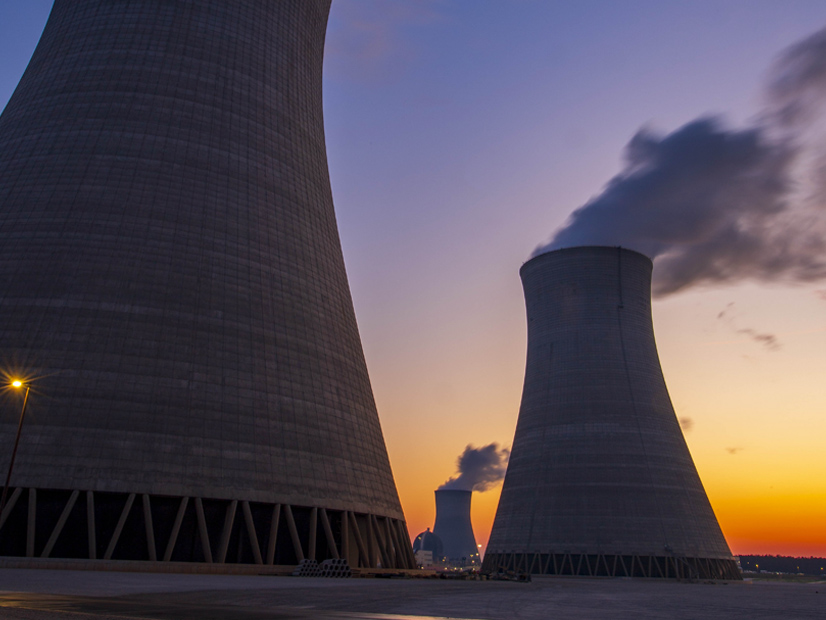
Amid the growing push for new sources of power generation — especially from the data center sector — we have seen an extraordinary number of announcements concerning nuclear power. At this point, they are occurring almost weekly, something few would have anticipated just a few years ago.
These announcements generally fall into one of three areas: rehabilitation of closed nuclear facilities, potential development of new large-scale facilities such as the AP 1000 technologies currently deployed across the country, and development and deployment of an entirely new class of smaller reactors commonly referred to as small modular reactors (SMRs) or modular nuclear reactors (MNRs). The buzz in the space is considerable, but there still are numerous hurdles to be overcome before we can declare a win for the much anticipated “nuclear renaissance.”
Not Dead Yet
In recent years, numerous nuclear plants were struggling to survive, especially in competitive power markets where low-cost gas-fired and renewable plants were seriously denting their economics. Indeed, the economic outlook was so poor that five states (Connecticut, Illinois, New York, New Jersey and Ohio) threw their nuclear plants lifelines and created subsidy programs to keep 14 nuclear plants operating.
Several other states, though, chose to let plants be taken out of service. The typical decommissioning process is to remove and store the fuel, dismantle the plants and decontaminate the sites. In fact, that process has been followed by dozens of sites over recent decades.

However, as forecast power demand has rapidly increased recently, several recently decommissioned sites are now being pressed back into service. These include the 837-MW Three Mile Island 1 in Pennsylvania that is slated to deliver power to Microsoft for 20 years, the 800-MW Palisades plant in Michigan and the 615-MW Duane Arnold facility in Iowa. And most recently, Holtec International, the owner of the 2,000-MW decommissioned Indian Point nuclear plant in New York, suggested the possibility of rehabilitating the facility for an estimated $10 billion.
While these efforts eventually may bring back over 4,000 MW of capacity online, there may not be many other resurrection efforts to follow, since many of the other decommissioned plants are either too far along in the process or may not prove economically viable.
An addition to this category might include the uncompleted V.C. Summer plant in South Carolina, which was abandoned in 2017 after burning through $9 billion of investment capital. That facility was thought to be dead until January 2025, when utility Santee Cooper issued a request for proposals seeking “to acquire and complete, or propose alternatives, for two partially constructed generating units at the VC Summer Nuclear Station.” In May, the utility said it had received responses to the RFP but offered few details.
Revisiting Large Light Water Reactors
New nuclear power supply may come from the traditional light water reactors that have been employed by the U.S. power industry for many decades. For example, the proposed gargantuan 11,000-MW Fermi Project in Texas recently submitted an application to the NRC that includes four, 1,000-MW Westinghouse AP1000 nuclear reactors. (The last such units deployed were in the Vogtle plant in Georgia back in 2023, coming in more than seven years behind schedule and $17 billion over the original budget.) However, it appears that the new smaller and modular nuclear technologies may dominate this space.
Smaller Cookie-cutter Modular Units
In recent years, SMR-related investments and project announcements have surged, with much of this coming from the data industry. Dozens of companies — from large and established energy players such as GE, Hitachi, Rolls Royce and Westinghouse to numerous startups — are vying for success in this industry. They typically distinguish themselves from the existing light water reactor technologies in terms of size and technology, with many boasting fail-safe designs.
Models range in size from so-called “micro reactors” as small as 1 MW to larger units offering almost 500 MW of output. Many startups feature competing technologies that have not yet been tested commercially, and given the large number of contenders, many will fail commercially. But that hasn’t seemed to slow the sector of late. In fact, in the frothy SMR waters, just since mid-August the following commitments have been heralded:
-
- Tennessee Valley Authority announced a contract with developer ENTRA1 Energy for a 6,000-MW deployment of MNR startup NuScale’s 77-MW reactors, the only ones thus far to have received NRC approval for their design.
- Startup X-energy hailed a collaboration with Amazon, Korea Hydro & Nuclear Power and Doosan Enerbility “to accelerate the deployment of new Xe-100 advanced nuclear reactors in the United States,” with a stated goal of deploying more than 5,000 MW of new nuclear capacity across the U.S. by 2039, while mobilizing up to $50 billion in public and private investments.
- Data co-location giant Equinix announced three separate deals with different modular nuclear companies for nearly 775 MW of new capacity in the U.S. and Europe, with power to come from reactors ranging in size from just over 1 MW to 470 MW.
- Finally, the Utah Office of Energy Development (OED), TerraPower (the Bill-Gates-backed company) and Flagship Companies signed a memorandum of understanding “to explore the potential siting of a Natrium reactor and energy storage plant in Utah.”
It’s increasingly looking like a new generation of nuclear reactors may become part of our energy future.
Big Data, Big Commitments
Much of the recent momentum is directly attributable to the data center companies that are hungry for power, while in many cases striving to maintain commitments to reduce associated carbon emissions. In addition to Equinix’s more recent announcements, it also had signed a deal to buy up to 500 MW of power from SMR startup Oklo, with a $25 million pre-payment for future power output and a right of first refusal for from 100 to 500 MW of power.
Google also has been active. In May, it signed an agreement with nuclear project developer Elementi to commit early-stage development capital to support at least three projects that each would generate more than 600 MW. The company has the option to be a project off-taker once the facilities are commissioned (terms and locations were not specified).
In October 2024, Google said it would financially support deployment of seven SMRs from startup Kairos Power that eventually would generate up to 500 MW of output, with a first unit operational by 2030 and additional reactors online within five years. Kairos already has started construction of a demonstration project in Oak Ridge, Tenn.
For its part, Amazon has invested more than $500 million in SMRs, and took the anchor role in a $500 million funding round supporting SMR developer X-energy. And last fall, Oracle announced it intended to develop data centers powered by SMRs.
More such announcements are likely to come as the data center industry appetite for new power supplies continues to grow. Data centers are not the only industries showing interest. Among others, utility Energy Northwest and materials science company Dow both have committed to projects using X-energy’s technology, with Dow already having designated a development site in Texas.
Rare Bipartisan Support in Washington
While the promotion of many energy sources fall into red or blue camps, nuclear generally has managed to remain purple. In 2024, Congress passed the strongly bipartisan Accelerating Deployment of Versatile, Advanced Nuclear for Clean Energy (ADVANCE) Act, which specifically seeks to promote advanced reactor technologies.
In addition, the U.S. Department of Energy has provided significant financial support, including a $900 million effort that began during the Biden administration to accelerate the development and deployment of SMRs. In August, DOE selected 11 advanced reactor projects for accelerated deployment, streamlined testing and fast-tracking toward commercialization.
A Nuclear Renaissance Won’t Happen Unless Certain Conditions are Met
Major challenges remain to be addressed before we can proclaim the nuclear industry as reborn. The thorny nuclear waste issue remains to be solved. So does the issue of security. It’s one thing to guard the 50+ nuclear sites operating today and quite another to secure hundreds of them. There also are the siting challenges and the problem of convincing neighbors to accept these plants in their communities. Nuclear sites also will face the same interconnection challenges that have bedeviled any other generating assets connecting to the grid.
Perhaps most critically, though, these new nuclear plants will need to be cost-competitive. Manufacturers will have to build the manufacturing facilities to make all the parts and entice enough firm orders to create the necessary economies of scale. It will not be enough for companies to build these new nuclear reactors in the single digits. The winners in this race likely will need to build dozens of them to get the costs down to where they can become competitive with other sources of generation.
It’s one thing to do that with solar modules or batteries, where global supply chains wring out inefficiencies through production of literarily hundreds of millions of the devices. It’s quite another to create such efficiencies in a new industry, in which there are many competing companies and technologies.
To succeed, the infant industry will have to migrate from one-off projects to a broad-based, factory-centered production approach, enjoying a large and predictable order book. It also will need to nurture the necessary talent to manufacture, site and operate the plants in the field. We’re not remotely there yet, but for fans of a nuclear renaissance, recent events offer encouraging signs.
Around the Corner columnist Peter Kelly-Detwiler of NorthBridge Energy Partners is an industry expert in the complex interaction between power markets and evolving technologies on both sides of the meter.