The U.S. Department of Energy is kicking off its Speed to Power initiative by seeking input on large-scale grid projects that would serve large-scale data centers.
The move is the latest in a series of efforts President Donald Trump initiated hours after his inauguration to boost American energy production. There has been an emphasis on boosting production and consumption of fossil fuels while hindering development of intermittent renewable energy resources, but energy infrastructure also is a priority.
DOE said Speed to Power is centered on multi-gigawatt generation, transmission and grid infrastructure projects that will enable the U.S. to accelerate artificial intelligence buildout.
“With the Speed to Power initiative, we’re leveraging the expertise of the private sector to harness all forms of energy that are affordable, reliable and secure to ensure the United States is able to win the AI race,” Energy Secretary Chris Wright said in a Sept. 18 news release.
The same day, DOE’s Grid Deployment Office issued a request for information that would help it identify projects that enable minimum incremental load of 3 GW and support up to 20 GW of incremental load.
These can include building new interregional transmission (minimum 1,000 MVA); reconductoring existing lines (minimum 500 MVA); bringing retired thermal generation facilities back online or using their interconnection capacity for new “reliable” power generation; and constructing new generation.
DOE reminded respondents about the funding and technical assistance programs available for such projects.
Responses are due by Nov. 21.
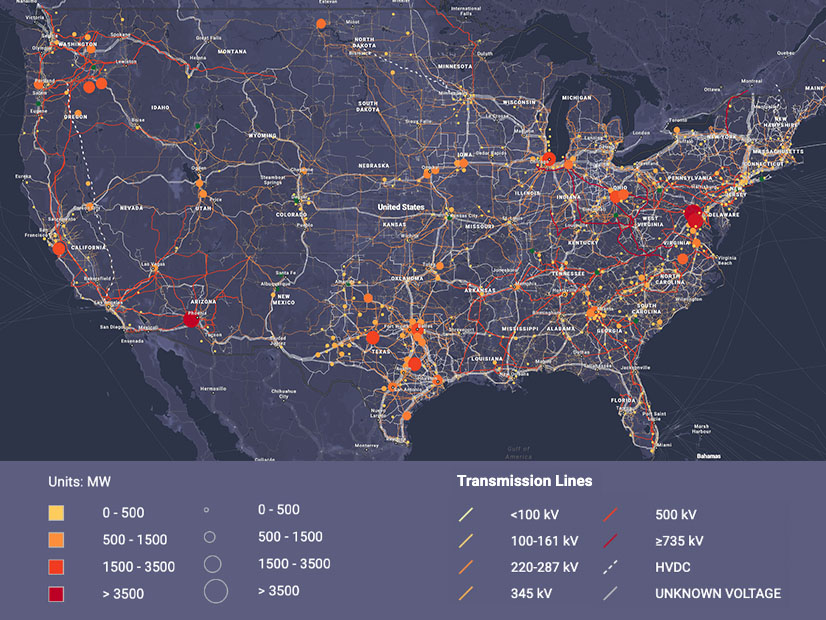
Speed to Power is supported by a data viewer created by DOE’s National Renewable Energy Laboratory.
The interactive map offers some of the information developers need as they conduct site assessments, including: power demand from data centers that are planned, under construction or in operation; fiber-optic cable networks; transmission lines; power plants; substations; natural gas pipelines; day and night population; NERC reserve margins; FEMA risk indexes; and railroads.
DOE said Speed to Power evolved from Trump’s Day One declaration of a national energy emergency and his orders “Unleashing American Energy” by emphasizing fossil fuels, removing barriers to American leadership in artificial intelligence and strengthening the reliability and security of the U.S. grid.
Also leading up to Speed to Power, DOE conducted and published an evaluation of grid reliability that concluded retirements of existing generation assets and delays in additions of new firm power will lead to a surge in power outages. (See DOE Reliability Report Argues Changes Required to Avoid Outages Past 2030.)
Some expert observers faulted details and conclusions of the report, but DOE continues to cite the document as it lays out strategies. (See Industry Experts Find Faults in DOE’s Resource Adequacy Analysis.)
DOE said its launch of Speed to Power will “ensure the United States has the power needed to win the global artificial intelligence race while continuing to meet growing demand for affordable, reliable and secure energy.”