New York City could be short as much as 650 MW in capacity in the summer of 2026, according to NYISO’s Short Term Assessment of Reliability (STAR) for the third quarter, issued Oct. 13.
The report, which assesses reliability over five years, also identified reliability needs in Long Island and the Lower Hudson Valley, though not until 2027 and 2030, respectively, and both are much less than the city’s.
The findings trigger a formal process by which the ISO will seek solutions including transmission, generation, energy efficiency or a combination of each. “NYISO will begin the process immediately by working with the local utilities and the marketplace to identify and evaluate possible solutions,” it said in a press release.
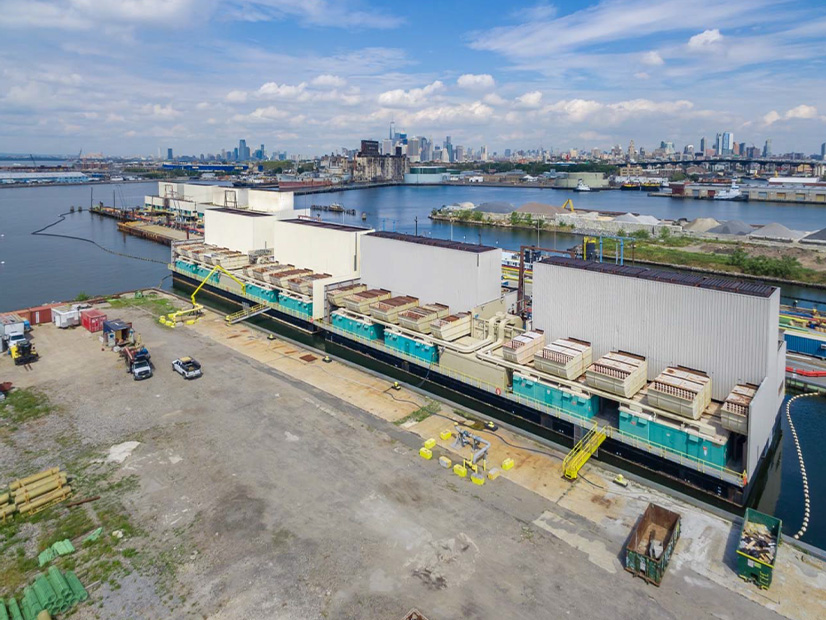
The shortfall is primarily driven by the impending retirements of the Gowanus and Narrows gas generators in the city, kept online by an ISO designation for reliability under New York state’s peaker rule. NYISO continues to say that several projects — including the Champlain Hudson Power Express HVDC transmission line and the Empire Wind offshore wind facility — would solve the city’s deficiency. But “until these system plans are completed and demonstrate their planned power capabilities to address the identified reliability needs, the previously identified … deficiencies would persist without Gowanus and Narrows,” according to the STAR.
NYISO used its press release to note the findings of its biennial Comprehensive Reliability Plan (CRP), even though it is still being finalized. (See NYISO Reliability Plan Calls for ‘New Dispatchable Generation’.)
“Taken together, these two reports show the grid is at a significant inflection point,” said Zach Smith, senior vice president of system and resource planning for NYISO. “Depending on future demand growth and generator requirements, the system may need several thousand megawatts of new dispatchable generation within the next 10 years.”
Gavin Donohue, president of the Independent Power Producers of New York, said residents should be alarmed by the findings.
“Electricity demand is continuing to drastically rise, and the state needs to look at all possible resources to safeguard strict reliability standards that millions of New Yorkers depend on,” Donohue said in a statement.
The STAR considers planned retirements, upgrades, forecast peak power demand and changes to the generation mix. Thirty-six gas turbines submitted retirement notices, including the 672-MW Gowanus and Narrows generators.
When the planned transmission and generation projects enter service and assuming all existing generators remain available, reserve margins would improve substantially, but the STAR notes that they would “gradually erode as forecasted demand for electricity grows.” As soon as 2029, the city would be once again deficient in the summer, by 68 MW for five hours.
“Even with the Champlain Hudson Power Express transmission project online, reliability margins will be breached in the near future due to lack of resources with the same capabilities coming onto the system to replace the planned peaker retirements,” Donohue said. “Increasing dispatchable generation must be prioritized so the state does not go dark.”
The ISO may extend the operation of Gowanus and Narrows until May 2029 under the peaker rule. They cannot continue operating beyond that date unless they meet state Department of Environmental Conservation emissions requirements.
Long Island could become deficient in summer 2027 by 39 to 116 MW because of the deactivations of the Pinelawn and Far Rockaway generators. Once Sunrise Wind is delivering power, the margins would improve in summer 2028 and again once the Propel NY Energy transmission project comes online in 2030.
NYISO said the Lower Hudson Valley reliability need is an exacerbation of the city’s and that solving the latter would solve the former.
But “the risk of deficiencies beyond the needs identified in this STAR is even greater when considering a range of plausible futures with combined risks, such as the statistical likelihood of further generator retirements or failures,” the ISO warned. “New York’s generation fleet is among the oldest in the country, and as these generators age, they are experiencing more frequent and longer outages.”
NYISO’s pronouncements echo those of its Reliability Needs Assessment just over a year ago. The ISO narrowly avoided issuing a formal reliability need then, but it made similar warnings of generator aging and retirements, and it also warned that the city’s reliability would depend on the Champlain Hudson project. (See NYISO: Large Load Flexibility Eliminates 2034 Shortfall Concern.)