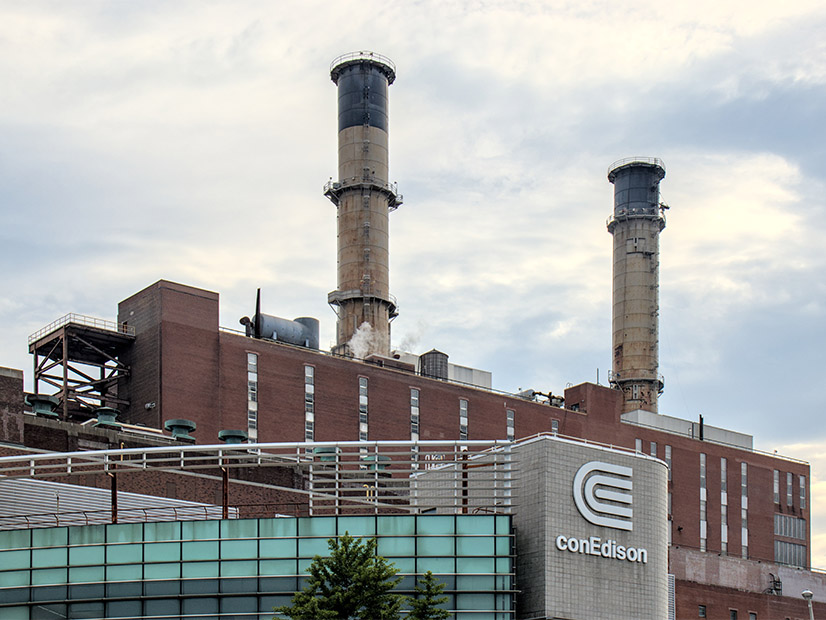
Consolidated Edison has been tasked with creating a contingency plan to avert the energy shortfall that it and NYISO have warned may develop in New York City.
The New York Public Service Commission initiated the proceeding Dec. 18 (25-E-0764). It directed Con Edison to first identify the reliability needs facing it over the next 10 years, then start a planning process to identify potential solutions to those needs.
The PSC is limiting those solutions to clean and non-emitting options: energy storage, distributed renewables and demand-side management such as energy efficiency, demand response and virtual power plants.
“Con Edison’s proposed NYC Reliability Contingency Plan must ‘turn over every stone’ to define a portfolio that is consistent with the state’s clean energy and climate goals,” the order states.
Further, the plan must prioritize solutions that are cost-effective for ratepayers; are straightforward and timely to deploy; and avoid or minimize impacts on disadvantaged communities.
With its limitation on emissions, the directive to Con Edison takes a narrower focus than the state Energy Plan, a directional guidebook that was updated Dec. 16 to include an all-of-the-above approach with the possibility of new fossil infrastructure. (See N.Y. Embraces All of the Above in Energy Strategy Update.)
But New York City has air quality problems, and the prospect of new fossil generation there — at a time when existing fossil plants may need to run much longer than many initially had hoped — is politically sensitive.
Con Edison also is directed to identify transmission and distribution upgrades needed to implement the solutions it proposes. The order includes both resource adequacy and transmission security under the “reliability” umbrella.
A spokesperson for the utility offered a broad response to the order: “We have a strong record of meeting system needs through both innovative solutions and traditional infrastructure investments, from pioneering non-wires solutions to building transmission that addressed the Indian Point contingency. We will continue to work collaboratively with NYISO, regulators, policymakers and other stakeholders to make sure the reliability needs of our customers are met, now and in the future.”
NYISO’s third-quarter 2025 Short-Term Assessment of Reliability (STAR), issued Oct. 13, identified reliability violations in Zone J (New York City) and Zone K (Long Island) starting in the summer of 2026.
NYISO’s 2025-2034 Comprehensive Reliability Plan, issued Nov. 21, did not identify actionable reliability needs, but it highlighted three converging trends that threaten reliability in New York: the aging generation fleet, the rapid growth of new large loads and the increasing difficulty of developing new dispatchable resources. Additionally, the advanced age of the fleet raises concerns about performance failures.
Con Edison’s 2025 Local Transmission Plan, submitted to NYISO stakeholders Dec. 3, identifies reliability needs in NYISO Zone J starting at 250 MW of peak need in 2030 and rising to 1,325 MW by 2035.
These reports are the basis for the PSC’s Dec. 18 order. The order “encourages” but does not direct the Long Island Power Authority (LIPA) to initiate a similar planning process leading to a contingency plan for Zone K. LIPA is a state entity not subject to PSC regulation.
NYISO meanwhile is awaiting the results of a Nov. 10 solicitation for short-term reliability process solutions to address the generator deactivation reliability needs identified in the third-quarter 2025 STAR report. Responses are due by Jan. 9. Natural gas generation can be proposed as a solution.
A PSC spokesperson told RTO Insider that the efforts by NYISO and now the PSC are complementary: The commission is setting up a process that is broader than the ISO solicitation but will reflect solutions identified by NYISO from its solicitation, thereby providing the widest possible range of options to address the problems.
NYISO welcomed the PSC’s order. “We’re pleased by the commission’s actions today to bolster reliability of the electric system in New York City and Long Island,” a spokesperson said. “The NYISO has long warned through our planning studies of declining reliability margins in New York City and the need for additional generation to meet rising demand. The order will be beneficial to meet reliability requirements and incentivize investment in new resources, while also supporting the newly approved state Energy Plan.”
PSC Chair Rory Christian spoke not only of the imperative of keeping the lights on in New York City but the impossibility of taking a cookie-cutter approach, as well as the need for innovative thinking if new electrons are to be brought onto the grid without creating new emissions.
“So as we explore solutions to the need identified, we’ll also need to explore new options and new opportunities to enhance reliability created through the ongoing integration of customer-side energy efficiency, demand response, battery storage, renewable energy and other measures,” Christian said. “I believe our utilities can rise to this challenge and look forward to the results of their work.”
The PSC voted 6-0 in favor of the order.