AUSTIN, Texas — ERCOT says there is “broad agreement” from stakeholders that the grid operator’s batch-based approach for interconnecting large loads is necessary.
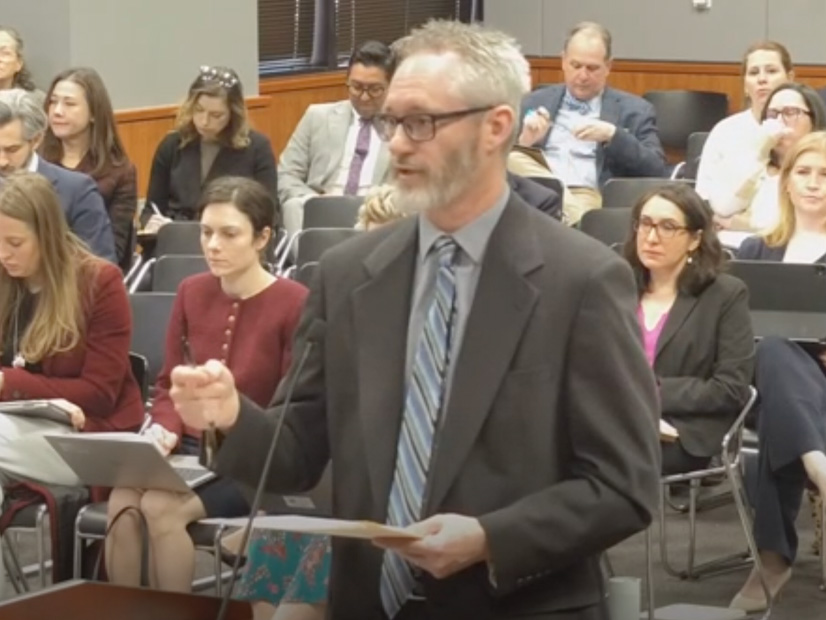
Jeff Billo, ERCOT vice president of interconnection and grid analysis, told the Texas Public Utility Commission during its Jan. 15 open meeting that it has only begun to engage stakeholders on the batch process, but a couple of themes already have stood out (59142).
“Everyone that we have talked to so far has been supportive of us moving to a batch study process and moving away from the current process,” Billo told commissioners. “I think one of the reasons is … that there is a lot of uncertainty in the current process. We have this issue today where loads go through the study process, and then something happens — maybe another load in their neighborhood moves forward and meets their financial commitment obligations and that load is not included in the other project study … and we’re kind of caught in this restudy loop for a lot of these projects.”
Other themes outlined by Billo included: uncertainty in the current process creating risk for developers of existing interconnection requests; transparency and consistency in the batch process; and aligning the process with ERCOT’s transmission-planning work.
ERCOT CEO Pablo Vegas unveiled the draft process in December, calling the wave of large loads looking to interconnect “fairly unprecedented.” The gird operator had 63 GW of interconnection requests from large loads at the end of 2024. That number has mushroomed to 232 GW as of January, according to staff’s latest data. (See ERCOT Again Revising Large Load Interconnection Process.)
With the batch process, ERCOT will group together large-load requests to be evaluated, rather than rely on the current individual studies that transmission service providers conduct. The batch studies will determine the amount of requested load that can be reliably served each year over a six-year period and the transmission upgrades needed to accommodate the full load requested.
The grid operator says a “Batch Zero Study” likely will be needed to transition from the current process, which was documented in December by a rule change to the Planning Guide. That study will set a foundation and baseline for future studies, which could happen several times a year for several years.
Billo said the first batch study will break the cycle of restudies and “get those projects out” without creating a restudy loop or uncertainty. The first batch will take projects that already are under ERCOT review, totaling about 7.4 GW.
“We are still really early in the process of designing how that batch study would work, but we hope to bring more details on that in the coming weeks,” he said.
ERCOT staff plan to use its Large Load Working Group as an engagement forum with stakeholders, as well as updating the Technical Advisory Committee and PUC during their next regularly scheduled meetings. During a Jan. 21 discussion with TAC, Billo deferred most questions to a Feb. 3 workshop on the batch process.
“We’re going to get through everything that we need to get through that day,” Billo promised TAC members. “We will lay out as many details on that framework as we can … [understanding] that the framework will be in pencil. We want the stakeholder feedback.”
A second batch-process workshop is tentatively scheduled for Feb. 12.
“And then our homework is due to the commission,” Billo said, pointing to the PUC’s Feb. 20 open meeting.