The winter storm that moved through Texas and much of the Eastern Interconnection over the Jan. 24-25 weekend cut power to hundreds of thousands of people and stressed the bulk power system, but it did not create major disruptions like storms earlier in this decade.
The storm dumped snow, sleet and freezing rain across its path, with the most power outages occurring on its southern edge — especially in the lower Mississippi Valley, according to the National Weather Service. Entergy Louisiana said Jan. 26 that most customers who lost power in its territory would be restored by Jan. 28, with some repairs taking a day longer.
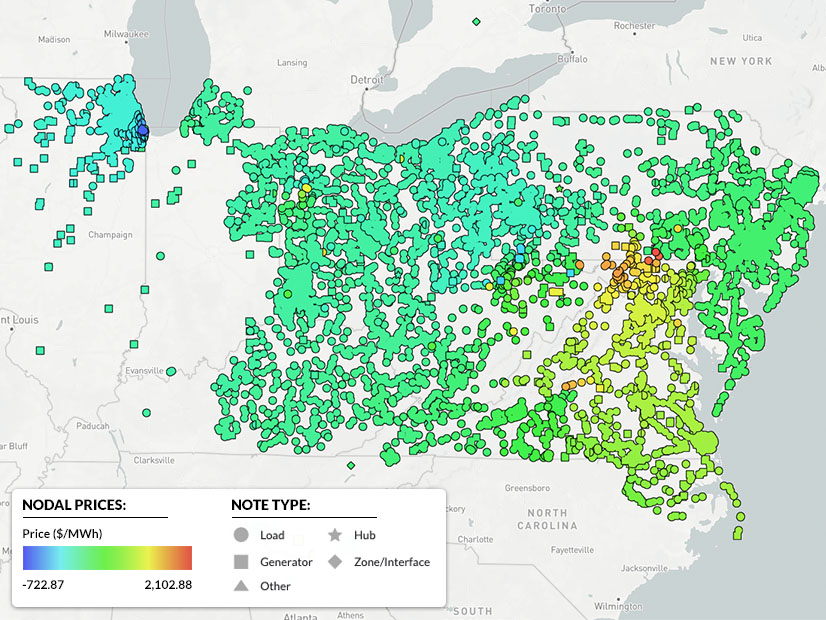
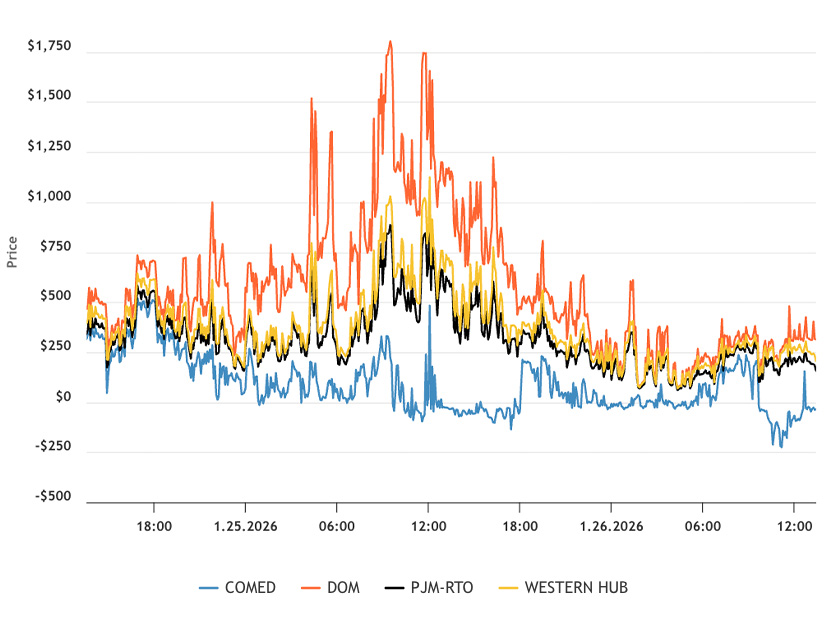
NYISO wholesale power prices briefly hit quadruple digits at about 11 p.m. ET Jan. 25 (Sunday), while the Dominion Zone in PJM saw prices above $1,000/MWh for much of the day.
PJM is actually expecting higher demand Jan. 27, with lower temperatures prompting it to issue a maximum generation alert and a low voltage alert. The RTO could break its winter peak record that day, as it forecasts peak demand of 147.2 GW, which would beat the mark of 143.7 GW set a year ago.
The RTO said that it could see peak demand hit 130 GW for seven straight days, which would be a first for winter.
“This is a formidable arctic cold front coming our way, and it will impact our neighboring systems as much as it affects PJM,” Senior Vice President of Operations Mike Bryson said in a statement. “We will be relying on our generation fleet to perform as well as they did during last year’s record winter peak.”
PJM was one of several grid operators to take up the Department of Energy on its offer to issue emergency orders under Section 202(c) of the Federal Power Act. (See Wright Ready to Use Emergency Powers to Dispatch Backup Generation During Storm.)
PJM asked DOE to issue a 202(c) order to allow it to dispatch every generator in its footprint at is maximum level without violating air quality laws — an order that remains in place through the end of January.
DOE issued a similar order to ISO-NE as New England deals with the same cold. One generator informed ISO-NE that it was running up against its permitted emission limits.
“This prolonged severe cold weather event is expected to result in a sustained high level of demand for electricity,” ISO-NE told DOE in its order application. “While the vast majority of generating units in the ISO-NE region continue to function adequately, some units may experience difficulty due to emissions/air permitting limitations or other operating constraints.”
NYISO is facing the same winter weather as its two neighbors, announcing last week that it could see peak demand exceed 24 GW, which was near expectations for this winter, but falls short of its all-time winter peak of 25.7 GW set in 2014.
“Our assessment finds there are adequate resources to serve demand on the grid under forecast conditions, but we’ve also seen generators in recent winters challenged with accessing adequate fuel capacity during very cold conditions,” NYISO Vice President of Operations Aaron Markham said in a statement.
MISO also issued a cold weather alert that remains in place through the end of January as low temperatures impact its footprint. It also issued a conservative operations declaration covering the cold snap.
MISO saw prices peak at about $1,802/MWh on Jan. 23, although they averaged just $178.04 across its entire footprint, while prices were slightly lower by Jan. 25.
SPP Back to Normal Conditions
SPP had returned to normal operating conditions as of 12 p.m. CT Jan. 26, after expiration of conservative operations and resource advisories that were in effect during the storm. However, it extended its weather advisory — considered normal operations — through noon Jan. 28 to maintain awareness of potential weather-related effects on system resources.
A spokesperson said the RTO had sufficient generation and met reserve obligations in its 14-state footprint during the storm, with load reaching about 46 GW during the morning peak Jan. 26. Load is forecasted to remain in the mid-40-GW range through the remainder of the week. SPP’s winter peak record of 48.1 GW was set in February 2025.
“We did not experience any major transmission losses, but we did get reports of local outages, particularly in the southern portion of our footprint,” SPP’s Derek Wingfield said.
He said the grid operator remained in close coordination with neighboring systems throughout the event, providing energy exports as needed and as available generating capacity allowed.
“We will continue to monitor conditions closely and will issue additional advisories as necessary,” Wingfield said.
Stronger ERCOT Grid Performs
The ERCOT grid breezed through the storm, a marked contrast to the dayslong outages during the disastrous Winter Storm Uri of February 2021. Since then, winterization has become mandatory for power plants and critical natural gas infrastructure. ERCOT has also added about 40 GW of capacity since the 2021 storm to bulk up its energy supplies.
About 90% of the new generation added since 2021 has been wind, solar and battery storage. Batteries provided more than 7 GW of energy at 8 a.m. CT Jan. 26. ERCOT’s instant storage discharge record stands at 9.7 GW, set in December 2025.
Natural gas provided more than 50.8 GW of energy at one point Jan. 26, another record, according to Grid Status.
This comes after DOE granted ERCOT’s request for an emergency order under the FPA because of the storm. The order allows certain electric generating units to operate up to their maximum generation output in certain limited circumstances, despite federal or state environmental standards and requirements.
The order is effective until 11:59 p.m. Jan. 27.
Early demand projections of 83 GW failed to materialize. Demand is now expected to peak at around 78 GW on Jan. 27.
ERCOT did declare a transmission emergency late Jan. 25 because of the loss of generation and transmission-line issues in the San Antonio and Houston areas. The emergency was canceled during the morning hours Jan. 26.
ISO staff have also canceled the operating condition notice (OCN) issued ahead of the approaching cold weather system. OCNs are the first of ERCOT’s “four levels of communication issued in anticipation of a possible emergency condition” and are issued when the system’s safety or reliability is compromised or threatened.
More than 61,000 Texas customers were out of power as of noon Jan. 26, primarily in the northeastern region of the state where American Electric Power subsidiary Southwestern Electric Power Co. and Entergy Texas operate.